
This standard specifies the graphite furnace atomic absorption spectrometry, inductively coupled plasma mass spectrometry, flame atomic absorption spectrometry and thiocyanate colorimetry for the determination of lead content in food.
This standard is applicable to the determination of lead content in all kinds of food.
After sample digestion treatment, the absorbance was measured at 283.3nm after graphite furnace atomization. The absorbance value of lead in a certain concentration range was proportional to the content of lead, and the quantitative comparison was made with the standard series.
Unless otherwise stated, the reagents used in this method are of superior purity and the water is of grade II as specified in GB/T 6682.
This standard is applicable to the determination of lead content in all kinds of food.
After sample digestion treatment, the absorbance was measured at 283.3nm after graphite furnace atomization. The absorbance value of lead in a certain concentration range was proportional to the content of lead, and the quantitative comparison was made with the standard series.
Unless otherwise stated, the reagents used in this method are of superior purity and the water is of grade II as specified in GB/T 6682.
Reagent
Hydrogen nitrate( HNO 3 )
Perchloric acid( HClO 4 )
Ammonium dihydrogen phosphate( NH 4 H 2 PO 4 )
Palladium nitrate[ Pd ( NO 3 ) 2 ]
Perchloric acid( HClO 4 )
Ammonium dihydrogen phosphate( NH 4 H 2 PO 4 )
Palladium nitrate[ Pd ( NO 3 ) 2 ]
Reagent preparation
Nitric acid solution (5+95): Measure 50 ml of nitric acid and slowly add it to 950mL of water, then mix well.
Nitric acid solution (1+9): Measure 50mL of nitric acid and slowly add it to 450mL of water, then mix well
Ammonium dihydrogen phosphate-palladium nitrate solution: weigh 0.02g palladium nitrate, add a small amount of nitric acid solution (1+9) to dissolve, then add 2g ammonium dihydrogen phosphate, dissolve and make up to 100mL with nitric acid solution (5+95), mix evenly.
Nitric acid solution (1+9): Measure 50mL of nitric acid and slowly add it to 450mL of water, then mix well
Ammonium dihydrogen phosphate-palladium nitrate solution: weigh 0.02g palladium nitrate, add a small amount of nitric acid solution (1+9) to dissolve, then add 2g ammonium dihydrogen phosphate, dissolve and make up to 100mL with nitric acid solution (5+95), mix evenly.
Standard substance
Standard solution preparation
Lead standard reserve solution (1000mg / L): accurately weigh 1.5985g of lead nitrate (accurate to 0.0001g), dissolve it with a small amount of nitric acid solution (1+9), transfer it into a 1000mL volumetric bottle, add water to the scale and mix evenly.
Lead standard intermediate solution (1.00mg / L): accurately add 1.00mL of lead standard reserve solution (1000mg / L) to a 1000mL volumetric flask, add nitric acid solution (5+95) to the scale, and mix evenly
Lead standard series solution: Transfer 0 mL, 0.500 mL, 1.00 mL, 2.00 mL, 3.00 mL, and 4.0 0mL of the lead standard intermediate solution (1.00 mg/L) to a 100mL volumetric flask, add nitric acid solution (5+95) to the mark, and mix thoroughly. The mass concentrations of this lead standard series solution are 0 μg/L, 5.00 μg/L, 10.0 μg/L, 20.0 μg/L, 30.0 μg/L, and 40.0 μg/L, respectively.
Note: The mass concentration of lead in the standard series solution can be determined according to the sensitivity of the instrument and the actual content of lead in the sample.
Note: All glassware and PTFE digestion inner tank need to be soaked in nitric acid solution (1 +5) overnight, rinsed repeatedly with tap water, and finally rinsed with water.
AA-1800S atomic absorption spectrometer (Shanghai Meixi Instrument Co., LTD.): equipped with graphite furnace atomizer and lead hollow cathode lamp.
Analysis balance: sensitivity of 0.1mg and 1mg
Adjustable electric furnace
Adjustable electric heating plate
Microwave digestion system: polytetrafluoroethylene digestion inner tank
Constant temperature drying chamber
Pressure dissolving tank: polytetrafluoroethylene dissolving inner tank
Lead standard intermediate solution (1.00mg / L): accurately add 1.00mL of lead standard reserve solution (1000mg / L) to a 1000mL volumetric flask, add nitric acid solution (5+95) to the scale, and mix evenly
Lead standard series solution: Transfer 0 mL, 0.500 mL, 1.00 mL, 2.00 mL, 3.00 mL, and 4.0 0mL of the lead standard intermediate solution (1.00 mg/L) to a 100mL volumetric flask, add nitric acid solution (5+95) to the mark, and mix thoroughly. The mass concentrations of this lead standard series solution are 0 μg/L, 5.00 μg/L, 10.0 μg/L, 20.0 μg/L, 30.0 μg/L, and 40.0 μg/L, respectively.
Note: The mass concentration of lead in the standard series solution can be determined according to the sensitivity of the instrument and the actual content of lead in the sample.
Note: All glassware and PTFE digestion inner tank need to be soaked in nitric acid solution (1 +5) overnight, rinsed repeatedly with tap water, and finally rinsed with water.
AA-1800S atomic absorption spectrometer (Shanghai Meixi Instrument Co., LTD.): equipped with graphite furnace atomizer and lead hollow cathode lamp.
Analysis balance: sensitivity of 0.1mg and 1mg
Adjustable electric furnace
Adjustable electric heating plate
Microwave digestion system: polytetrafluoroethylene digestion inner tank
Constant temperature drying chamber
Pressure dissolving tank: polytetrafluoroethylene dissolving inner tank
Sample preparation
Note: In the process of sampling and sample preparation, sample contamination should be avoided.
After removing debris, grain and legume samples were crushed and stored in plastic bottles Samples of vegetables, fruits, fish, meat, etc. should be washed with water, dried, and the edible parts should be taken to make a homogenate and stored in plastic bottles
After removing debris, grain and legume samples were crushed and stored in plastic bottles Samples of vegetables, fruits, fish, meat, etc. should be washed with water, dried, and the edible parts should be taken to make a homogenate and stored in plastic bottles
Sample pretreatment
Wet digestion
Weigh a solid sample of 0.2g to 3g (accurate to 0.001g) or accurately transfer a liquid sample of 0.500mL to 5.00mL into a graduated digestion tube. Add 10mL of nitric acid and 0.5mL of perchloric acid, and digest the sample on an adjustable electric heating furnace (reference conditions: 120℃ for 0.5h to 1h; then increase to 180℃ for 2h to 4h, and finally to 200℃ to 220℃). If the digestion solution turns brown, add a small amount of nitric acid to digest until white smoke appears, and the solution becomes colorless, transparent, or slightly yellow. Remove the digestion tube, cool it, and dilute with water to 10mL, mix well, and set aside. Simultaneously, perform a reagent blank test. Alternatively, use a conical flask and perform wet digestion on an adjustable electric heating plate using the same method.
Microwave digestion
Weigh a solid sample of 0.2g to 0.8g (accurate to 0.001g) or accurately transfer a liquid sample
of 0.500mL to 3.00mL into a microwave digestion vessel. Add 5mL of nitric acid and digest the sample according to the procedures outlined in Appendix A. After cooling, remove the digestion vessel and transfer it to an electric heating plate, where it is heated to 140℃~160℃ until the acid volume reaches about 1mL. Once the digestion vessel has cooled, transfer the digestion solution to a 10mL volumetric flask. Wash the digestion vessel with a small amount of water 2 to 3 times, combine the wash solutions in the volumetric flask, and make up to the mark with water. Mix well and set aside for later use. Simultaneously, perform a reagent blank test.
of 0.500mL to 3.00mL into a microwave digestion vessel. Add 5mL of nitric acid and digest the sample according to the procedures outlined in Appendix A. After cooling, remove the digestion vessel and transfer it to an electric heating plate, where it is heated to 140℃~160℃ until the acid volume reaches about 1mL. Once the digestion vessel has cooled, transfer the digestion solution to a 10mL volumetric flask. Wash the digestion vessel with a small amount of water 2 to 3 times, combine the wash solutions in the volumetric flask, and make up to the mark with water. Mix well and set aside for later use. Simultaneously, perform a reagent blank test.
Pressure tank digestion
Weigh 0.2g to 1g of solid sample (accurate to 0.001g) or accurately transfer 0.500mL to 5.00mL of liquid sample into the digestion inner jar, and add 5mL of nitric acid. Cover the inner jar, tighten the stainless steel outer sleeve, and place it in a constant temperature drying oven at 140℃ to 160℃ for 4h to 5h. After cooling, slowly loosen the outer jar, remove the digestion inner jar, and place it on an adjustable electric heating plate at 140℃ to 160℃ to acidify to about 1mL. After cooling, transfer the digestion solution to a 10mL volumetric flask, wash the inner jar and inner cover with a small amount of water 2 to 3 times, combine the wash solutions in the volumetric flask and make up to the mark with water, mix well, and set aside for later use. Simultaneously, perform a reagent blank test.
Determination
The reference conditions for the graphite furnace atomic absorption spectrometry instrument are shown in Table B.1。
Table B.1 Reference Conditions for Graphite Furnace Atomic Absorption Spectrometry Instrument
Table B.1 Reference Conditions for Graphite Furnace Atomic Absorption Spectrometry Instrument
| Element | Wavelengthnm | Slit width nm | Light current mA | Dryness | Ashification | Atomization |
| Pb | 283.3 | 0.5 | 8-12 | 85℃-120℃/40s-50s | 750℃/20s-30s | 2300℃/4s-5s |
The microwave digestion heating procedure is shown in Table A.1.
Table A.1 Microwave Digestion Heating Program
Table A.1 Microwave Digestion Heating Program
| Step | Set the temperature/℃ | Heating-up time/Min | Constant temperature time Min |
| 1 | 120 | 5 | 5 |
| 2 | 160 | 5 | 10 |
Standard curve preparation
The 10 μL lead standard series solution and the 5 μL ammonium dihydrogen phosphate-palladium nitrate solution (the optimal injection volume can be determined based on the instrument used) were injected into the graphite furnace in sequence from low to high mass concentration. After atomization, their absorbance values were measured. A standard curve was created with mass concentration as the x-axis and absorbance value as the y-axis.
Determination of sample solution
Under the same experimental conditions as the standard solution, 10 μL of blank solution or sample solution and 5 μL of ammonium dihydrogen phosphate-palladium nitrate solution (the optimal injection amount can be determined according to the instrument used) were injected into the graphite furnace at the same time. After atomization, the absorbance value was measured and compared with the standard series for quantitative determination.
The lead content in the sample is calculated according to formula (1):
The lead content in the sample is calculated according to formula (1):
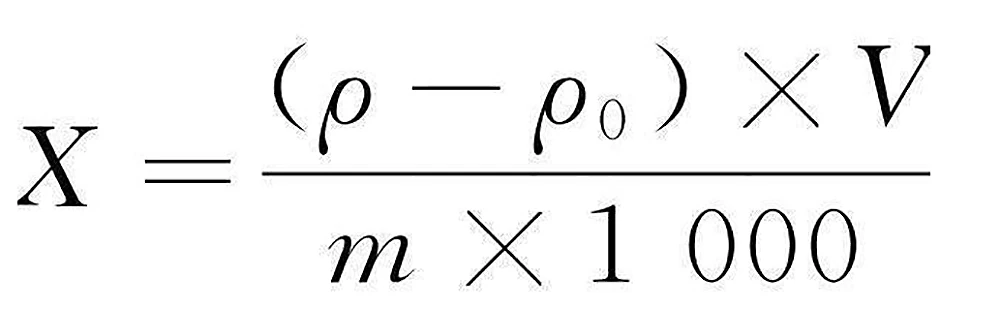
X——The lead content in the sample, measured in milligrams per kilogram or milligrams per liter (mg/kg or mg/ L)
ρ——The mass concentration of lead in the sample solution, in units of micrograms per liter (μg/L)
ρ0——Mass concentration of lead in blank solution, in micrograms per liter (μg/L)
V——The volume of the sample digestion solution is measured in milliliters (mL)
m——The sample weight or volume transferred is measured in grams or milliliters (gor mL)
1000——Conversion factor
When the lead content is greater than or equal to 1.00mg/kg (or mg/L), the calculation results are retained with three significant digits; when the lead content is seen in GB5009.268
After the sample is processed, lead ions form a complex with sodium dithiocarbamate (DDTC) under specific pH conditions. The complex is then extracted and separated using 4-methyl-2-pentanone (MIBK), and the extract is introduced into an atomic absorption spectrometer for analysis. The absorbance at 283.3nm is measured after flame atomization. Within a certain concentration range, the absorbance of lead is directly proportional to its content, allowing for quantitative comparison with a standard series
Note: Unless otherwise stated, the reagents used in this method are of analytical purity and the water is grade II water as specified in GB/T6682
ρ——The mass concentration of lead in the sample solution, in units of micrograms per liter (μg/L)
ρ0——Mass concentration of lead in blank solution, in micrograms per liter (μg/L)
V——The volume of the sample digestion solution is measured in milliliters (mL)
m——The sample weight or volume transferred is measured in grams or milliliters (gor mL)
1000——Conversion factor
When the lead content is greater than or equal to 1.00mg/kg (or mg/L), the calculation results are retained with three significant digits; when the lead content is seen in GB5009.268
After the sample is processed, lead ions form a complex with sodium dithiocarbamate (DDTC) under specific pH conditions. The complex is then extracted and separated using 4-methyl-2-pentanone (MIBK), and the extract is introduced into an atomic absorption spectrometer for analysis. The absorbance at 283.3nm is measured after flame atomization. Within a certain concentration range, the absorbance of lead is directly proportional to its content, allowing for quantitative comparison with a standard series
Note: Unless otherwise stated, the reagents used in this method are of analytical purity and the water is grade II water as specified in GB/T6682
Reagent
Hydrogen nitrate( HNO 3 ): Superior purity
Perchloric acid (HClO 4): Superior purity
Ammonia sulfate[( NH 4 ) 2 SO 4 ]
Ammonium citrate [ C 6 H 5 O 7 ( NH 4 ) 3 ]
Bromothymol blue( C 27 H 28 O 5 SBr 2 )
Ammonia (NH3·H2O): Superior purity
4-methyl-2-pentanone (MIBK, C 6 H 12 O)
Hydrochloric acid (HCl): Superior purity
Perchloric acid (HClO 4): Superior purity
Ammonia sulfate[( NH 4 ) 2 SO 4 ]
Ammonium citrate [ C 6 H 5 O 7 ( NH 4 ) 3 ]
Bromothymol blue( C 27 H 28 O 5 SBr 2 )
Ammonia (NH3·H2O): Superior purity
4-methyl-2-pentanone (MIBK, C 6 H 12 O)
Hydrochloric acid (HCl): Superior purity
Reagent preparation
Nitric acid solution (5+95): take 50mL of nitric acid and add it to 950mL of water, mix well
Nitric acid solution (1+9): take 50mL of nitric acid and add it to 450mL of water, mix well
Sulfate ammonium solution (300g / L): Weigh 30g of sulfate ammonium, dissolve and dilute to 100mL with water, and mix evenly
Ammonium citrate solution (250g / L): take 25g ammonium citrate, dissolve in water and dilute to 100mL, mix evenly
Sodium carmine blue aqueous solution (1g / L): take 0.1g sodium carmine blue, dissolve in water and dilute to 100mL, mix evenly
DDTC solution (50g / L): Weigh 5g DDTC, dissolve and dilute to 100mL with water, mix
Ammonia solution (1+1): absorb 100mL ammonia water, add 100mL water, mix evenly
Hydrochloric acid solution (1+11): Add 10mL hydrochloric acid to 110mL water and mix
Nitric acid solution (1+9): take 50mL of nitric acid and add it to 450mL of water, mix well
Sulfate ammonium solution (300g / L): Weigh 30g of sulfate ammonium, dissolve and dilute to 100mL with water, and mix evenly
Ammonium citrate solution (250g / L): take 25g ammonium citrate, dissolve in water and dilute to 100mL, mix evenly
Sodium carmine blue aqueous solution (1g / L): take 0.1g sodium carmine blue, dissolve in water and dilute to 100mL, mix evenly
DDTC solution (50g / L): Weigh 5g DDTC, dissolve and dilute to 100mL with water, mix
Ammonia solution (1+1): absorb 100mL ammonia water, add 100mL water, mix evenly
Hydrochloric acid solution (1+11): Add 10mL hydrochloric acid to 110mL water and mix
Standard solution preparation
Lead standard reserve solution (1000mg / L): accurately weigh 1.5985g of lead nitrate (accurate to 0.0001g), dissolve it with a small amount of nitric acid solution (1+9), transfer it into a 1000mL volumetric bottle, add water to the scale and mix evenly
Lead standard solution (10.0mg / L): accurately add 1.00mL of lead standard reserve solution (1000mg / L) to a 100mL volumetric flask, add nitric acid solution (5+95) to the scale, and mix evenly
Note: All glassware should be soaked in nitric acid (1+5) overnight, rinsed repeatedly with tap water, and finally washed clean with water
AA-1800C atomic absorption spectrometer (Macylab Instrument Co., LTD.): equipped with flame atomizer and lead hollow cathode lamp
Analysis balance: sensitivity of 0.1mg and 1mg
Adjustable electric furnace
Adjustable electric heating plate
Note: In the process of sampling and sample preparation, sample contamination should be avoided.
After removing debris, grain and legume samples were crushed and stored in plastic bottles
Samples of vegetables, fruits, fish, meat, etc. should be washed with water, dried, and the edible parts should be taken to make a homogenate and stored in plastic bottle
Lead standard solution (10.0mg / L): accurately add 1.00mL of lead standard reserve solution (1000mg / L) to a 100mL volumetric flask, add nitric acid solution (5+95) to the scale, and mix evenly
Note: All glassware should be soaked in nitric acid (1+5) overnight, rinsed repeatedly with tap water, and finally washed clean with water
AA-1800C atomic absorption spectrometer (Macylab Instrument Co., LTD.): equipped with flame atomizer and lead hollow cathode lamp
Analysis balance: sensitivity of 0.1mg and 1mg
Adjustable electric furnace
Adjustable electric heating plate
Note: In the process of sampling and sample preparation, sample contamination should be avoided.
After removing debris, grain and legume samples were crushed and stored in plastic bottles
Samples of vegetables, fruits, fish, meat, etc. should be washed with water, dried, and the edible parts should be taken to make a homogenate and stored in plastic bottle
Determination
Flame Atomic Absorption Spectrometry (FAAS) Instrument Operating Conditions
The following table lists the recommended operating parameters for the determination of lead (Pb) by flame atomic absorption spectrometry (FAAS).
Table C.1 Recommended Instrument Conditions for FAAS Analysis of Lead
The following table lists the recommended operating parameters for the determination of lead (Pb) by flame atomic absorption spectrometry (FAAS).
Table C.1 Recommended Instrument Conditions for FAAS Analysis of Lead
| Element | Wavelength (nm) | Slit Width (nm) | Lamp Current (mA) | Burner Height (mm) | Air Flow Rate (L/min) |
| Lead (Pb) | 283.3 | 0.5 | 8–12 | 6 | 8 |
Standard curve preparation
Take 0 mL, 0.250 mL, 0.500 mL, 1.00 mL, 1.50 mL, and 2.00mL (equivalent to 0 μg, 2.50 μg, 5.00 μg, 10.0 μg, 15.0 μg, and 20.0 μg of lead) of the lead standard solution into a 125mL separatory funnel, and add water to make it 60 mL. Add 2mL of ammonium citrate solution (250g/L) and 3 to 5 drops of bromophenol blue aqueous solution (1g/L). Adjust the pH to yellow to blue using an ammonia solution (1+1). Add 10mL of ammonium sulfate solution (300g/L) and 10mL of DDTC solution (1g/L), and shake well. After about 5 minutes, add 10mL of MIBK, and vigorously shake for 1 minute. After settling, discard the aqueous layer and transfer the MIBK layer to a 10 mL stoppered graduated tube to obtain the standard series solution. Sequentially introduce the standard series solution into the flame atomizer in ascending order of mass, measure its abso
Determination of sample solution
Place the sample digestion solution and the blank reagent solution in a 125mL separatory funnel, and add water to make it 60 mL. Add 2mL of ammonium citrate solution (250 g/L) and 3 to 5 drops of bromophenol blue aqueous solution (1 g/L). Adjust the pH to blue by adding ammonia solution (1+1). Then, add 10mL of ammonium sulfate solution (300 g/L) and 10mL of DDTC solution (1 g/L), and mix well. After about 5 minutes, add 10mL of MIBK, and vigorously shake for 1 minute to extract the sample. After settling, discard the aqueous layer and transfer the MIBK layer to a 10 mL stoppered graduated tube to obtain the sample solution and the blank solution. Inject the sample solution and the blank solution into the flame atomizer, measure their absorbance values after atomization, and compare them with the standard series for quantification.
Presentation of the results of the analysis
The lead content in the sample is calculated according to formula (2):
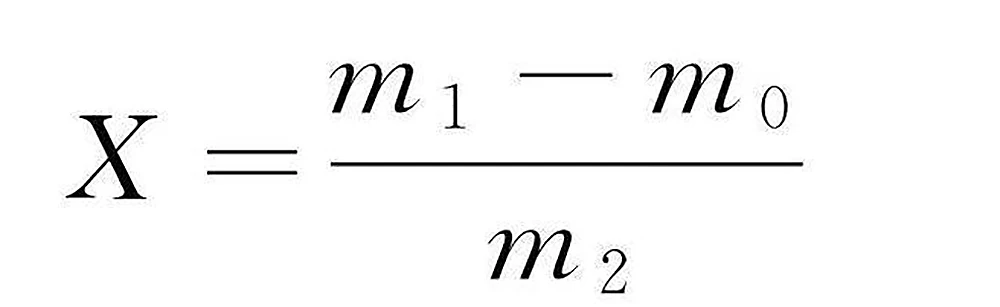
X ———The lead content in the sample, in units of mg/kg or mg/L (mg/kg or mg/L);
m 1 ———The mass of lead in the sample solution, in units of micrograms (μ g);
m 0 ———The mass of lead in the blank solution, in units of micrograms (μg);
m 2 ———The sample weight or volume transferred is measured in grams or milliliters (g or mL).
When the lead content is greater than or equal to 10.0mg/kg (or mg/L), the calculation results are retained to three significant digits
m 1 ———The mass of lead in the sample solution, in units of micrograms (μ g);
m 0 ———The mass of lead in the blank solution, in units of micrograms (μg);
m 2 ———The sample weight or volume transferred is measured in grams or milliliters (g or mL).
When the lead content is greater than or equal to 10.0mg/kg (or mg/L), the calculation results are retained to three significant digits
About Us
Macylab Instrument Co., Ltd. (hereinafter referred to as Macylab) is a high-tech enterprise with independent intellectual property rights. The company’s founding philosophy,’ Technology —— Change for You,’ guides its mission to continuously explore and innovate boldly. In the field of analytical testing instruments, Meixi consistently develops advanced products, positioning itself as a supplier of high-quality instruments.
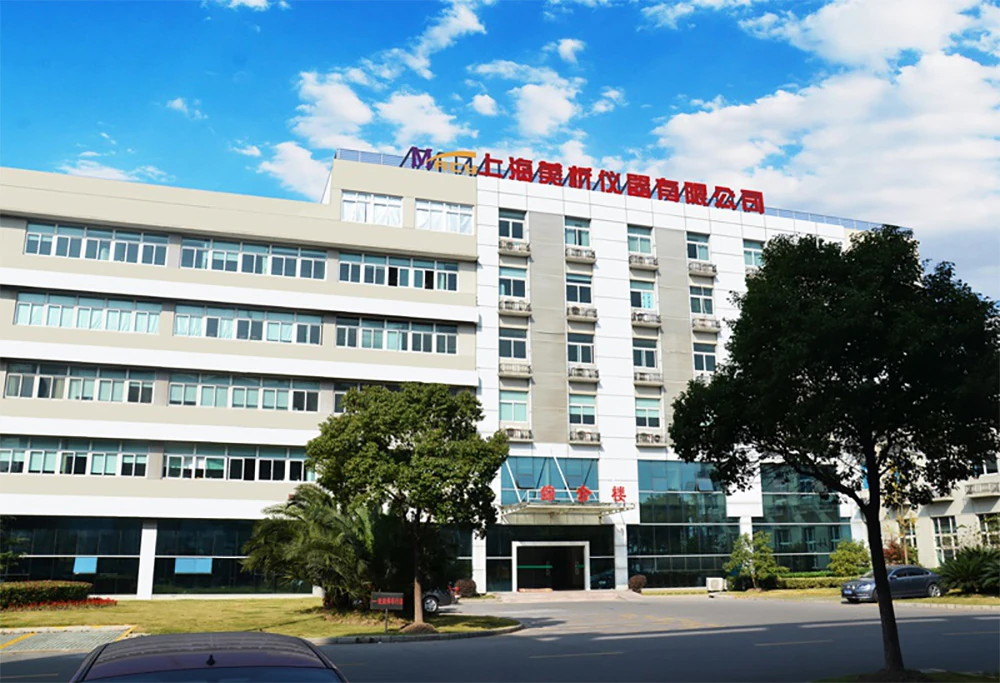
Macylab specializes in a wide range of spectrometric instruments, including visible spectrophotometers, UV-visible spectrophotometers, atomic absorption spectrometers, ultra-micro spectrophotometers, atomic fluorescence spectrometers, ICP (inductively coupled plasma) emission spectrometers, and ICP-MS (inductively coupled plasma mass spectrometers). Our products are widely used in fields such as organic chemistry, inorganic chemistry, biochemistry, pharmaceuticals, environmental protection, metallurgy, petroleum, and agriculture. Leveraging our extensive experience in product mechanical design, optical design, electrical applications, and software development, and by aligning with the latest market demands, we will soon introduce a series of new analytical instruments.
Meixie’s headquarters and production base are located in Shanghai, with its marketing center in Beijing. The company has also established R&D bases in Jiangsu, Shanghai, and Shandong. To leverage the intellectual resources of various regions, Meixie collaborates deeply with research institutions both domestically and internationally, continuously transforming research outcomes into practical applications. To better serve its customers, Meixie has set up 12 offices across China, offering customized application solutions to enhance the value of its products. While serving domestic users, Meixie has also formed deep strategic partnerships with distribution agencies in over 20 countries.
Meixie’s headquarters and production base are located in Shanghai, with its marketing center in Beijing. The company has also established R&D bases in Jiangsu, Shanghai, and Shandong. To leverage the intellectual resources of various regions, Meixie collaborates deeply with research institutions both domestically and internationally, continuously transforming research outcomes into practical applications. To better serve its customers, Meixie has set up 12 offices across China, offering customized application solutions to enhance the value of its products. While serving domestic users, Meixie has also formed deep strategic partnerships with distribution agencies in over 20 countries.
Ready to Implement This Solution?
Contact our application specialists for a customized quote and method validation.