How Does UV-Vis Spectrophotometry Support Quantitative Analysis in Pharmacy?
Introduction
Pharmaceutical laboratories need to determine the amount or concentration of APIs and other analytes accurately and consistently. The appropriate analytical technique depends on the analyte, formulation, sample matrix, and required level of selectivity.
UV-Vis spectrophotometry can be a practical option for samples with suitable absorption characteristics. However, obtaining useful quantitative results involves more than taking an absorbance reading. The analytical procedure, sample preparation, measurement conditions, and instrument capabilities all need to work together.
This guide explains where UV-Vis fits into quantitative analysis pharmacy, how laboratories can develop a suitable measurement workflow, and which instrument characteristics are worth considering when evaluating a UV-Vis spectrophotometer for routine work.
Key Takeaways
- Quantitative analysis in pharmacy analysis focus on determining the amount or concentration of an analyte, such as an active pharmaceutical ingredient (API), in a sample.
- UV-Vis spectrophotometry can support pharmaceutical quantification when the analyte has suitable UV/visible absorption characteristics and the analytical procedure provides sufficient selectivity.
- Reliable results depend on the complete workflow, including wavelength selection, sample preparation, dilution, cuvette condition, calibration, and instrument performance.
- When evaluating a UV-Vis spectrophotometer, laboratories should consider wavelength accuracy, bandwidth, photometric performance, stability, software functions, and data handling alongside the analytical procedure.
What Is Quantitative Analysis in Pharmacy?
What Does Quantitative Analysis Mean in Pharmaceutical Testing?
Quantitative analysis determines how much of a substance is present, while qualitative analysis determines what substance is present. In pharmaceutical testing, quantitative measurements may be used to determine API concentration, assay or content, formulation composition, raw-material characteristics, and routine quality-control results.
The analytical method selected depends on the substance being measured and the sample matrix. A simple solution containing a UV-absorbing compound may be suitable for UV-Vis measurement, while a complex formulation may require a more selective technique.
For a pharmaceutical analysis lab, the objective is therefore not simply to obtain an absorbance value. The measurement procedure must produce results that are appropriate for the intended analytical purpose.
Which Analytical Methods Are Used in Pharmaceutical Quantitative Analysis?
Several analytical techniques may be used for pharmaceutical quantification, including:
- UV-Vis spectrophotometry
- High-performance liquid chromatography (HPLC)
- Titration
- Fluorescence analysis
- Near-infrared spectroscopy (NIR)
UV-Vis can be attractive for suitable samples because the measurement process can be relatively straightforward. However, it is not a universal replacement for more selective analytical methods. The choice should be based on the analyte, matrix, required selectivity, and established analytical procedure.
When Is UV-Vis Suitable for Pharmaceutical Quantification?
UV-Vis is generally appropriate when the analyte has a useful absorption response in the UV or visible region and the measurement conditions provide adequate selectivity.
For example, the presence of other absorbing components can make direct quantification more difficult. Excipients, solvents, or other analytes may contribute to the measured signal. In such cases, the laboratory may need a different analytical approach or additional sample preparation.
The suitability of UV-Vis should therefore be established from the analytical procedure rather than assumed from the instrument alone.
How Does UV-Vis Spectrophotometry Support Quantitative Pharmaceutical Analysis?
How Should Absorbance Measurements Be Kept Within a Suitable Range?
A quantitative UV-Vis measurement should be performed under conditions that provide a useful and consistent response. If a sample produces a signal that is unsuitable for the analytical procedure, dilution or another sample-preparation adjustment may be necessary.
The appropriate conditions depend on the analyte, sample matrix, optical path, and analytical procedure. Sample concentration and dilution should therefore be established as part of the method rather than adjusted arbitrarily during routine testing.
Keeping the measurement within the established working conditions also helps ensure that the unknown sample is measured in a way that is consistent with the standards used for quantification.
How Is the Analytical Wavelength Selected?
Wavelength selection should begin with the absorption characteristics of the analyte and the requirements of the analytical procedure. Where appropriate, the laboratory may identify an absorption maximum (λmax) and select a measurement wavelength that provides a useful analytical response.
The solvent and sample background should also be considered. If another component absorbs strongly near the selected wavelength, spectral interference may affect the measurement.
For this reason, wavelength accuracy and repeatability are important when evaluating an instrument. The selected wavelength needs to be positioned consistently so that measurements can be performed under the conditions defined by the analytical procedure.
How Are Standards and Samples Prepared?
Good quantitative results begin before the sample reaches the spectrophotometer. A typical workflow is:
Reference standard → standard solutions → sample preparation → dilution → blank → measurement
The preparation procedure should be defined clearly so that standards and unknown samples are handled under comparable conditions. Weighing, dissolution, dilution, pipetting, solvent selection, and optical-cell selection should follow the requirements of the analytical procedure.
How Is a Calibration Curve Used?
A calibration curve establishes the relationship between the response measured from standards and their known concentrations. A basic workflow is:
- repare standards at known concentrations.
- Measure their absorbance under defined conditions.
- Establish the concentration-response relationship.
- Measure the unknown sample.
- Determine the sample concentration from the established relationship.
The standards should represent the concentration range required by the analytical procedure. Once the relationship has been established, the unknown sample can be evaluated under the same measurement conditions.
What Happens When Spectral Interference Occurs?
UV-Vis quantification becomes more challenging when several components absorb in the same spectral region. Excipients may also contribute to background absorption, while an unsuitable sample concentration can reduce the usefulness of the measurement.
Depending on the method, laboratories may address these issues through sample preparation, wavelength selection, multicomponent analysis, or chemometric approaches. The appropriate solution depends on the analytical objective and sample matrix.
What Factors Affect Quantitative Results in a Pharmaceutical Analysis Lab?
Why Do Wavelength Accuracy and Repeatability Matter?
The selected wavelength determines where the sample’s absorbance is measured. If the analytical procedure specifies a particular wavelength, the instrument needs to position that wavelength accurately and reproduce it consistently between measurements.
This becomes especially important when the analyte has a narrow or changing absorption profile around the selected region. Wavelength errors can change the measured absorbance and, in turn, affect the calculated result.
Bandwidth is also relevant because it affects spectral resolution. An adjustable bandwidth can give the laboratory more flexibility when a procedure requires different measurement conditions.
How Do Photometric Performance and Stability Affect Results?
Photometric performance describes how consistently an instrument measures the optical response of a sample. In quantitative work, repeatability matters because the same sample should produce comparable results when measured under the same conditions.
Stability is also important during longer measurement sequences. Changes in the instrument’s optical response or baseline can introduce variation that is unrelated to the sample itself. Stray light can also affect measurements, particularly when working with samples or procedures where unwanted optical signals may influence the result.
For this reason, photometric accuracy, repeatability, stability, and stray-light performance are useful specifications to review when comparing instruments for quantitative applications.
How Do Sample Preparation and Cuvettes Affect Measurement?
Not every variation in a quantitative result comes from the spectrophotometer. Sample preparation can have a direct effect on the measured absorbance.
Incomplete dissolution may leave part of the analyte outside the measured solution, while inaccurate dilution or pipetting can change the actual sample concentration. Air bubbles, contamination, or inconsistent handling can also affect the optical path.
For solid pharmaceutical formulations, sample pretreatment may require particular attention. Incomplete dissolution or suspended particles can scatter light and affect the measured absorbance. Depending on the analytical procedure, extraction, filtration, or centrifugation may be used to obtain a sufficiently clear solution before measurement.
The selected pretreatment should be defined and controlled as part of the analytical procedure so that standards and test samples are prepared consistently.
The cuvette is another practical consideration. Dirty or scratched surfaces can alter the amount of light reaching the detector, while the cell material must be suitable for the selected wavelength. For UV measurements, a quartz cuvette may be required by the analytical procedure.

Why Do Blank and Background Measurements Matter?
A UV-Vis measurement does not always represent the analyte alone. The solvent, reagents, and other components of the sample preparation procedure may also contribute to the measured signal.
A blank is used to account for this relevant background. If the blank does not match the measurement procedure, the resulting absorbance may be shifted and affect the quantitative result.
Blank preparation should therefore be treated as part of the analytical method rather than simply as an instrument setup step.
How Should UV-Vis Methods Be Developed and Validated for Pharmacy?
What Should Be Considered During Analytical Procedure Development?
A practical development sequence can be viewed as:
Analytical objective → sample/matrix → wavelength → concentration range → measurement conditions → procedure
This sequence helps connect the analytical question with the actual measurement conditions. Sample characteristics, expected concentration, wavelength, and measurement range should be considered before routine testing begins.
Method robustness also matters. A procedure that depends heavily on small changes in preparation or measurement conditions may require closer control of those variables.
Which Validation Characteristics Matter?
Depending on the analytical procedure, relevant characteristics can include:
- Accuracy
- Precision
- Specificity
- Linearity
- Range
- Robustness
Not every characteristic necessarily has the same importance for every procedure. The validation approach should reflect the purpose and characteristics of the analytical method.
How Does Instrument Performance Support Method Validation?
| Analytical Requirement | Relevant Instrument Consideration |
| Correct wavelength | Wavelength accuracy and repeatability |
| Consistent absorbance | Photometric repeatability |
| Stable baseline | Photometric stability |
| Suitable spectral resolution | Adjustable bandwidth |
| Quantitative curves | Onboard quantitative functions |
| Data handling | Data storage and USB output |
The purpose is not to claim that instrument specifications alone establish method validity. Rather, the instrument needs to provide capabilities that are compatible with the analytical procedure being developed and evaluated.
How Do You Choose a UV-Vis Spectrophotometer for Quantitative Analysis in Pharmacy?
Choosing an instrument should come after the analytical requirements have been defined. Once the laboratory understands the sample, measurement wavelength, concentration range, required repeatability, and data workflow, instrument specifications can be evaluated against those needs.
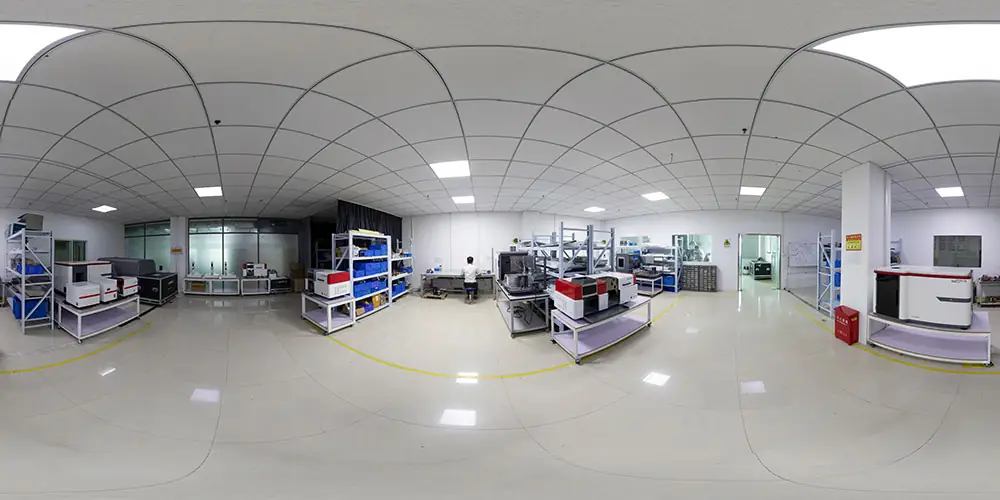
When evaluating an instrument supplier, laboratories may also consider the manufacturer’s production environment, quality-control processes, technical capabilities, and ability to provide application support. These factors do not replace instrument specifications, but they can provide useful context when comparing suppliers for long-term laboratory use.
Which UV-Vis Specifications Matter Most?
For laboratories comparing instruments, the following M-2800 specifications are relevant to routine quantitative applications:
| Specification | Macylab M-2800 | Why It Matters |
| Optical path | Double beam | Helps compensate for changes in light-source conditions |
| Wavelength range | 190–1100 nm | Covers UV and visible analytical applications |
| Bandwidth | 1.0 / 2.0 nm adjustable | Allows selection of spectral resolution |
| Wavelength accuracy | ±0.3 nm | Supports accurate wavelength positioning |
| Wavelength repeatability | 0.1 nm | Supports consistent wavelength setting |
| Photometric accuracy | ±0.2% τ | Supports quantitative absorbance/transmittance measurements |
| Photometric repeatability | 0.1% τ | Supports repeated measurements |
| Stray light | ≤0.02% τ | Helps control unwanted optical signal |
| Stability | 0.0003 A/h @ 500 nm | Supports stable measurements over time |
| Photometric modes | T, A, C, E | Supports different measurement workflows |
| Display | 10-inch touch LCD | Enables direct instrument operation |
| Data output | USB | Supports data transfer and output |
These specifications should be assessed against the requirements of the actual analytical procedure. An instrument specification by itself does not guarantee regulatory compliance or method validation.
Why Can a Double-Beam Configuration Be Useful?
A double-beam design uses sample and reference optical paths. This configuration can help compensate for changes in light-source conditions and support baseline stability during measurement.
For routine laboratory work, this can be useful when measurements need to be repeated under consistent conditions. The value of the configuration still depends on the complete instrument design and the analytical procedure.
How Can Onboard Software Support Routine Quantitative Testing?
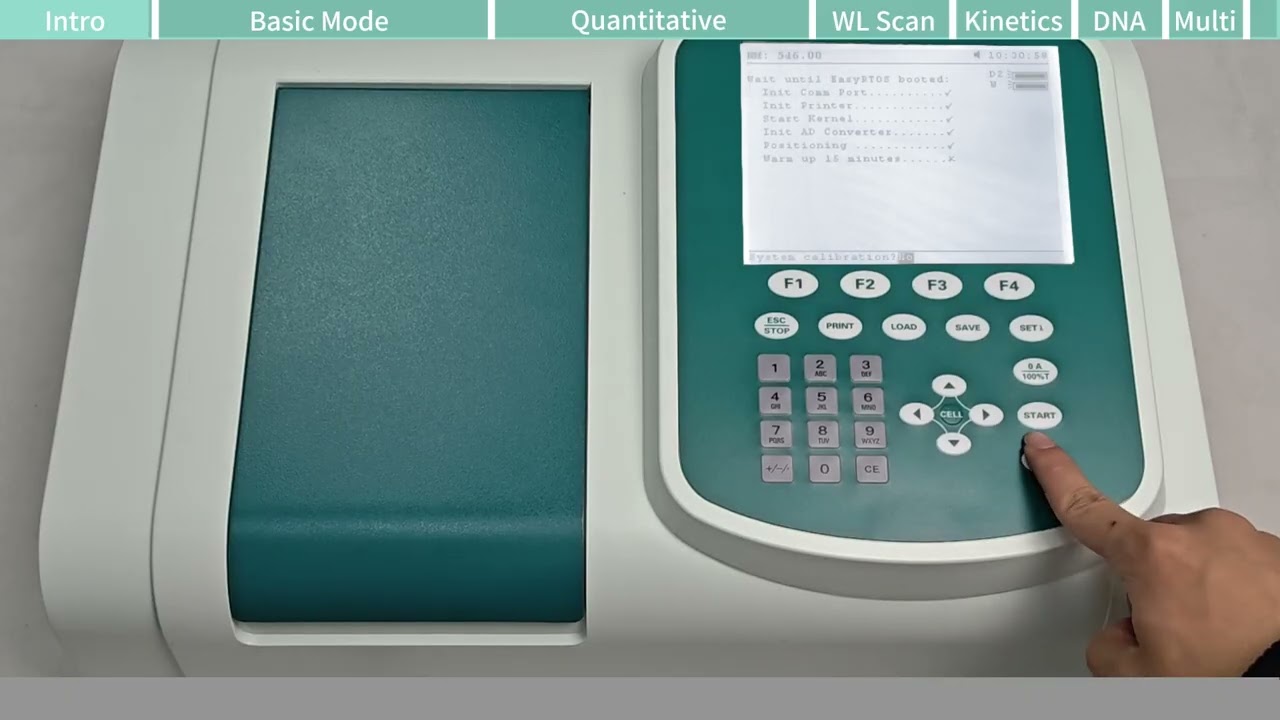
The M-2800 supports functions relevant to routine quantitative workflows, including quantitative measurement, standard quantitative curves, multi-wavelength testing, kinetic testing, and DNA/protein concentration analysis.
It also supports full-band or segmented wavelength scanning, data retention after power-off, and USB output, with optional PC control. These functions can reduce the need to move between separate measurement and calculation steps during routine testing.
The practical benefit is workflow continuity: the operator can establish a quantitative curve, measure samples, and manage resulting data within the instrument’s available functions.
How Can the Macylab M-2800 Support Pharmaceutical Quantitative Analysis?
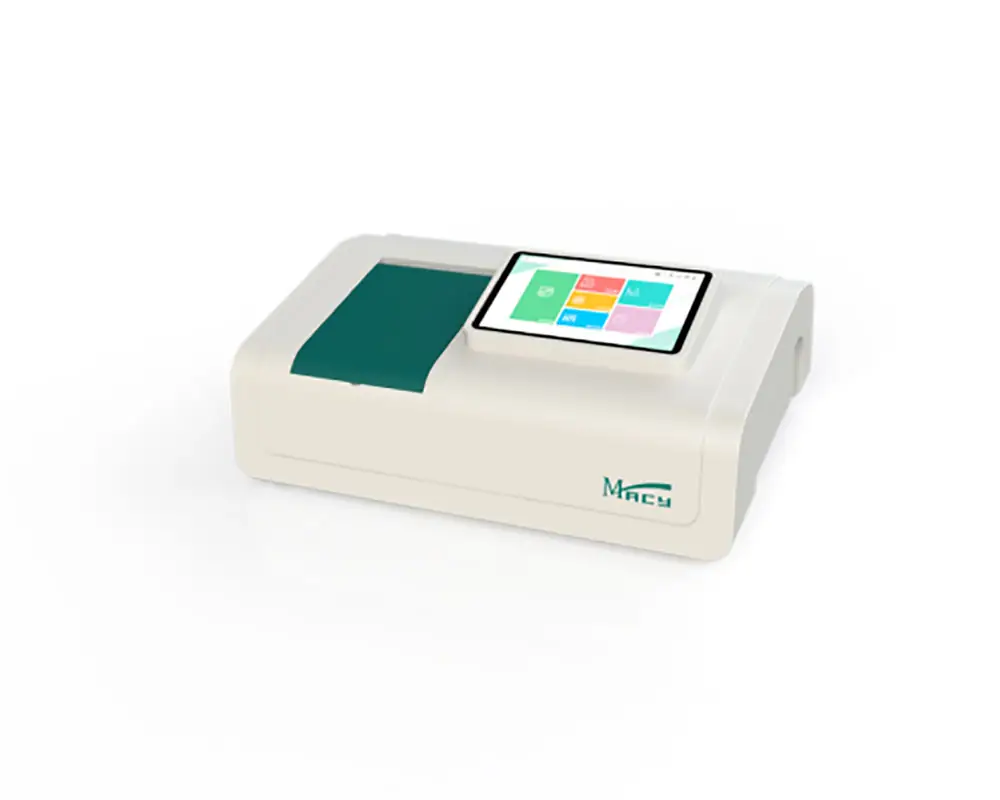
M-2800 Configuration for Routine Quantitative Measurements
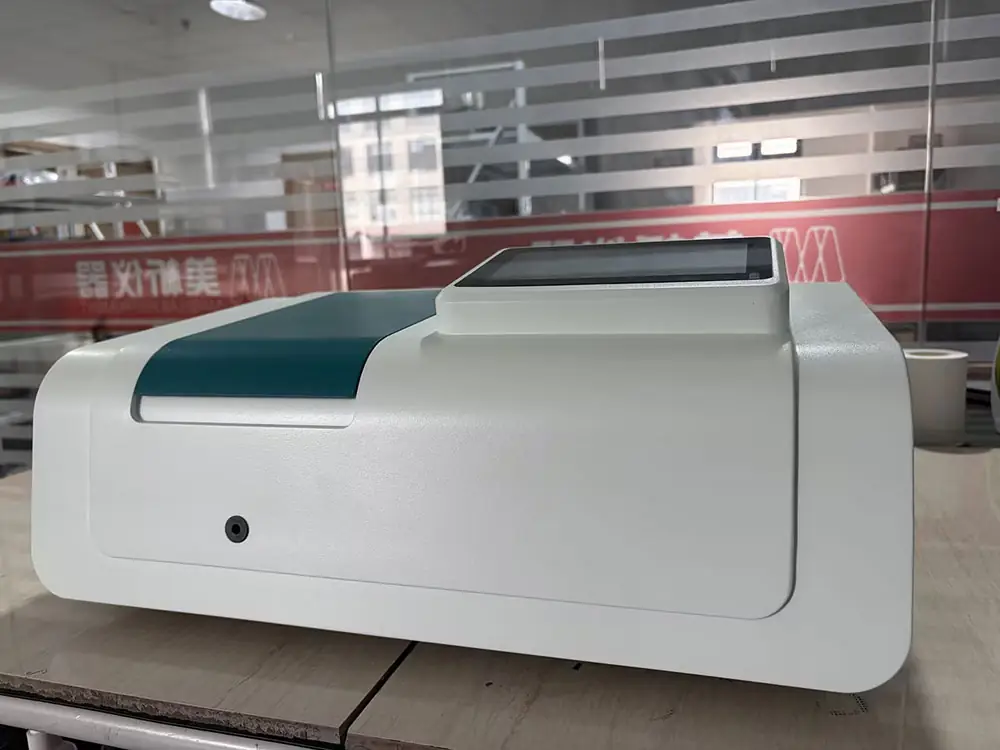
The Macylab M-2800 brings together the optical and measurement functions discussed above in a configuration designed for routine quantitative work. Its double-beam architecture, adjustable bandwidth, wavelength control, photometric performance, and quantitative measurement functions can be evaluated against the requirements of a specific pharmaceutical analytical procedure.
Rather than relying on a single specification, laboratories can assess how the complete configuration fits their measurement range, sample types, calibration workflow, and routine testing requirements.
Supporting Different Pharmaceutical Laboratory Workflows
A typical quantitative workflow can be organized as:
Quantitative measurement → calibration curve → sample measurement → data output
Depending on the application, the M-2800 can also support multi-wavelength measurements, kinetic testing, wavelength scanning, and DNA/protein concentration analysis where relevant.
The appropriate configuration should ultimately be determined by the analytical procedure, sample characteristics, and laboratory workflow rather than by specifications alone.
FAQ
What Is Quantitative Analysis in Pharmacy?
Quantitative analysis determines the amount or concentration of an analyte, such as an API, in a pharmaceutical sample. It can be used for assay, formulation testing, raw-material testing, and routine quality-control measurements.
How Is UV-Vis Spectrophotometry Used in Quantitative Pharmaceutical Analysis?
UV-Vis measures the optical response of a sample at selected wavelengths. With appropriate standards, sample preparation, and calibration, the measured response can be used to determine the concentration of an unknown sample.
What Factors Affect the Accuracy of UV-Vis Quantitative Analysis?
Important factors include wavelength accuracy, photometric performance, sample preparation, dilution, cuvette condition, blank preparation, solvent/background absorption, and spectral interference. Instrument performance is only one part of the overall measurement process.
What Should You Consider When Choosing a UV-Vis Spectrophotometer for Pharmaceutical Analysis?
Consider the wavelength range, wavelength accuracy and repeatability, bandwidth, photometric performance, stability, quantitative software functions, data management, and the level of manufacturer support required by the laboratory.
Conclusion
UV-Vis spectrophotometry can provide a practical approach to pharmaceutical quantification when the analyte, sample matrix, and analytical procedure are suitable. Reliable results depend on the complete workflow, from wavelength selection and sample preparation to calibration, measurement, and method validation.
When comparing UV-Vis spectrophotometer options, laboratories should evaluate wavelength performance, photometric characteristics, bandwidth, stability, software functions, and data handling alongside the requirements of the analytical method.
For laboratories comparing analytical instrument manufacturers, the ability to match instrument capabilities with real laboratory workflows is as important as the specification sheet itself.
With its double-beam configuration, 190–1100 nm wavelength range, adjustable 1.0/2.0 nm bandwidth, and quantitative measurement functions, the Macylab M-2800 can be considered as one instrument option for pharmaceutical laboratory workflows.
Contact Macylab to discuss UV-Vis spectrophotometer configurations for pharmaceutical quantitative analysis and laboratory application requirements.
Below is the link to the video we posted on YouTube about the installation of the UV series accessories.