The Macylab V-1000 is an entry-level, single-beam visible spectrophotometer designed for basic quantitative and photometric testing in the visible spectrum from 325nm to 1000nm. Featuring a fixed 4nm spectral bandwidth, it serves as an economical, practical alternative to traditional analog colorimeters and basic 721-type laboratory instruments.
Controlled by an integrated single-chip microcomputer, the V-1000 combines a manual wavelength adjustment dial with a digital 4-digit LED readout. It provides push-button auto-zero and 100%T baseline calibration, eliminating manual potentiometer balancing and analog needle interpretation in routine chemical and educational assays.
Key Features
Manual Wavelength Tuning: Wavelength is set mechanically using the front-panel rotation dial, while photometric values are clearly presented on the 4-digit digital LED screen.
One-Button 0%T / 100%T Adjustment: Digital baseline calibration is executed automatically via dedicated front-panel keys, removing the need for manual zero-potentiometer adjustment.
Direct Concentration Reading: Supports straightforward quantitative determination. Operators can directly enter standard sample concentrations or input F-factors (K, B factors) via the numeric keypad to read concentration values directly.
Durable Optical Architecture: Built with a 1200 lines/mm grating monochromator, an imported tungsten halogen lamp, and an imported silicon photodiode detector.
Data Export Interfaces: Equipped with an integrated USB port and a standard parallel printer interface for optional connection to a PC or local printer.
Specifications
Parameter
Specification (Official Verified Data)
Optical System
Single Beam, Grating 1200 lines/mm
Wavelength Range
325 ~ 1000 nm
Wavelength Setting
Manual (via front-panel knob)
Spectral Bandwidth
4 nm
Wavelength Accuracy
±2.0 nm
Wavelength Repeatability
1.0 nm
Photometric Display Range
-0.3 ~ 3.0 A | 0 ~ 200% T | 0 ~ 9999 C
Photometric Accuracy
±0.5% T
Photometric Repeatability
0.2% T
Stray Light
≤0.05% T (at 340 nm NaNO2)
Stability
0.001 A/30min @ 500nm
Photometric Mode
T, A, C, E
Display Mode
4-digit LED display
Detector
Imported Silicon Photodiode
Light Source
Imported Tungsten Lamp
Output Interfaces
USB Port, Parallel Printer Port
Power Requirements
AC 220V/50Hz or AC 110V/60Hz | 120W
Dimensions (WDH)
360 × 280 × 190 mm
Net Weight
9 Kg
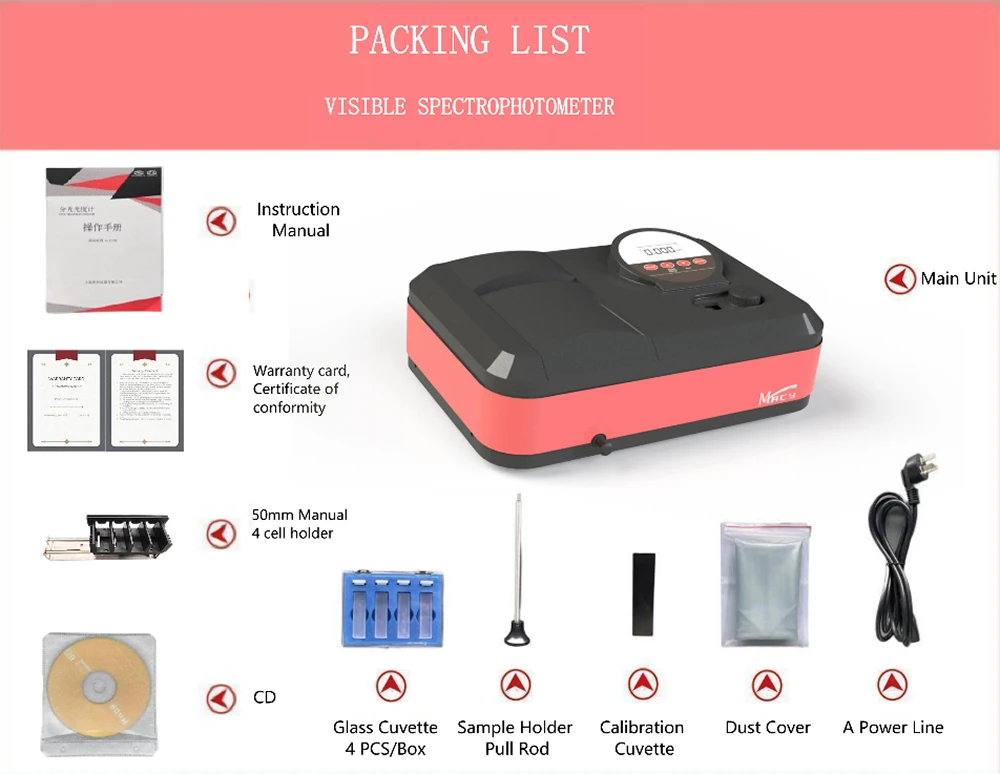
Standard Configuration
Applications
The V-1000 is configured for standard, fixed-wavelength visible spectrophotometric testing:
Educational Laboratories: Demonstrating Beer-Lambert Law principles, chemical stoichiometry, and cell density measurements (OD600) in high school and college curricula.
Water Quality Screening: Routine colorimetric determination of parameters such as phosphates, nitrates, and chemical oxygen demand (COD) in wastewater and effluent monitoring.
Agricultural Analysis: Basic quantitative measurement of extractable nutrients (nitrogen, phosphorus, potassium) in soil and fertilizer extracts.
Routine Industrial QA: Fixed-wavelength absorbance and concentration screening of visual dyes and chemical solutions.
Who is it for?
Teaching Laboratories: Academic departments requiring a durable, entry-level visible spectrophotometer that is simple for students to operate without complex software menus.
Budget-Conscious Facilities: Small water treatment plants, farm cooperatives, and regional QC labs that require routine visible testing at a minimal acquisition cost.
Public and Private Tenders: B2B distributors bidding on tender specifications calling for basic, cost-effective manual visible spectrophotometers.
Why choose it?
Economical Visible Range Analysis: For testing protocols restricted to the 325–1000nm spectrum, the V-1000 eliminates the higher procurement and ongoing lamp maintenance costs of UV-Vis spectrophotometers.
Digital Accuracy over Analog Instruments: Compared to legacy 721 analog colorimeters, the digital microcomputer control provides digital 0%T / 100%T baseline calibration and direct digital readouts, reducing human interpretation error.
Straightforward Maintenance: The pre-aligned tungsten lamp allows for direct in-house replacement without complex optical alignment, minimizing laboratory downtime.
Software features
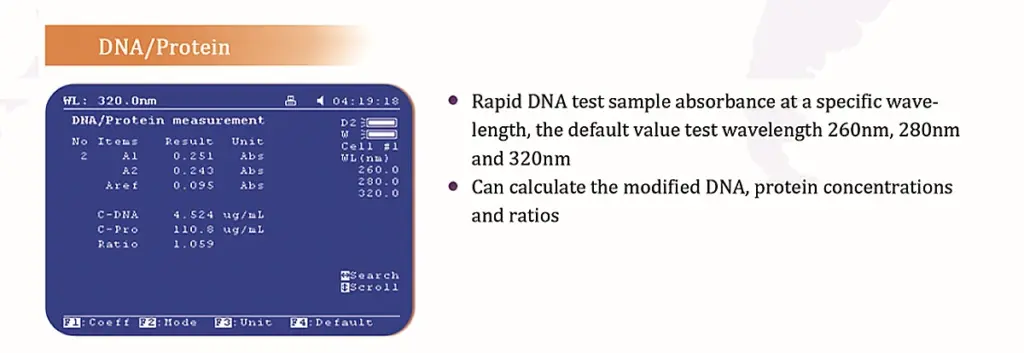
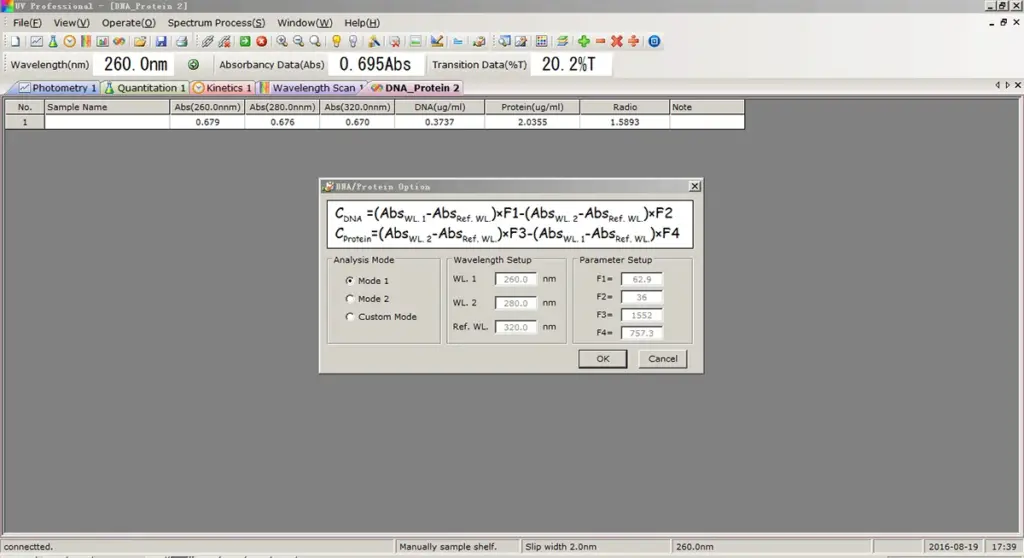
DNA Protein
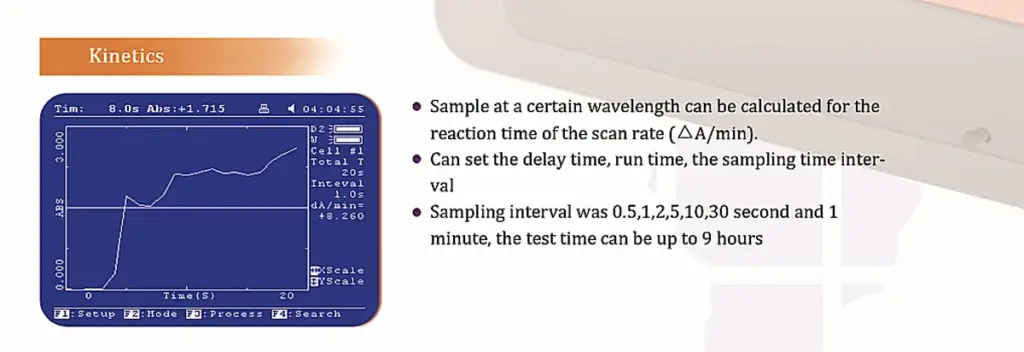
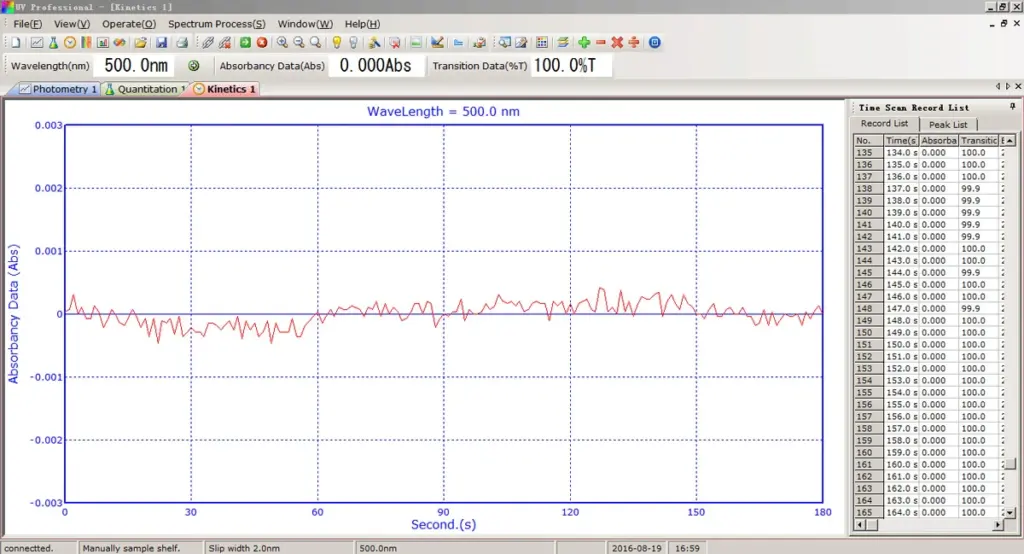
Kinetics
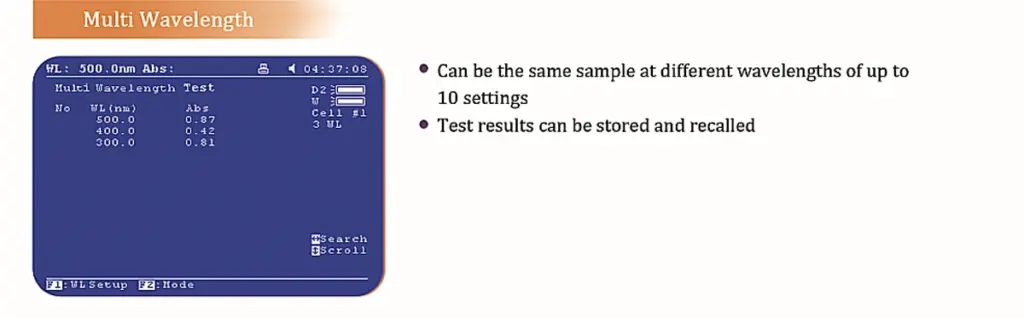
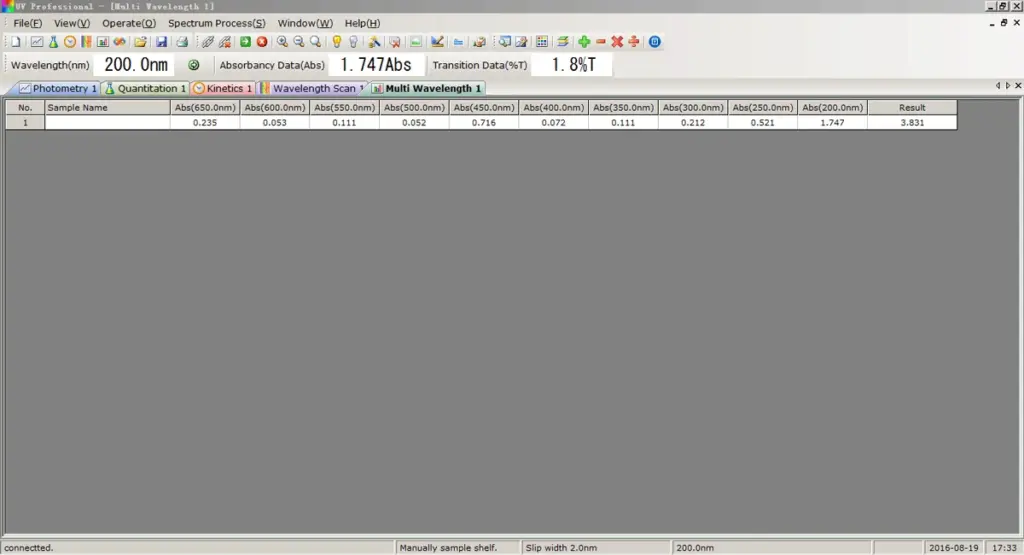
Multi Wavelength
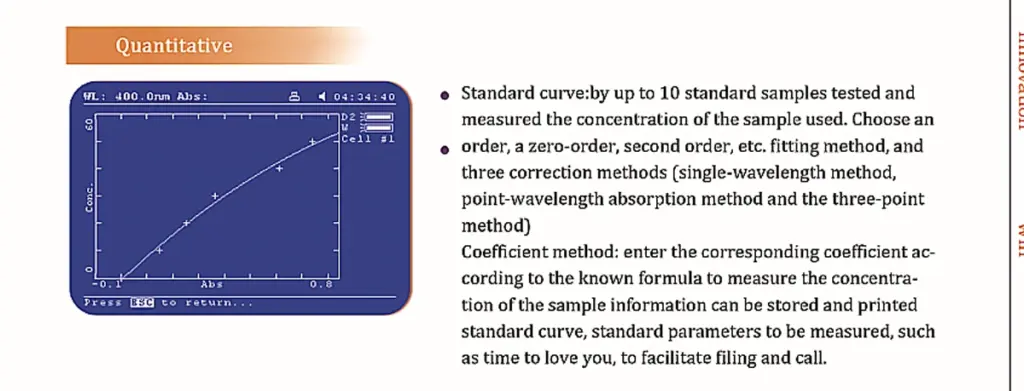
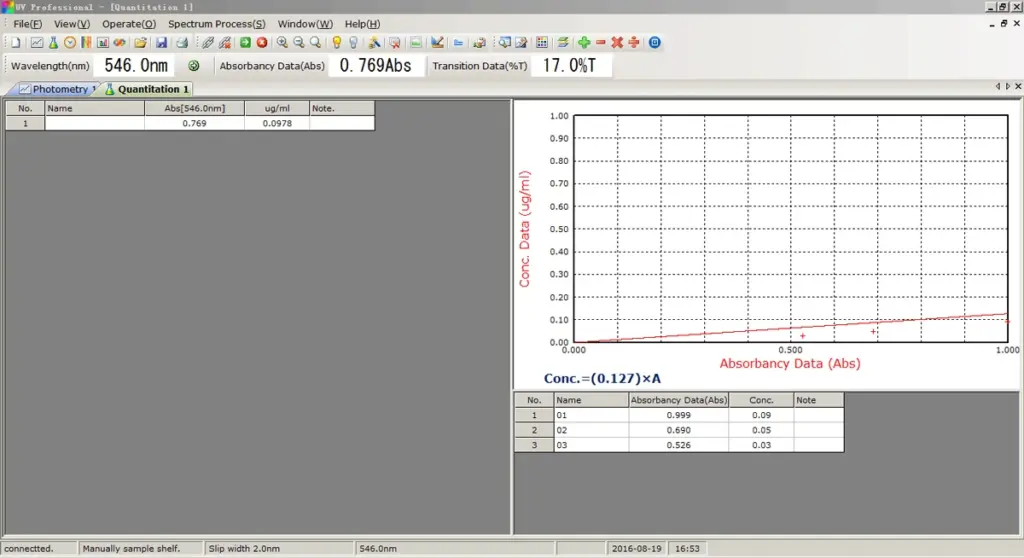
Quantitive
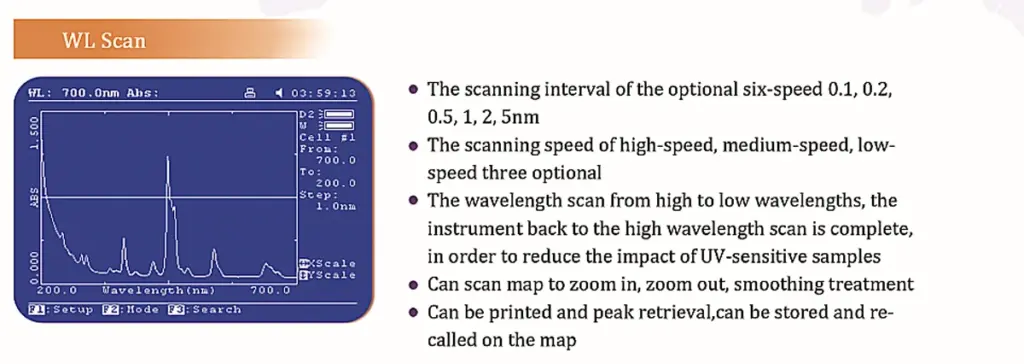
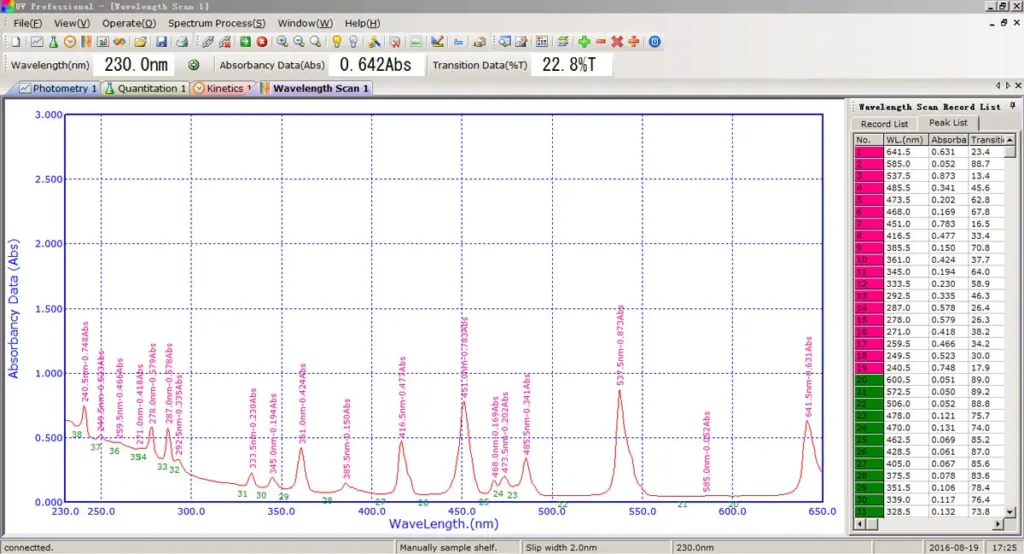
WL Scan
Packaging, Installation & Operation
Packaging & Shipping
After unpacking the instrument, compare the contents with the packing list and check that all items are present and undamaged.
Installation & Setup
Place the spectrophotometer in a suitable location away from direct sunlight, dust, corrosive gases, and strong vibrations. For stable operation, keep it away from strong magnetic or electrical fields and electrical devices that may generate high-frequency fields.
Keep the area around and underneath the instrument clear to allow adequate airflow.
Use the appropriate power cord and connect the instrument to a grounded outlet.
Initial Operation
Turn on the spectrophotometer and allow it to warm up for the recommended time before taking measurements. Follow the instrument’s operating instructions to complete any required system initialization, calibration, or wavelength verification before measurement.
Exhibition
FAQ (Frequently Asked Questions)
No. The V-1000 is a manual-wavelength instrument. Operators must manually set the wavelength using the front dial. For automated scanning across the visible range, higher models with motorized drives (such as the V-1200 or V-1500) are required.
No. Standard quantification of nucleic acids and proteins requires ultraviolet (UV) light at 260nm and 280nm. The V-1000 operates within the visible spectrum (325–1000nm) and cannot perform UV measurements. A UV-Vis model is required for these assays.
No. Quartz cuvettes are required only for ultraviolet testing below 320nm. Because the V-1000 operates between 325nm and 1000nm, standard glass cuvettes or visible-range plastic cuvettes are suitable.
The instrument features automatic 0%T and 100%T baseline calibration. After placing your blank solution in the light path, pressing the corresponding zero/blank button automatically calibrates the system baseline.
Yes. The V-1000 includes a standard parallel printer interface for direct printing and a USB port for data output to a PC running compatible software.