The Macylab V-1200 is a single-beam, microprocessor-controlled visible spectrophotometer designed for quantitative analysis in the visible spectral range of 325nm to 1000nm. Powered by a tungsten halogen lamp and a silicon photodiode detector, the instrument provides reliable absorbance, transmittance, and concentration measurements for routine laboratory workflows.
Unlike basic manual-wavelength models, the V-1200 features an automatic wavelength adjustment system and a 128×64 dots LCD screen. This allows operators to establish standard curves and perform quantitative testing directly on the device without requiring a connected PC, streamlining the testing process for routine quality control and academic applications.
Key Features
Automatic Wavelength Setting: The instrument automatically adjusts and calibrates the wavelength via the keypad, eliminating the mechanical errors associated with manual dial tuning and improving measurement repeatability.
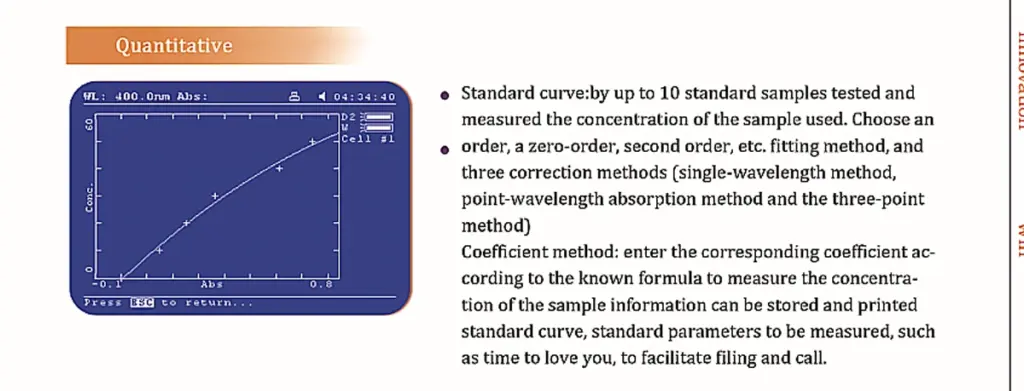
Built-in Quantitative Functions: Operators can establish standard curves directly on the device using up to nine standard samples. Additionally, users can input K and B factors manually to establish a curve for direct concentration reading.
Clear LCD Display: Features a 128×64 dots LCD screen capable of displaying multiple sets of measurement data, standard sample points, and standard curve parameters simultaneously.
Data Management: Built-in memory capacity allows for the storage of multiple sets of measurement data and standard curves. A power-off save function ensures that parameters and data are retained when the instrument is turned off.
Automated Optical Adjustments: Equipped with an auto-zero and 100% adjustment function, as well as automatic color filter switching, reducing manual intervention during multi-point testing.
Specifications
Parameter
Specification
Optical System
Single Beam
Wavelength Range
325 ~ 1000 nm
Wavelength Setting
Automatic
Spectral Bandwidth
2.0 nm
Wavelength Accuracy
±2.0 nm
Wavelength Repeatability
≤0.5 nm
Photometric Display Range
-0.3 ~ 3.0 A | 0 ~ 200% T | 0 ~ 9999 C
Photometric Mode
T, A, C
Display Mode
LCD Screen (128*64 Dots)
Detector
Silicon Photodiode
Light Source
Tungsten Halogen Lamp
Sample Compartment
Fits 5–100 mm cuvettes
Output Interfaces
USB Port, Parallel Printer Port
Power Requirements
AC 220V/50Hz or AC 110V/60Hz
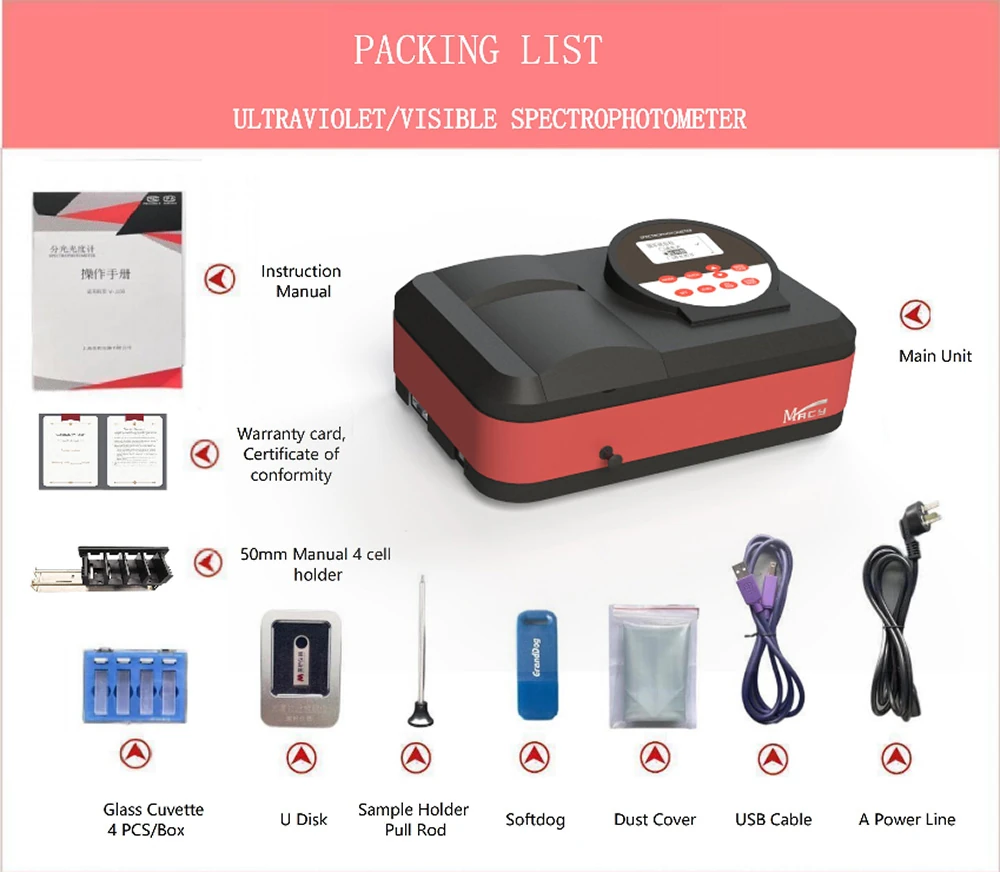
Standard Configuration
Applications
The V-1200 is configured for standard, fixed-wavelength visible spectrophotometric testing:
Water Quality Testing: Colorimetric determination of routine water parameters, such as chemical oxygen demand (COD), phosphate, and ammonia nitrogen.
Agricultural Analysis: Quantitative testing of soil extracts, fertilizers, and plant nutrient elements in agricultural testing stations.
Academic Education: Demonstrating spectrophotometry principles and conducting routine cell density measurements (such as OD600) in high school and university teaching laboratories.
Industrial Quality Control: Monitoring the concentration of dyes, visual color intensity, and liquid reagents in food processing and chemical manufacturing.
Who is it for?
Educational Laboratories: High schools, colleges, and university departments seeking an automated, easy-to-read visible spectrophotometer for chemistry and biology teaching labs.
Small-to-Medium Industrial Labs: Quality control facilities in water treatment plants, farm cooperatives, and chemical factories performing repetitive quantitative tests.
Testing Facilities Upgrading from Manual Models: Laboratories looking to transition from manual-wavelength colorimeters to an automated, LCD-equipped system for improved operational efficiency.
Why choose it?
Operational Independence: The integration of the 128×64 LCD screen and built-in software allows the V-1200 to establish standard curves and display quantitative results as a fully standalone unit, freeing up bench space by removing the need for a dedicated computer.
Reduced Operator Error: The automatic wavelength adjustment and automatic filter switching eliminate the reading discrepancies that can occur when multiple technicians manually turn mechanical dials.
Cost-Effective Visible Analysis: Operating strictly within the 325-1000nm visible spectrum, the V-1200 provides the automated functions of a higher-tier instrument while avoiding the higher purchase and maintenance costs associated with UV-Vis models (which require deuterium lamps and quartz cuvettes).
Software features
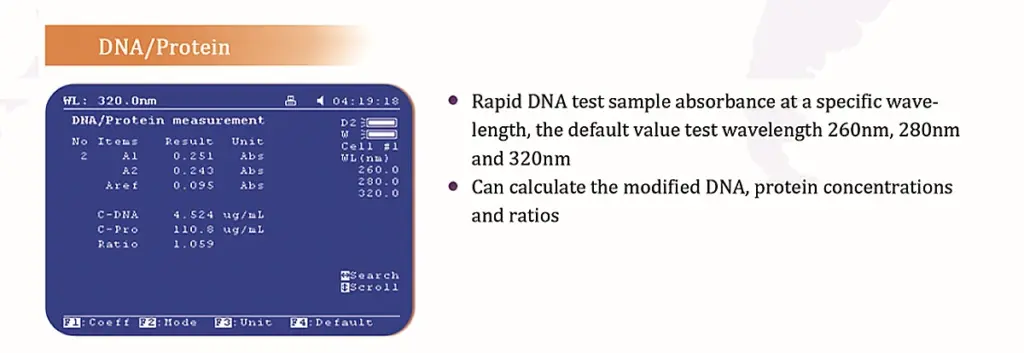
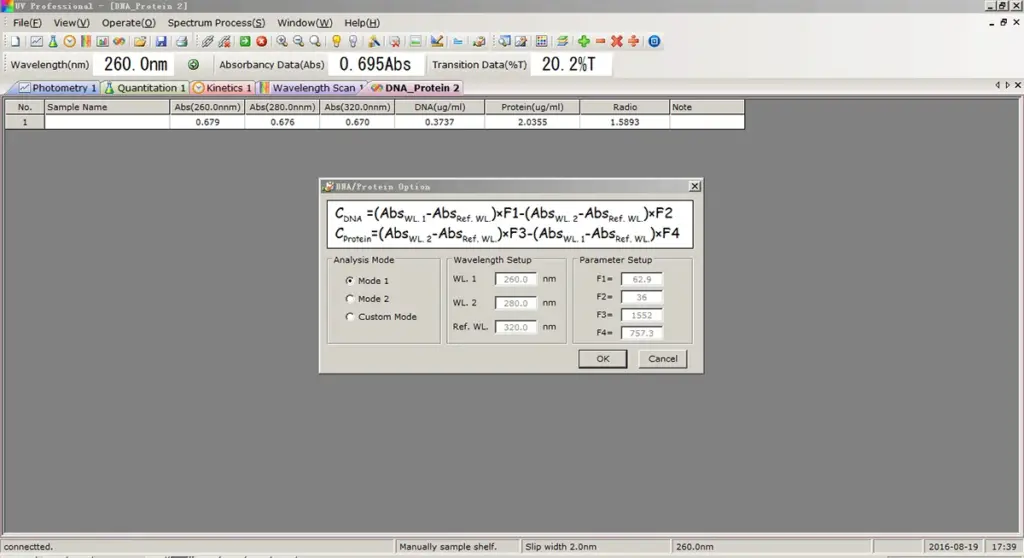
DNA Protein
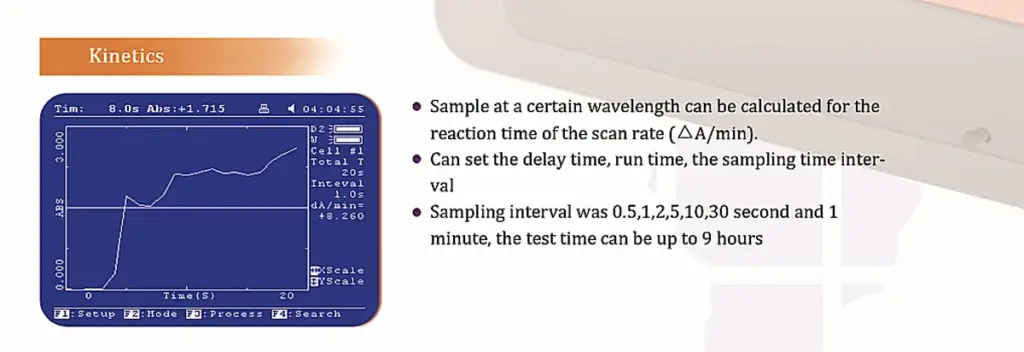
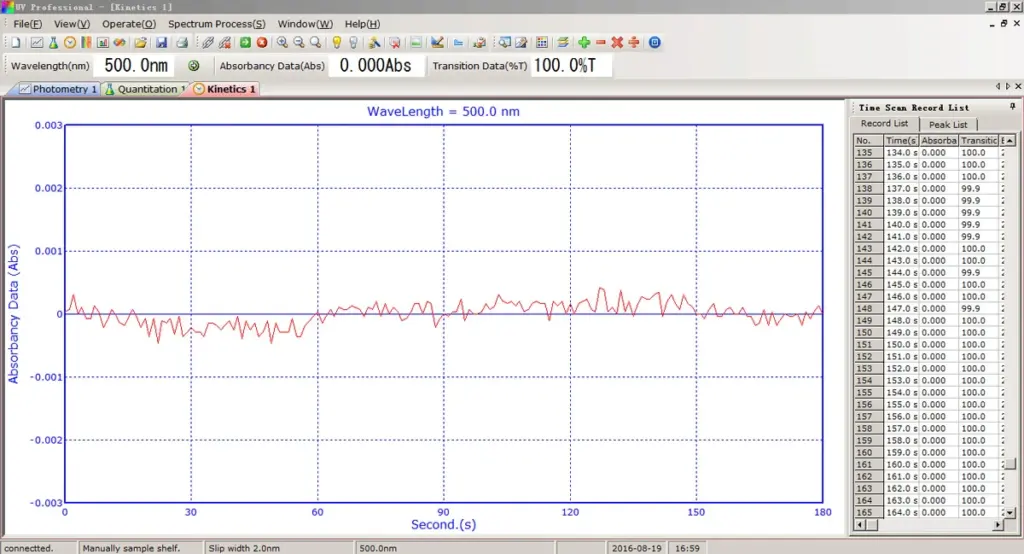
Kinetics
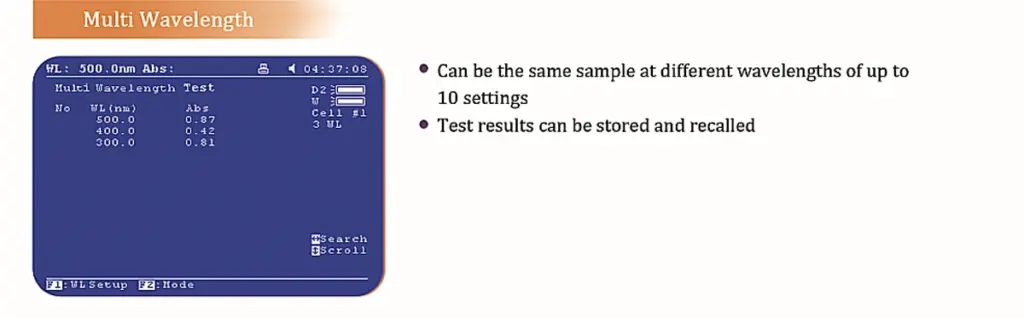
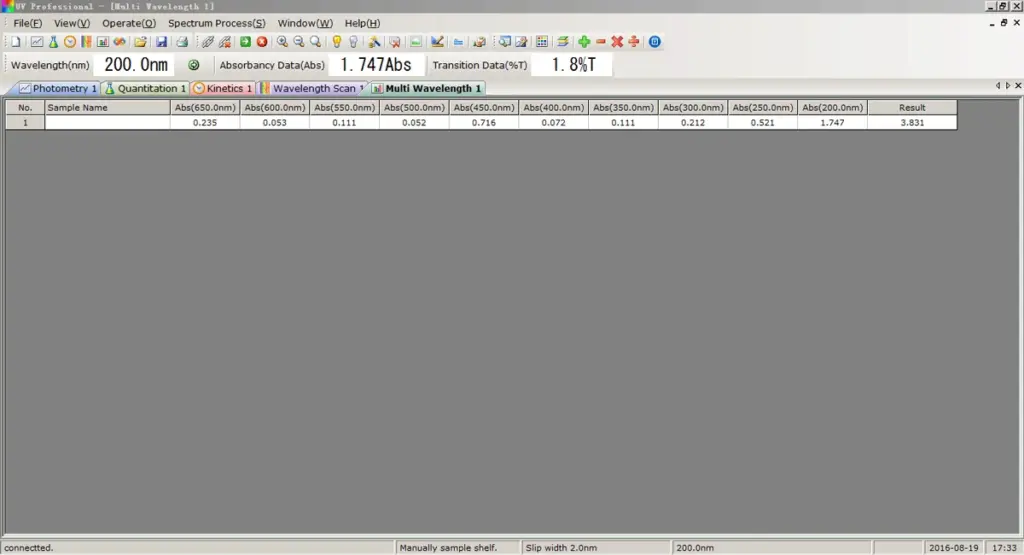
Multi Wavelength
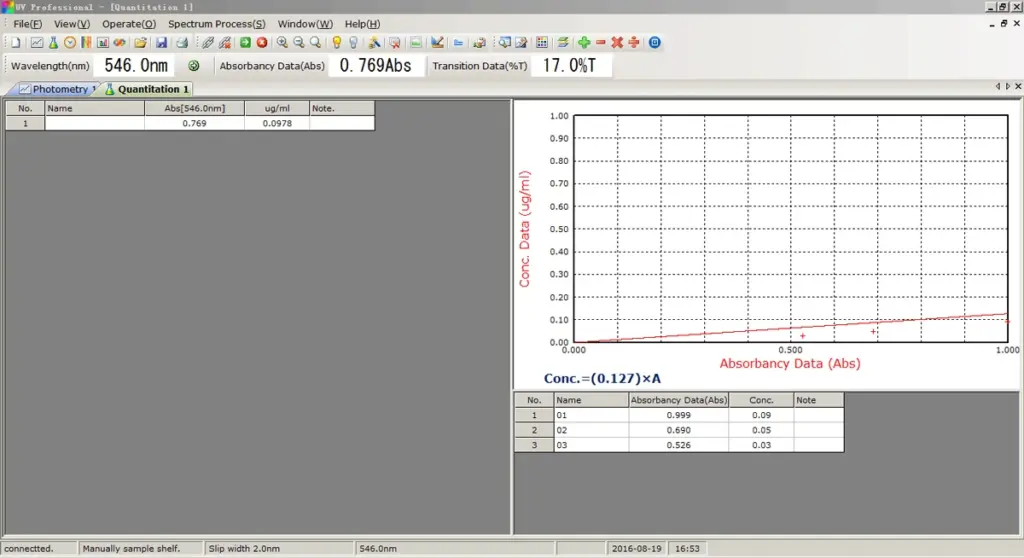
Quantitive
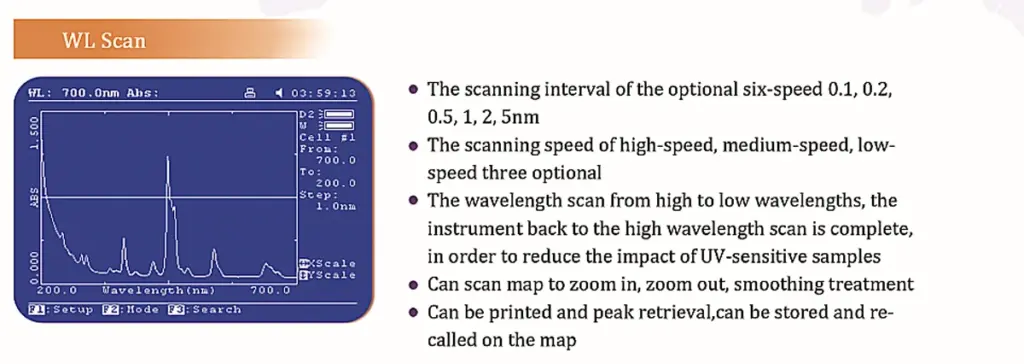
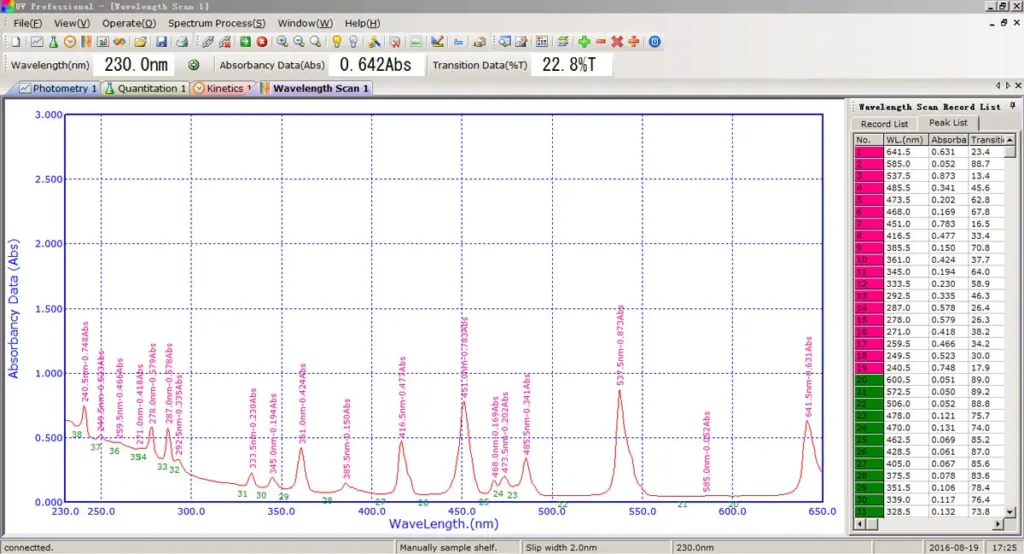
WL Scan
Packaging, Installation & Operation
Packaging & Shipping
After unpacking the instrument, compare the contents with the packing list and check that all items are present and undamaged.
Installation & Setup
Place the spectrophotometer in a suitable location away from direct sunlight, dust, corrosive gases, and strong vibrations. For stable operation, keep it away from strong magnetic or electrical fields and electrical devices that may generate high-frequency fields.
Keep the area around and underneath the instrument clear to allow adequate airflow.
Use the appropriate power cord and connect the instrument to a grounded outlet.
Initial Operation
Turn on the spectrophotometer and allow it to warm up for the recommended time before taking measurements. Follow the instrument’s operating instructions to complete any required system initialization, calibration, or wavelength verification before measurement.
Exhibition
FAQ (Frequently Asked Questions)
No. Standard nucleic acid and protein quantification requires ultraviolet (UV) light, typically at 260nm and 280nm. Because the V-1200’s optical range begins at 325nm, it cannot measure in the ultraviolet spectrum. A UV-Vis spectrophotometer is required for these assays.
No. Quartz cuvettes are specifically required for ultraviolet measurements below 320nm. Because the V-1200 operates entirely in the visible range, standard glass cuvettes or visible-range plastic cuvettes are completely suitable.
No. The instrument is equipped with a 128×64 dots LCD screen and built-in microcomputer software. Operators can establish standard curves directly on the device using up to nine standard samples or by entering the K and B factors manually.
No. The V-1200 features an automatic wavelength adjustment system and automatic switching of color filters, which are controlled digitally via the front keypad.
Yes, the instrument includes a standard parallel printer port, allowing you to connect a compatible local printer to print measurement data without routing it through a PC.