
Part I: Reagents
Purified water, potassium borohydride, sodium hydroxide, hydrochloric acid, nitric acid, thiourea, cobalt solution, cadmium standard solution.
Part II: Instrumentation and Equipment
AFS-6801 atomic fluorescence photometer, temperature-controlled electric furnace, fume hood.
Part III: Cadmium Standard Series
1. Concentration: 0, 0.2, 1.0, 2.0, 4.0ug/L;
2. Medium: Each 100ml solution contains 1.0g thiourea, 0.2mg cobalt ions, and 1.0ml hydrochloric acid solution.
2. Medium: Each 100ml solution contains 1.0g thiourea, 0.2mg cobalt ions, and 1.0ml hydrochloric acid solution.
Part IV: Sample Handling
1. Concentration: 0, 0.2, 1.0, 2.0, 4.0ug/L;
2. Medium: Each 100ml solution contains 1.0g thiourea, 0.2mg cobalt ions, and 1.0ml hydrochloric acid solution.
2. Medium: Each 100ml solution contains 1.0g thiourea, 0.2mg cobalt ions, and 1.0ml hydrochloric acid solution.
Part III: Cadmium Standard Series
According to GB/T23349 for pretreatment;
Accurately weigh about 5g (1/10,000th of a balance) in a 250ml triangular flask, add 30ml of hydrochloric acid and 10ml of nitric acid, heat at low temperature on a temperature-controlled electric furnace, and after the reaction is stable, gradually increase the temperature under the premise of no splashing, and finally steam the sample to gradually dry, remove it slightly cold, add 5ml of hydrochloric acid and 5ml of pure water, shake well to dissolve the lump (off-white), filter and transfer to a 100ml volumetric flask.
Before getting on the machine, dilute the treated solution appropriately according to the limit of cadmium in the sample, so that the final concentration is within the curve range.
Accurately weigh about 5g (1/10,000th of a balance) in a 250ml triangular flask, add 30ml of hydrochloric acid and 10ml of nitric acid, heat at low temperature on a temperature-controlled electric furnace, and after the reaction is stable, gradually increase the temperature under the premise of no splashing, and finally steam the sample to gradually dry, remove it slightly cold, add 5ml of hydrochloric acid and 5ml of pure water, shake well to dissolve the lump (off-white), filter and transfer to a 100ml volumetric flask.
Before getting on the machine, dilute the treated solution appropriately according to the limit of cadmium in the sample, so that the final concentration is within the curve range.
Part V: Fluorescence conditions
1. Lamp current: main 60mA, auxiliary 30mA;
2. Negative high voltage: 230V;
3. Atomizer height: 7~8mm;
4. Integration method: peak area.
2. Negative high voltage: 230V;
3. Atomizer height: 7~8mm;
4. Integration method: peak area.
Part VI: Curves and Results
Standard curve report
Element:Cd path:B print time:2022-03-03
correlation:0.99949 curve equations:1164.5634C-54.5515
Element:Cd path:B print time:2022-03-03
correlation:0.99949 curve equations:1164.5634C-54.5515
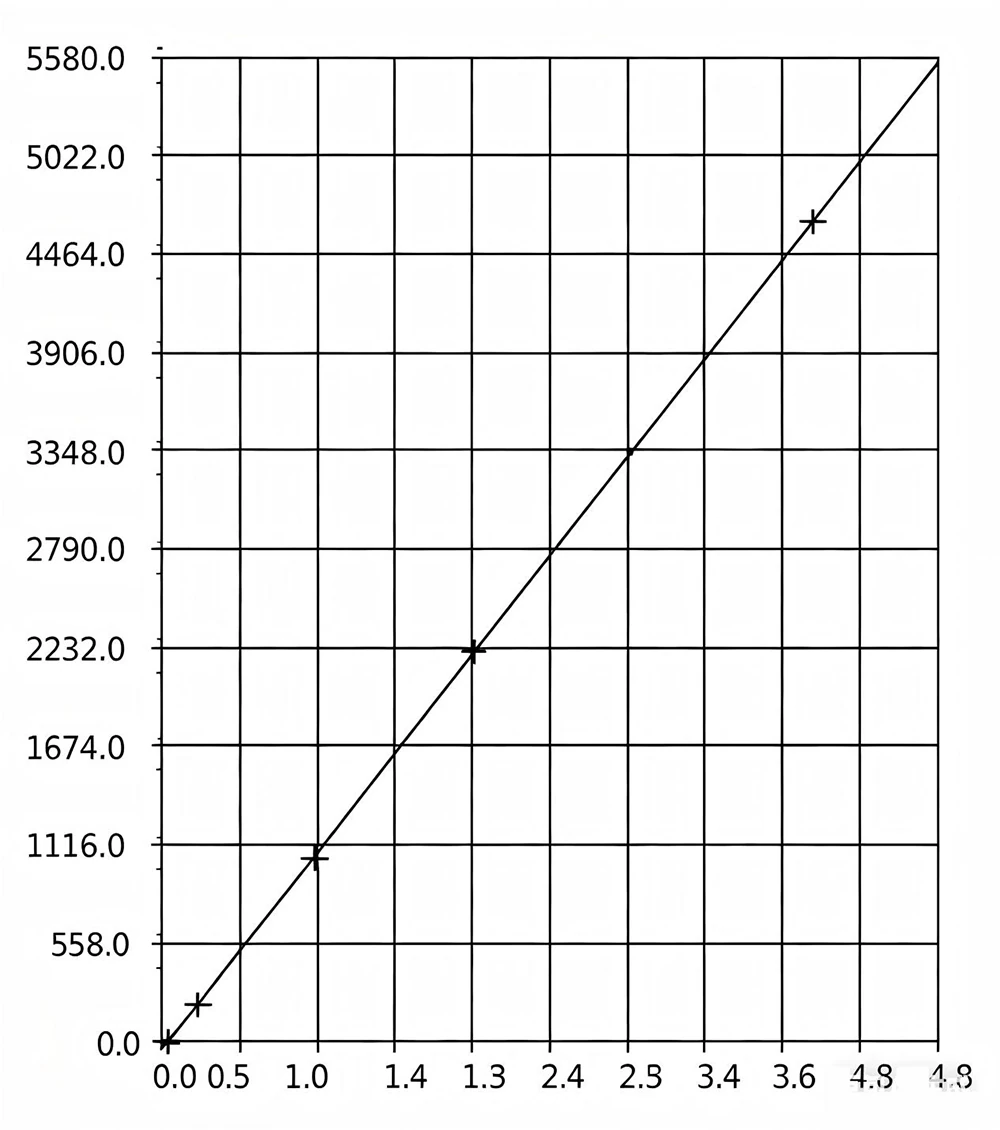
| No. | Sample item | Concentration | Unit | Fluorescence degree | result |
| 1 | STD.1 | -2.88 | True | ||
| 2 | STD.2 | 0.200 | 211.51 | True | |
| 3 | STD.3 | 1.000 | 1040.91 | True | |
| 4 | STD.4 | 2.000 | 2211.9 | True | |
| 5 | STD.5 | 4.000 | 4650.66 | True |
Sample testing report
Element:Cd Path:B print time:2022-03-03
Element:Cd Path:B print time:2022-03-03
| No. | Sample name | Actual con. | Con. | unit | Testing time |
| 1 | Blank sample 1 | 0.077 | 2022-03-02 14:48:39 | ||
| 2 | Blank sample 2 | 0.076 | 2022-03-02 14:50:35 | ||
| 3 | Usual fertilizer1 | 8.197e-2mg/kg | 0.434 | ug/l | 2022-03-02 14:52:33 |
| 4 | Usual fertilizer 2 | 9.122e-2mg/kg | 0.457 | ug/l | 2022-03-02 14:54:30 |
| 5 | Rice fertilizer 1 | 1.073e-1mg/kg | 0.536 | ug/l | 2022-03-02 14:56:26 |
| 5 | Rice fertilizer 2 | 1.086e-1mg/kg | 0.564 | ug/l | 2022-03-02 14:58:23 |
Part VII: Instrument Parameters
1. Instrument use
It is suitable for trace analysis of 12 elements such as arsenic, mercury, selenium, tin, lead, bismuth, antimony, tellurium, germanium, cadmium, zinc, and gold in samples.
2. Working environment
* Power supply: 220V, 50Hz
* Temperature: 15~35°C (strictly 15~25°C)
* Relative humidity: ≤90%
* Temperature: 15~35°C (strictly 15~25°C)
* Relative humidity: ≤90%
3. Technical parameters
* Detection Limit (D.L.):
As、Se、Pb、Bi、Sb、Te、Sn < 0.01µg/L
Hg、Cd <0.001µg/L
Ge <0.05μg/L
Zn <1.0μg/L
Au <3.0μg/L
* Precision (RSD) ≤0.7%
* Linear range: greater than three orders of magnitude.
As、Se、Pb、Bi、Sb、Te、Sn < 0.01µg/L
Hg、Cd <0.001µg/L
Ge <0.05μg/L
Zn <1.0μg/L
Au <3.0μg/L
* Precision (RSD) ≤0.7%
* Linear range: greater than three orders of magnitude.
4. Instrument host
* Dual-channel and two-element measurements can be measured at the same time.
* Optical path: dual-beam single-detector optical system, multi-lamp design, full-channel dual-beam peer-to-peer system design, with excellent channel consistency, anti-interference stray light influence, improve the accuracy and stability of the instrument.
* Light source system: The hollow core cathode lamp adopts a new pulse modulation/constant current drive power supply mode.
* The hollow-core cathode lamp adopts coding technology, and the instrument automatically identifies the hollow-core cathode lamp, and can monitor the working status and service life of the hollow-core cathode lamp
* Detection system: imported photomultipier tube.
* Injection system: Syringe pump sequential flow injection device. (Sample blanks are introduced alternately to avoid cross-contamination of samples and ensure measurement accuracy)
* The new intermittent flow without residual vapor generation reaction system is adopted, and the reaction efficiency is higher
* The high-efficiency surge two-stage chemical gas-liquid reaction separation device is adopted, the chemical reaction is more complete, and the gas-liquid separation effect is better, especially suitable for the determination of complex samples such as rock and mineral, soil, etc
* It has a carrier gas steady flow device, which can not only eliminate the bubbles generated by potassium borohydride online, but also reduce the diffusion effect between reagents and improve the stability of the instrument
* It has a two-stage vapor-liquid separation device, the first stage of chemical gas phase gas-liquid separation, and the second-stage water-sealed vapor-liquid separation device can efficiently remove water without manual drainage
* Adopt a new gas-saving gas circuit design, which can control and close the air source at any time, save argon consumption, and reduce the operating cost of the instrument
* The instrument circuit adopts strong and weak current separation and the latest high concentration module.
* Adopt a closed quartz atomizer.
* The instrument adopts a low-temperature furnace atom.
* It has an external filtered argon hydrogen flame real-time observation window, which can directly observe the flame state in real time.
* Optical path: dual-beam single-detector optical system, multi-lamp design, full-channel dual-beam peer-to-peer system design, with excellent channel consistency, anti-interference stray light influence, improve the accuracy and stability of the instrument.
* Light source system: The hollow core cathode lamp adopts a new pulse modulation/constant current drive power supply mode.
* The hollow-core cathode lamp adopts coding technology, and the instrument automatically identifies the hollow-core cathode lamp, and can monitor the working status and service life of the hollow-core cathode lamp
* Detection system: imported photomultipier tube.
* Injection system: Syringe pump sequential flow injection device. (Sample blanks are introduced alternately to avoid cross-contamination of samples and ensure measurement accuracy)
* The new intermittent flow without residual vapor generation reaction system is adopted, and the reaction efficiency is higher
* The high-efficiency surge two-stage chemical gas-liquid reaction separation device is adopted, the chemical reaction is more complete, and the gas-liquid separation effect is better, especially suitable for the determination of complex samples such as rock and mineral, soil, etc
* It has a carrier gas steady flow device, which can not only eliminate the bubbles generated by potassium borohydride online, but also reduce the diffusion effect between reagents and improve the stability of the instrument
* It has a two-stage vapor-liquid separation device, the first stage of chemical gas phase gas-liquid separation, and the second-stage water-sealed vapor-liquid separation device can efficiently remove water without manual drainage
* Adopt a new gas-saving gas circuit design, which can control and close the air source at any time, save argon consumption, and reduce the operating cost of the instrument
* The instrument circuit adopts strong and weak current separation and the latest high concentration module.
* Adopt a closed quartz atomizer.
* The instrument adopts a low-temperature furnace atom.
* It has an external filtered argon hydrogen flame real-time observation window, which can directly observe the flame state in real time.
5. Technical index data processing system
* It can be switched offline or connected at will
* Single/multi-window open arbitrarily
* Single/multi-database optional
* Manage sample calibration to further improve measurement accuracy
* Using Windows98/2000/XP Chinese window operation software, it can realize automatic system diagnosis, automatic sample measurement, standard curve method measurement, and a variety of report formats
* Single/multi-window open arbitrarily
* Single/multi-database optional
* Manage sample calibration to further improve measurement accuracy
* Using Windows98/2000/XP Chinese window operation software, it can realize automatic system diagnosis, automatic sample measurement, standard curve method measurement, and a variety of report formats
Ready to Implement This Solution?
Contact our application specialists for a customized quote and method validation.