
Key words :ICP-AES metal elements
Introduction: The existence of some trace metal elements in crude oil has adverse effects on petroleum processing, storage and transportation process and environmental protection. Therefore, the type and content of harmful elements in crude oil is an important index to evaluate the quality of crude oil. At present, the commonly used methods for the determination of trace elements in crude oil are atomic absorption spectrometry, atomic fluorescence spectrometry, ultraviolet visible spectrophotometry and so on. With the development and maturity of atomic emission spectroscopy, inductively coupled plasma atomic emission spectrometry (ICP-AES) has been widely used in the elemental analysis of crude oil because of its features such as simultaneous determination of multiple elements, wide linear range, high sensitivity, small matrix effect, high precision, fast and accurate. A rapid method for the determination of 14 metal elements including Barium, calcium, cadmium, cobalt, chromium, copper, iron, potassium, magnesium, sodium, nickel, lead, vanadium and manganese in pipeline crude oil was established by ICP-AES.
Instruments and reagent materials
Macylab ICP 6800S Inductively Coupled Plasma Emission Spectrometer (petrochemical machine);
Muffle furnace;
Quartz volumetric bottles include 100 mL and 50 mL, soaked in 10% hydrochloric acid, 10% nitric acid, rinsed with deionized water, dried in the oven for use, quartz crucible (100 mL), boiled in 10% hydrochloric acid solution, burned at 750℃ in Muffle furnace for 2 h, cooled to room temperature and stored in the dryer for use.
Standard reserve liquid containing barium, calcium, cadmium, cobalt, chromium, copper, iron, potassium, magnesium, sodium, nickel, lead, vanadium and manganese, 1000mg/L; Nitric acid (68%), excellent purity; Argon, purity greater than or equal to 99999%.
Muffle furnace;
Quartz volumetric bottles include 100 mL and 50 mL, soaked in 10% hydrochloric acid, 10% nitric acid, rinsed with deionized water, dried in the oven for use, quartz crucible (100 mL), boiled in 10% hydrochloric acid solution, burned at 750℃ in Muffle furnace for 2 h, cooled to room temperature and stored in the dryer for use.
Standard reserve liquid containing barium, calcium, cadmium, cobalt, chromium, copper, iron, potassium, magnesium, sodium, nickel, lead, vanadium and manganese, 1000mg/L; Nitric acid (68%), excellent purity; Argon, purity greater than or equal to 99999%.
Sample handing
Weigh 30.0 g crude oil sample after mixing with electric mixer. The sample is placed in a crucible, heated on an electronic multipurpose furnace, and burned freely until the fire is extinguished. Then the residue is transferred to a high-temperature Muffle furnace and burned for a certain period of time until the residue completely becomes ash. The residue is taken out and cooled to room temperature, then 15 mLHNO3 is added and dissolved on an electric heating plate. Heat and concentrate to 1-2 mL, cool and transfer to 50 mL volumetric bottle, dilute to scale, shake well. The sample treatment of blank test is carried out according to the above method except that the sample to be tested is not added.
Instrument Operating Condition
Through the recommended instrument conditions and repeated exploration tests, the instrument conditions were optimized as follows: radio frequency power 1150W, atomizer pressure 207.5kPa, auxiliary gas flow rate 0.5L /min, peristaltic pump speed 100 r/min. The analytical spectral line data of selected elements were shown in Table 1.
Table 1. Elemental analysis spectral line data and series
| Element | Wavelength/nm | Level | Element | Wavelength/nm | Level |
| Ca | 315.887 | 107 | Co | 237.862 | 142 |
| Fe | 259.940 | 130 | Cr | 283.563 | 119 |
| Ni | 231.604 | 445 | K | 769.896 | 44 |
| Mn | 257.610 | 131 | Na | 589.592 | 57 |
| Mg | 285.213 | 118 | V | 290.882 | 116 |
| Cu | 327.396 | 103 | Cd | 226.502 | 449 |
| Ba | 493.409 | 68 | Pb | 220.353 | 152 |
Working curve drawing
Standard reserve solution containing barium, calcium, cadmium, cobalt, chromium, copper, iron, potassium, magnesium, sodium, nickel, lead, vanadium and manganese (1000 mg/L) was configured into standard use solution of 100 mg/L.
Ca, V, Pb standard liquid 2.0, 4.0, 6.0, 8.0, 10.0 mL, Fe, Ni standard liquid 1.0, 2.0, 3.0, 4.0, 5.0 mL, Mn, Mg, Cu, Co, Cd, Ba, Cr standard liquid 0.1, 0.4, 1.0, 1.4, 20 mL in 100 mL volumetric bottle, Ca, V, Pb(2.0, 4.0, 6.0, 8.0, 10.0mg/L), Fe, Ni(L.0, 2.0, 30, 4.0, 5.0 mg/ l), Mn, Mg, Cu, Co, Cd, Ba, Cr (0.1, 0.4, 1.0, 1.4, 2.0mg/L) A series of mixed standard solutions a, b, c, d, e.
Na was removed and K standard solution 2.0, 4.0, 6.0, 8.0, 10.0 mL was used in 100 mL volumetric bottle and configured into B series mixed standard solution f, g, h, i, j containing Na and K(2.0, 4.0, 6.0, 8.0, 10.0 mg/L).
Ca, V, Pb standard liquid 2.0, 4.0, 6.0, 8.0, 10.0 mL, Fe, Ni standard liquid 1.0, 2.0, 3.0, 4.0, 5.0 mL, Mn, Mg, Cu, Co, Cd, Ba, Cr standard liquid 0.1, 0.4, 1.0, 1.4, 20 mL in 100 mL volumetric bottle, Ca, V, Pb(2.0, 4.0, 6.0, 8.0, 10.0mg/L), Fe, Ni(L.0, 2.0, 30, 4.0, 5.0 mg/ l), Mn, Mg, Cu, Co, Cd, Ba, Cr (0.1, 0.4, 1.0, 1.4, 2.0mg/L) A series of mixed standard solutions a, b, c, d, e.
Na was removed and K standard solution 2.0, 4.0, 6.0, 8.0, 10.0 mL was used in 100 mL volumetric bottle and configured into B series mixed standard solution f, g, h, i, j containing Na and K(2.0, 4.0, 6.0, 8.0, 10.0 mg/L).
Testing
Under the set instrument test conditions, the metal content of the standard solution is
measured, and the working curve is drawn according to the measured results. According to the working curve, the metal element content of the sample is determined under the set instrument test conditions.
measured, and the working curve is drawn according to the measured results. According to the working curve, the metal element content of the sample is determined under the set instrument test conditions.
Result and discussion
The choice of ashing conditions
Ashing time A batch of crude oil samples were selected and treated at ashing temperature of 500℃,550℃,650℃,700℃ and ashing time of 20, 25, 30 and 40h, respectively. The results show that when the ashing time is 3 h, the ashing is complete.
When the ashing temperature is 550 ℃ , the measured value of each metal element content is basically the highest. This is because at 500℃ the sample did not complete the ash, the remaining small carbon particles are easy to absorb metal elements, and it is difficult to dissolve with acid; At 650℃ and 700℃ , the ashing temperature is too high, which causes the volatilization of elements and the retention of the crucible wall, so that the measured value of each metal element content is low. So the ashing temperature was chosen at 550 ℃.
When analyzing the content of metal elements in crude oil, the crucible ashing method is used to treat the sample. Quartz crucible is suitable for the melting crucible during the ashing of pipeline crude oil. The suitable ashing conditions are as follows: temperature 550 ℃, time 3 h.
The inductively coupled plasma atomic emission spectrophotometer is used for the determination of metal elements in pipeline crude oil. It is simple, rapid and accurate to determine many elements at the same time by treating the sample at one time. The detection limits of all metal elements ranged from 0 000 6 to 0.723 omg/L. The relative standard deviations of all other metal elements except cadmium were less than 7.0%, and the recoveries were between 91% and 115%.
Ashing time A batch of crude oil samples were selected and treated at ashing temperature of 500℃,550℃,650℃,700℃ and ashing time of 20, 25, 30 and 40h, respectively. The results show that when the ashing time is 3 h, the ashing is complete.
When the ashing temperature is 550 ℃ , the measured value of each metal element content is basically the highest. This is because at 500℃ the sample did not complete the ash, the remaining small carbon particles are easy to absorb metal elements, and it is difficult to dissolve with acid; At 650℃ and 700℃ , the ashing temperature is too high, which causes the volatilization of elements and the retention of the crucible wall, so that the measured value of each metal element content is low. So the ashing temperature was chosen at 550 ℃.
When analyzing the content of metal elements in crude oil, the crucible ashing method is used to treat the sample. Quartz crucible is suitable for the melting crucible during the ashing of pipeline crude oil. The suitable ashing conditions are as follows: temperature 550 ℃, time 3 h.
The inductively coupled plasma atomic emission spectrophotometer is used for the determination of metal elements in pipeline crude oil. It is simple, rapid and accurate to determine many elements at the same time by treating the sample at one time. The detection limits of all metal elements ranged from 0 000 6 to 0.723 omg/L. The relative standard deviations of all other metal elements except cadmium were less than 7.0%, and the recoveries were between 91% and 115%.
Machine parameters
Macylab ICP-6800S Inductively Coupled Plasma Optical Emission Spectrophotometer
Product introduction
ICP-6800 series inductively coupled plasma emission spectrometer is an inductively coupled plasma emission spectrometer developed by our company after many years of technology accumulation. It is used to determine the content of trace and trace metallic elements or non-metallic elements in various substances (which can be dissolved in hydrochloric acid, nitric acid, hydrofluoric acid, etc.), with high degree of automation, easy operation, stable and reliable. At present, the instrument is widely used in rare earth, geology, metallurgy, chemical industry, environmental protection, clinical medicine, petroleum products, semiconductors, food, biological samples, criminal science, agricultural research and other fields.
Working environment
Storage and transportation temperature :15℃-25℃
Storage and transportation relative humidity :≤ 70%
Atmospheric pressure :86-106 kPa
Power supply adaptability :220±10v 50-60MHz
Working humidity :≤ 70%
Operating temperature :15℃-30℃
Storage and transportation relative humidity :≤ 70%
Atmospheric pressure :86-106 kPa
Power supply adaptability :220±10v 50-60MHz
Working humidity :≤ 70%
Operating temperature :15℃-30℃
About us
Shanghai Macylab Instrument Inc. profile
Shanghai Macylab Instrument Inc. (Macylab), is a high-tech enterprise with independent intellectual property rights, the United States analysis of the entrepreneurial concept of “science and technology – because you change”, and take this as the purpose of the enterprise, continuous exploration, bold innovation. Especially in the field of analytical testing instruments, we have continuously developed advanced products, making us a supplier of high-quality instrument resources.
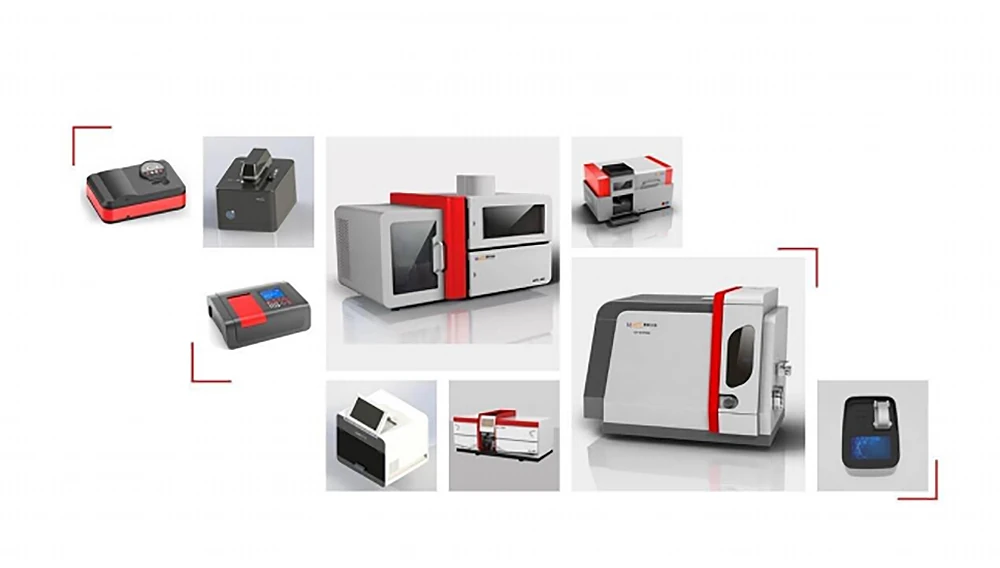
Macylab main spectral instruments visible spectrophotometer, UV-visible spectrophotometer, atomic absorption spectrometer, ultra micro spectrophotometer, atomic fluorescence photometer, ICP inductively coupled plasma emission spectrometer, ICP inductively coupled plasma mass spectrometer, at present, Our products have been widely used in organic chemistry, inorganic chemistry, biochemistry, medicine, environmental protection, metallurgy, petroleum, agriculture and other fields. At the same time, with the rich experience accumulated in product mechanical structure, optical design, electrical application and software development, combined with the international demand of the market, a number of analytical instruments will be launched in the near future.
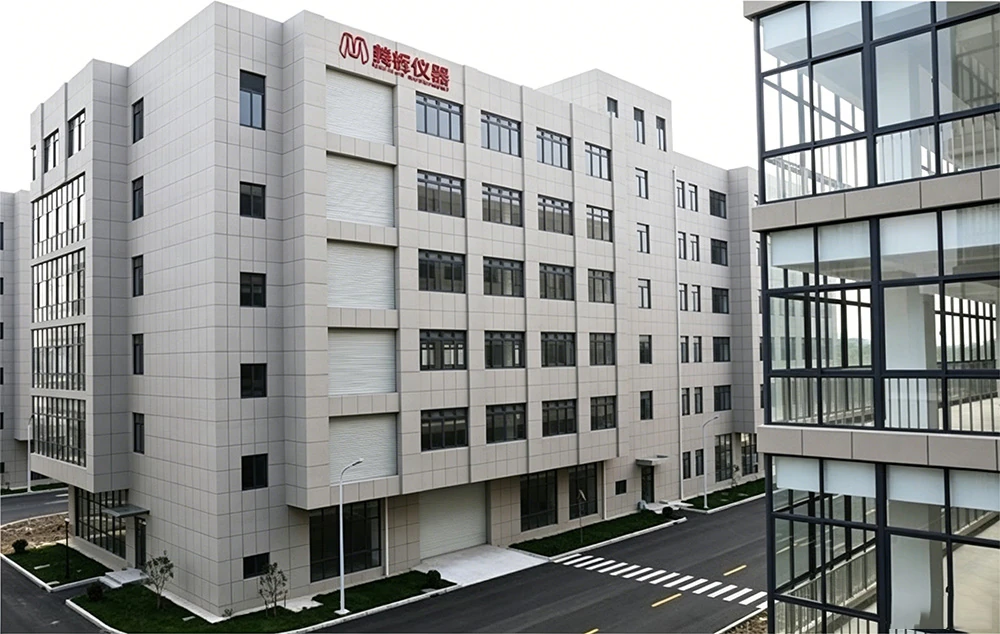
Our company’s headquarters and production base are located in Shanghai, the marketing center is located in Beijing, and the company has R & D bases in Jiangsu, Shanghai and Shandong. In order to make full use of the intellectual resources around the country, the United States has also carried out in-depth scientific research cooperation with some scientific research institutions at home and abroad, and constantly transform scientific research achievements into productive forces. In order to better serve our customers, Meisei has 12 offices in China to customize application solutions that meet your needs and improve the added value of products. In the continuous service of domestic users at the same time, the United States analysis has also established a deep strategic cooperation relationship with more than 20 countries.
(Macylab Instrument Inc. is not only a high-tech certification enterprise, but also passed the CE certification, FCC certification, RoHS certification and a number of domestic qualification examination certification, and has a number of self-developed spectrum patents and Copyrights, etc.)
(Macylab Instrument Inc. is not only a high-tech certification enterprise, but also passed the CE certification, FCC certification, RoHS certification and a number of domestic qualification examination certification, and has a number of self-developed spectrum patents and Copyrights, etc.)
Ready to Implement This Solution?
Contact our application specialists for a customized quote and method validation.