
(In accordance with INSO 23403 / EN 13432)
I. Overview of the Protocol
This protocol utilizes the Macylab ICP-6800D (or ICP-6810) full-spectrum direct-reading inductively coupled plasma emission spectrometer. In accordance with ISO 23403 / EN 13432, to perform single-sample, simultaneous multi-element analysis of heavy metals such as Cd, Hg, Pb, Cr, and As in biodegradable plastics. The method strictly adheres to the limit values of Cd ≤ 0.5 mg/kg and Hg ≤ 0.5 mg/kg, making it suitable for rapid screening and compliance testing of large batches across multiple parameters.
II. Test Standards
Same as Plan 1: ISO 23403, EN 13432, and general methods for plastic digestion and ICP.
III. Instruments and Equipment
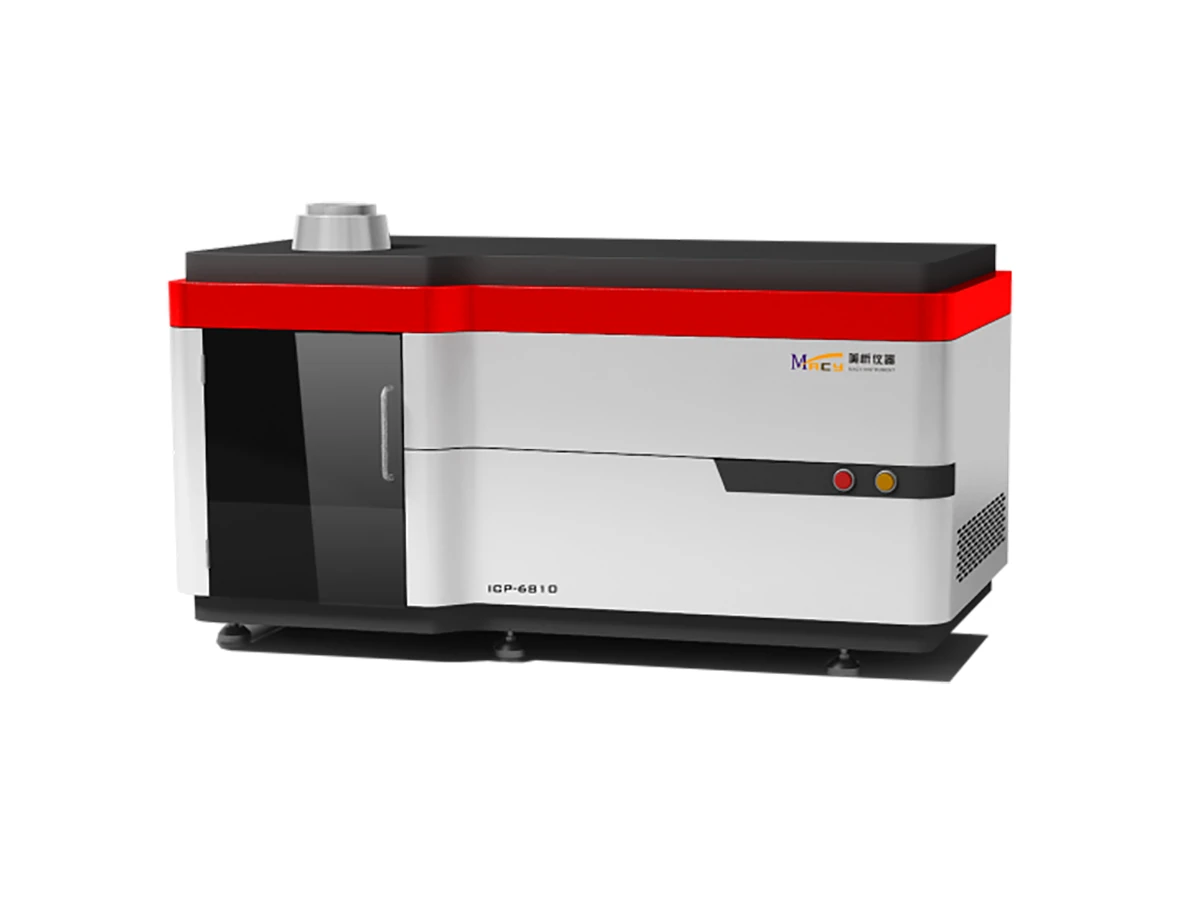
2. Solid-state RF generator: 40.68 MHz, 750–1500 W
Intermediate-stage grating + prism cross-dispersion, wavelength 165–950 nm
Bidirectional observation (automatic switching between axial and lateral modes)
Detection limits: 1–10 ppb for most elements
3. Supporting equipment: Same as Proposal 1 (microwave digestion system, ultrapure water system, balances, etc.)
Intermediate-stage grating + prism cross-dispersion, wavelength 165–950 nm
Bidirectional observation (automatic switching between axial and lateral modes)
Detection limits: 1–10 ppb for most elements
3. Supporting equipment: Same as Proposal 1 (microwave digestion system, ultrapure water system, balances, etc.)
IV. Reagents
· Analytical-grade HNO₃, H₂O₂
· Multi-element standard solution (containing Cd, Hg, Pb, Cr, As)
· High-purity argon (≥99.999%)
· Ultrapure water
· Multi-element standard solution (containing Cd, Hg, Pb, Cr, As)
· High-purity argon (≥99.999%)
· Ultrapure water
V. Sample Preparation (Microwave Digestion)
1. Sample pretreatment: Cut the plastic into small pieces → grind in liquid nitrogen → pass through a 80-mesh sieve and mix thoroughly.
2. Weighing: Place 0.2–0.5 g (accurate to 0.0001 g) into a digestion vessel.
3. Digestion: Add 6 mL HNO₃ + 2 mL H₂O₂, let stand for 30 min, seal, and perform microwave digestion.
4. Digestion Program:
5. 120°C for 5 min → 160°C for 5 min → 190°C for 15 min
6. After cooling, evaporate the acid to near dryness at 120°C, dilute to 25 mL with ultrapure water, and perform a blank test throughout the process.
2. Weighing: Place 0.2–0.5 g (accurate to 0.0001 g) into a digestion vessel.
3. Digestion: Add 6 mL HNO₃ + 2 mL H₂O₂, let stand for 30 min, seal, and perform microwave digestion.
4. Digestion Program:
5. 120°C for 5 min → 160°C for 5 min → 190°C for 15 min
6. After cooling, evaporate the acid to near dryness at 120°C, dilute to 25 mL with ultrapure water, and perform a blank test throughout the process.
VI. ICP-OES Analysis Conditions (Macylab ICP-6810)
RF Power: 1200 W
· Cooling Gas: 15 L/min (Ar)
· Auxiliary Gas: 0.5 L/min
· Atomization Gas: 0.7 L/min
· Observation Mode: Axial (trace elements)
· Sample flow rate: 1.2 mL/min
· Elemental spectral lines (recommended):
Cd: 228.802 nm
Hg: 194.164 nm
Pb: 220.353 nm
Cr: 267.716 nm
As: 193.696 nm
· Calibration curve: 0, 0.1, 0.5, 1.0, 5.0 mg/L, r ≥ 0.9998
· Limit determination: Cd ≤ 0.5 mg/kg, Hg ≤ 0.5 mg/kg
· Cooling Gas: 15 L/min (Ar)
· Auxiliary Gas: 0.5 L/min
· Atomization Gas: 0.7 L/min
· Observation Mode: Axial (trace elements)
· Sample flow rate: 1.2 mL/min
· Elemental spectral lines (recommended):
Cd: 228.802 nm
Hg: 194.164 nm
Pb: 220.353 nm
Cr: 267.716 nm
As: 193.696 nm
· Calibration curve: 0, 0.1, 0.5, 1.0, 5.0 mg/L, r ≥ 0.9998
· Limit determination: Cd ≤ 0.5 mg/kg, Hg ≤ 0.5 mg/kg
VII. Testing Procedure
1. Stabilize argon, ignite the torch, and preheat the plasma for 15 minutes.
2. Optimize parameters and establish a multi-element mixed standard curve.
3. Batch testing: blank → standard → sample → duplicate sample.
4. The software automatically outputs the concentration of each element, which can be directly compared against the standard limits.
2. Optimize parameters and establish a multi-element mixed standard curve.
3. Batch testing: blank → standard → sample → duplicate sample.
4. The software automatically outputs the concentration of each element, which can be directly compared against the standard limits.
VIII. Result Interpretation
Same as Protocol 1: Cd and Hg ≤ 0.5 mg/kg are considered compliant; other elements are evaluated simultaneously according to standards.
IX. Advantages of the Protocol ( ICP-6810)
Multi-element simultaneous analysis: Simultaneously measures Cd/Hg/Pb/Cr/As with a single injection, improving efficiency by 5–10 times
· Wide linear range: ppb–ppm level, covering the entire sample concentration range
· Dual-channel detection + high sensitivity, easily meeting the 0.5 mg/kg limit
· Fully automatic sample introduction + intelligent flushing, suitable for large-scale industrial quality control
· Wide linear range: ppb–ppm level, covering the entire sample concentration range
· Dual-channel detection + high sensitivity, easily meeting the 0.5 mg/kg limit
· Fully automatic sample introduction + intelligent flushing, suitable for large-scale industrial quality control
X. Precautions
Hg signals are prone to drift in ICP; prepare the standard curve on the same day.
· Argon purity must be ≥99.999% to prevent flame extinction and baseline drift.
· Ensure complete decomposition of organic matter during digestion to avoid clogging of the nebulizer and torch tube.
· Argon purity must be ≥99.999% to prevent flame extinction and baseline drift.
· Ensure complete decomposition of organic matter during digestion to avoid clogging of the nebulizer and torch tube.
Ready to Implement This Solution?
Contact our application specialists for a customized quote and method validation.