Empowering Pharmaceutical Analysis with Double Beam Technology: How the Macylab M-2800 Enhances Precision and Efficiency in Lab Quantification
Key Takeaways
- A double beam spectrophotometer measures sample and reference signals to help compensate for changes in light-source intensity during testing.
- For pharmaceutical analysis, key specifications include wavelength range, wavelength accuracy, photometric accuracy, stability, stray light, and spectral bandwidth.
- The Macylab M-2800 provides a 190–1100 nm wavelength range, adjustable 1.0/2.0 nm bandwidth, 0.0003 A/h stability at 500 nm, and ≤0.02% τ stray light.
- Built-in quantitative analysis, multi-wavelength measurement, kinetic testing, touchscreen operation, and USB data output can simplify routine laboratory work.
- When selecting an instrument, laboratories should evaluate not only specifications but also software, maintenance, calibration, validation support, and supplier service.
Introduction
Pharmaceutical laboratories often perform repeated measurements to determine the concentration or characteristics of samples. During these tests, even small changes in the measurement system can affect the consistency of results, particularly when testing continues for an extended period.
A double beam spectrophotometer addresses this challenge by using a sample path and a reference path. The reference measurement provides a comparison that helps account for changes in the light source during operation. This design makes double beam systems useful for pharmaceutical quality control, active pharmaceutical ingredient (API) testing, raw-material analysis, dissolution-related measurements, and biochemical applications.
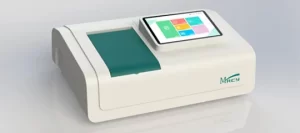
For laboratories evaluating new analytical equipment, the Macylab M-2800 provides an example of how double beam technology can be combined with practical functions such as quantitative analysis, touchscreen operation, and USB data output.
How Does a Double Beam Spectrophotometer Work?
Sample and Reference Measurements
In a double beam instrument, the light is divided between a sample path and a reference path. The sample path measures the material being tested, while the reference path provides a comparison signal.
This comparison is useful because the intensity of a light source can change slightly during operation. If the light becomes weaker or stronger while a measurement is being performed, the instrument can use the reference signal to help account for that change.
For laboratories, the practical benefit is measurement stability. Instead of relying only on the sample measurement, the system continuously has a reference point that can help distinguish changes in the sample from changes in the measurement system.
Double Beam vs. Single Beam
Both double beam and single beam instruments have applications in laboratory analysis. The appropriate choice depends on the testing method, required stability, workflow, and budget.
| Factor | Double Beam | Single Beam |
| Reference path | Uses a reference path during measurement | Usually measured separately |
| Light-source changes | Can compensate for changes during measurement | More dependent on measurement sequence |
| Longer measurements | Useful when stability is important | Suitable for many routine measurements |
| System design | More complex | Generally simpler |
| Main consideration | Stability and repeatability | Simplicity and application needs |
Double beam instruments are commonly used when measurement stability and repeatability are important, particularly in routine pharmaceutical and quality-control testing.
Which Specifications Matter for Pharmaceutical Testing?
Key specifications for a double beam spectrophotometer include wavelength range, wavelength accuracy, photometric accuracy, stability, stray light, and spectral bandwidth.
Wavelength Range and Accuracy
The wavelength range determines which parts of the spectrum the instrument can measure. The Macylab M-2800 covers 190–1100 nm, providing coverage from the ultraviolet region through the visible range and into the near-infrared edge of the specified range.
For pharmaceutical and biochemical measurements, laboratories should first check the wavelengths required by their existing analytical methods. The M-2800 covers 190–1100 nm, providing broad UV-Vis coverage for pharmaceutical, biochemical, and research applications.
Stability and Photometric Performance
Stability becomes especially important when a laboratory performs repeated measurements or tests that take longer to complete.
The M-2800 specifies a stability of 0.0003 A/h at 500 nm. It also provides photometric accuracy of ±0.2% τ, photometric repeatability of 0.1% τ, and stray light of ≤0.02% τ.
The combination of stability, photometric accuracy, repeatability, and low stray light supports consistent UV-Vis measurements. A stable measurement system helps reduce the possibility that changes in the instrument signal will be interpreted as changes in the sample.
For a pharmaceutical analysis lab, this can be relevant when consistent quantitative results are needed across repeated measurements.
1.0 nm vs. 2.0 nm Bandwidth
The M-2800 offers adjustable 1.0 nm and 2.0 nm spectral bandwidth.
| Bandwidth | Typical Consideration |
| 1.0 nm | Useful when greater spectral detail is required |
| 2.0 nm | Suitable for routine measurements that do not require the narrowest bandwidth |
The M-2800 offers 1.0 nm and 2.0 nm bandwidth settings for different measurement requirements.
Where Can a Double Beam Spectrophotometer Be Used?
Pharmaceutical QC and API Testing
One of the main applications for UV-Visible spectrophotometry is quantitative measurement.
In pharmaceutical quality control, laboratories may use spectrophotometric methods for API concentration testing, raw-material evaluation, routine quantitative analysis, and standard-curve measurements.
The M-2800 supports quantitative analysis and multiple photometric modes, including transmittance, absorbance, concentration, and energy measurements. These functions can support routine analytical workflows without requiring operators to build a separate system for each basic measurement.
For a quantitative analysis pharmacy workflow, the important consideration is whether the instrument’s wavelength range, photometric performance, and software functions match the laboratory’s established methods.
Dissolution and Long-Duration Testing
Changes in lamp intensity can affect the measured signal during longer tests. The reference path in a double beam system helps compensate for this variation.
A double beam system provides a reference measurement that can help account for changes in the light source during operation. Laboratories should still evaluate the complete method, including sample preparation, temperature, cuvette condition, calibration, and instrument settings.
DNA, Protein, and Biochemical Measurements
The M-2800 is not limited to pharmaceutical testing. Its supplied functions also include DNA concentration analysis, protein concentration analysis, multi-wavelength measurement, kinetic testing, and full or segmented wavelength scanning.
These functions also support biochemical research and routine laboratory analysis.
This flexibility can be useful for lab equipment manufacturers and laboratory purchasers comparing instruments for different end-user applications, provided the instrument configuration matches the intended methods.
How Does the M-2800 Improve Laboratory Workflow?
Touchscreen Operation and Built-In Functions
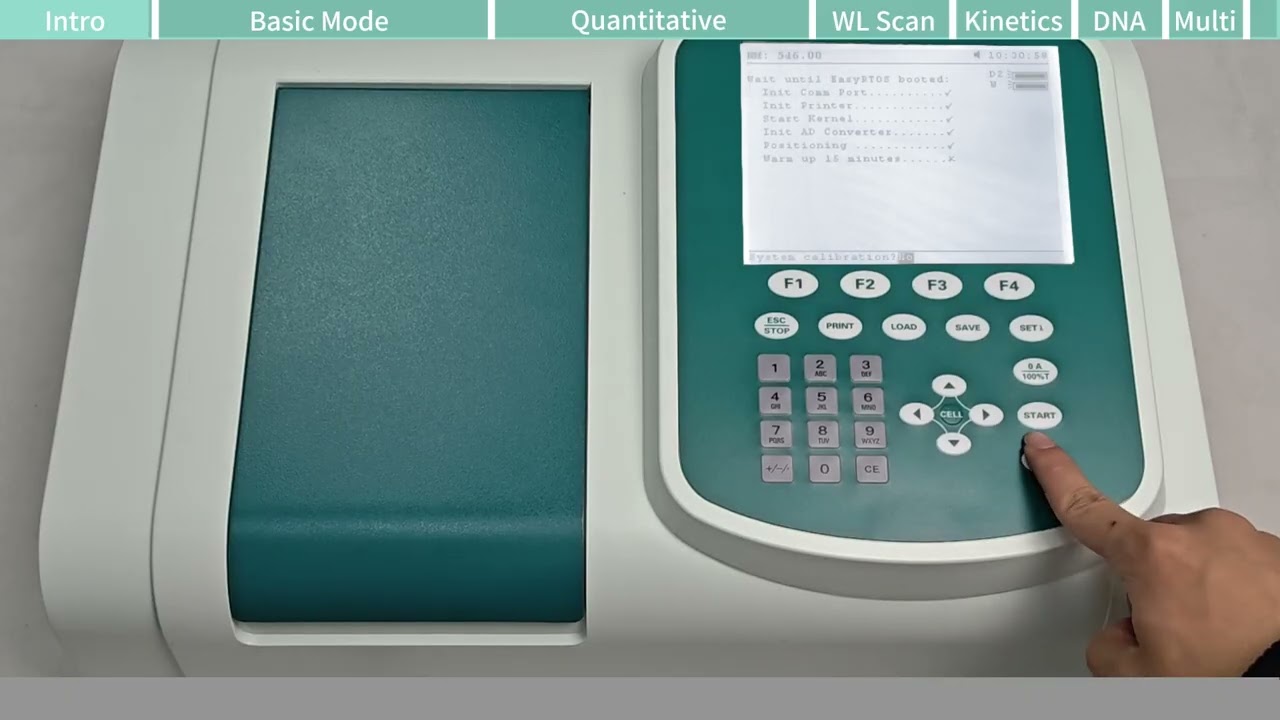
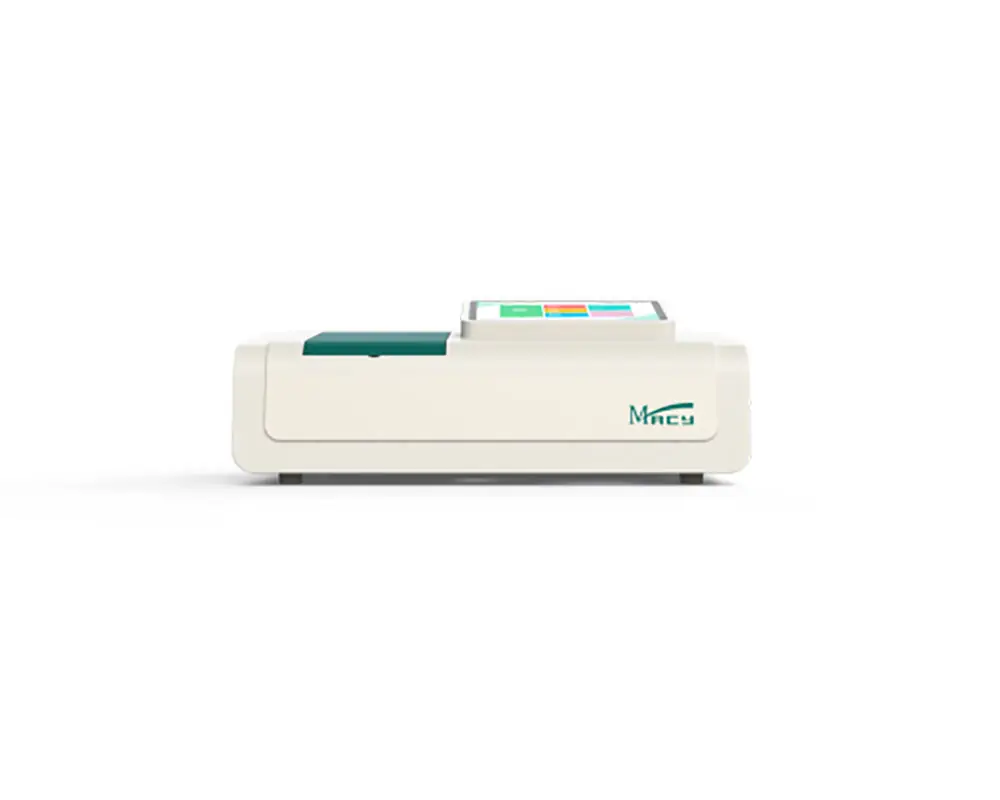
The M-2800 uses a 10-inch touch LCD for instrument control and routine measurements. Built-in functions include quantitative analysis, standard-curve setup, multi-wavelength measurement, kinetic testing, DNA and protein concentration analysis, and wavelength scanning.
Users can set measurement parameters and review results directly on the instrument. USB data output and optional PC control are also available for data transfer and laboratory record management.
Data Output and PC Control
The M-2800 provides USB data output, printer connectivity, and optional PC control.USB export can be useful for transferring measurement results and maintaining laboratory records.
For regulated environments, the complete software and data-management system should be checked for functions such as:
- Measurement records
- Audit trails
- Data storage
- Export and archiving
Macylab M-2800 Specifications and Buying Considerations
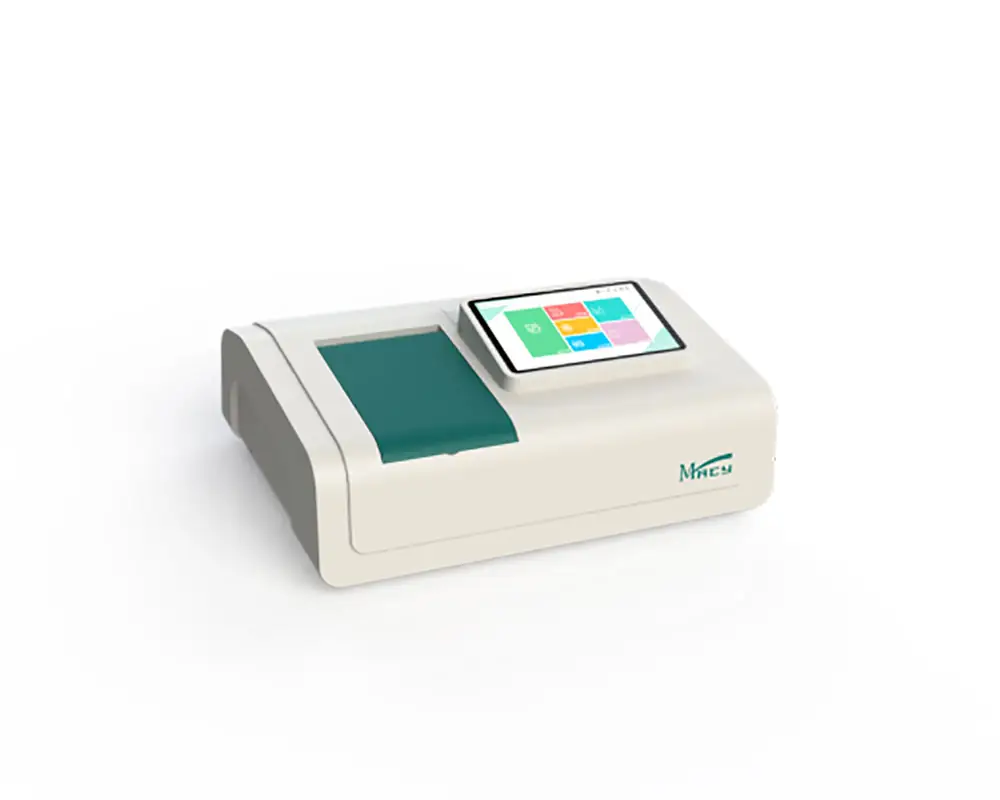
M-2800 Technical Specifications
The following specifications provide a concise reference for laboratories comparing the M-2800 with other analytical instruments.
| Parameter | M-2800 Specification |
| Optical system | Double beam |
| Wavelength range | 190–1100 nm |
| Bandwidth | 1.0 / 2.0 nm adjustable |
| Wavelength accuracy | ±0.3 nm |
| Wavelength repeatability | 0.1 nm |
| Photometric accuracy | ±0.2% τ |
| Photometric repeatability | 0.1% τ |
| Stray light | ≤0.02% τ |
| Stability | 0.0003 A/h @ 500 nm |
| Photometric modes | T, A, C, E |
| Display | 10-inch touch LCD |
| Detector | Silicon photodiode |
| Light source | Deuterium + tungsten-halogen lamp |
| Data output | USB |
| Dimensions | 650 × 430 × 230 mm |
| Weight | 20 kg |
Is the M-2800 a Suitable Fit?
The M-2800 may be worth considering for laboratories that require:
- A double beam measurement system
- 190–1100 nm wavelength coverage
- Adjustable 1.0/2.0 nm bandwidth
- Quantitative and multi-wavelength measurement functions
- Touchscreen-based instrument operation
- Applications across pharmaceutical, biochemical, and research testing
Macylab also supplies analytical instruments for pharmaceutical, biochemical, research, and quality-control laboratories.
As an analytical instrument manufacturer, Macylab provides UV-Vis spectrophotometers and other laboratory analytical instruments for different testing requirements.
About Macylab Manufacturer
Macylab Instrument Inc. is a distinguished high-tech enterprise driven by independent innovation, holding core proprietary intellectual property rights. Guided by its corporate philosophy, “Technology – Transformed by You,” Macylab is dedicated to the research, development, and manufacturing of advanced analytical testing instruments that empower scientific research, quality control, and industrial laboratories worldwide.

Core Product Portfolio
Macylab specializes in precision optical and analytical instrumentation, serving a diverse range of scientific and industrial applications. Our comprehensive product lineup includes:
- Visible Spectrophotometers & Ultraviolet-Visible (UV-Vis) Spectrophotometers
- Atomic Absorption Spectrometers (AAS)
- Atomic Fluorescence Spectrometers (AFS)
- Inductively Coupled Plasma Optical Emission Spectrometers (ICP-OES)
- Inductively Coupled Plasma Mass Spectrometers (ICP-MS)
Why Work with Macylab?
As a trusted global manufacturer and long-term analytical instrument supplier, Macylab offers distinct strategic advantages for laboratories, academic institutions, and international distributors:
- Complete Product Range: From routine UV-Vis spectrophotometers to high-end elemental analysis systems (ICP-MS, AAS), Macylab provides a one-stop sourcing solution for diverse laboratory testing requirements.
- Cost-Effective Solutions: We deliver reliable analytical performance and precision engineering at competitive price points, helping laboratories maximize their equipment budgets without compromising quality.
- Robust Technical & After-Sales Support: Dedicated product support, troubleshooting, and customized engineering services are readily available to meet specific regional regulations and application demands.
- Continuous Product Development: Through ongoing investment in R&D and strict quality management, Macylab continuously upgrades its optical and analytical instrument portfolio to match modern scientific standards.
- Global Distribution Experience: With international export experience and necessary compliance certifications, Macylab products successfully serve customers across diverse global markets.
- Flexible Configurations & OEM/ODM Support: Accessories, software, and instrument hardware configurations can be flexibly tailored to suit unique customer specifications and specialized applications.
Inside Macylab: Manufacturing & R&D Facilities
Our state-of-the-art production floors, assembly lines, and analytical testing laboratories ensure that every instrument meets stringent international quality standards before reaching the end user.
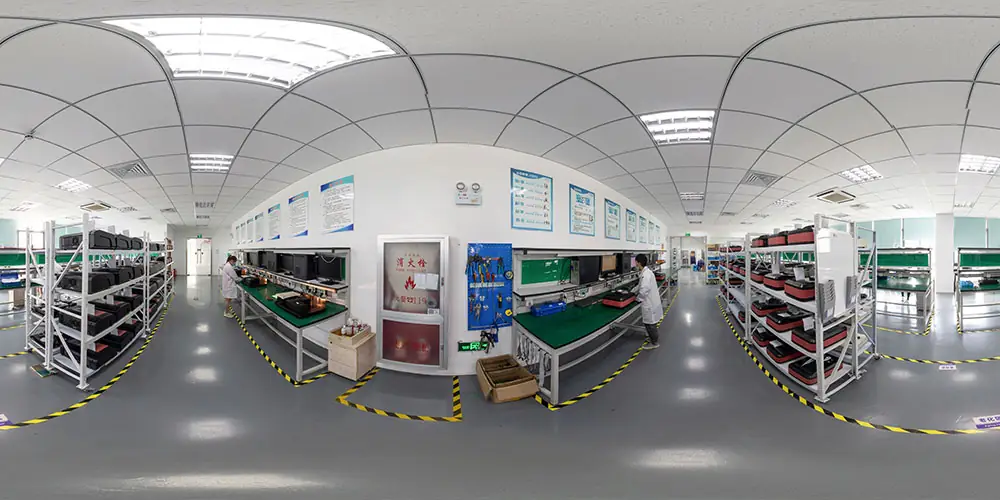
1. Instrument Assembly and Quality Control Workshop
Equipped with organized assembly benches, automated testing stations, and strict 6S manufacturing management protocols to ensure precision and reliability in every spectrophotometer and analytical device produced.
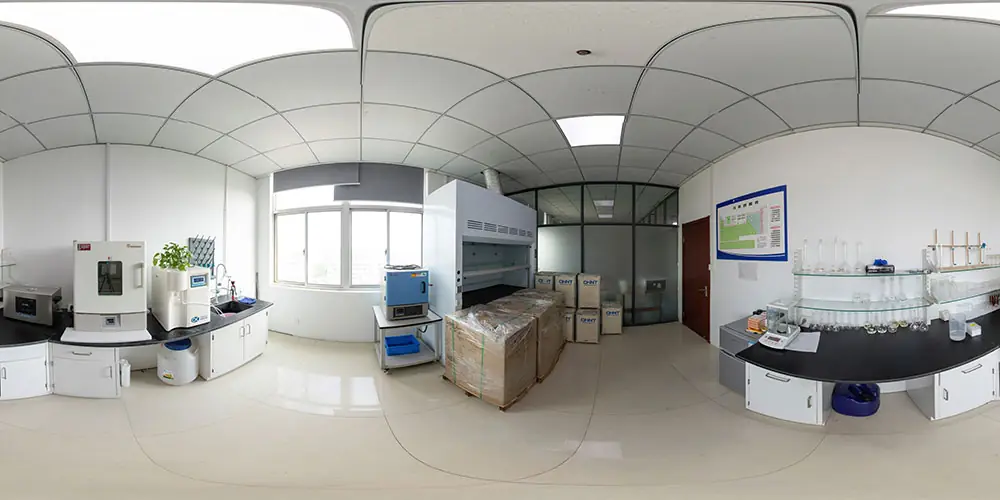
2. R&D Analytical Testing and Calibration Laboratory
Our advanced laboratory facilities feature clean workspaces, chemical handling hoods, precision glassware, and analytical testing equipment dedicated to continuous product development, instrument calibration, and quality assurance.
FAQ
Why use a double beam spectrophotometer for pharmaceutical testing?
A double beam system uses sample and reference paths to help compensate for changes in light-source intensity during measurement. This can improve measurement stability when testing is repeated or continues for a longer period.
Why is baseline stability important?
Stable baseline performance helps reduce the risk that changes in the instrument signal will be mistaken for changes in the sample. This is particularly relevant when consistent quantitative measurements are required.
What is the difference between 1.0 nm and 2.0 nm bandwidth?
A 1.0 nm bandwidth can provide greater spectral detail, while 2.0 nm can provide greater light throughput for routine measurements. The correct setting depends on the analytical method and sample.
What should I consider when buying a double beam spectrophotometer?
Consider the wavelength range, wavelength accuracy, photometric performance, stability, stray light, bandwidth, software functions, data management, maintenance, validation support, and supplier service. The instrument should ultimately be matched to the laboratory’s actual testing methods.
Does USB data export mean the instrument is 21 CFR Part 11 compliant?
No. USB data export alone does not establish 21 CFR Part 11 compliance. Laboratories operating under regulated requirements should evaluate the complete software and electronic-record system, including access controls, records, audit trails, storage, and archiving.
Conclusion
A double beam spectrophotometer can help laboratories maintain more stable measurements by comparing sample and reference signals during operation.F or pharmaceutical testing, practical specifications such as wavelength range, wavelength accuracy, photometric performance, stability, stray light, and bandwidth should be prioritized rather than relying on a single specification.
The Macylab M-2800 combines a 190–1100 nm wavelength range, adjustable 1.0/2.0 nm bandwidth, touchscreen operation, quantitative functions, multi-wavelength and kinetic measurements, and USB data output.
The final purchasing decision should also consider the laboratory’s analytical methods, software and data-management requirements, maintenance plan, qualification needs, and supplier support.
Contact the Macylab team today to request detailed technical specifications, discuss your specific pharmaceutical testing requirements, or receive a customized quotation for the M-2800 double beam spectrophotometer.
Below is the link to the video we posted on YouTube about the installation of the UV series accessories.