Fast and Accurate Analysis of Heavy Metals in Drinking Water: Meeting International Safety Standards with ICP-OES
Global Drinking Water Standards and the Technological Shift: Why ICP-OES Leads Modern Water Quality Monitoring
Access to safe drinking water is a fundamental human right, and protecting public health requires rigorous monitoring of contaminants. Among the most dangerous are toxic heavy metals like lead, arsenic, cadmium, and mercury, which can cause severe health issues even at low concentrations. To safeguard consumers, international and national regulatory bodies have established strict, enforceable limits for these substances in drinking water. This regulatory landscape, combined with the need for efficient, high-throughput analysis, is driving a significant technological shift in laboratories worldwide. Modern water quality monitoring equipment, particularly the inductively coupled plasma emission spectrometer (ICP-OES), is increasingly replacing traditional methods to meet these demands.
Key Technical Specifications: High-Resolution ICP-OES Performance Analysis
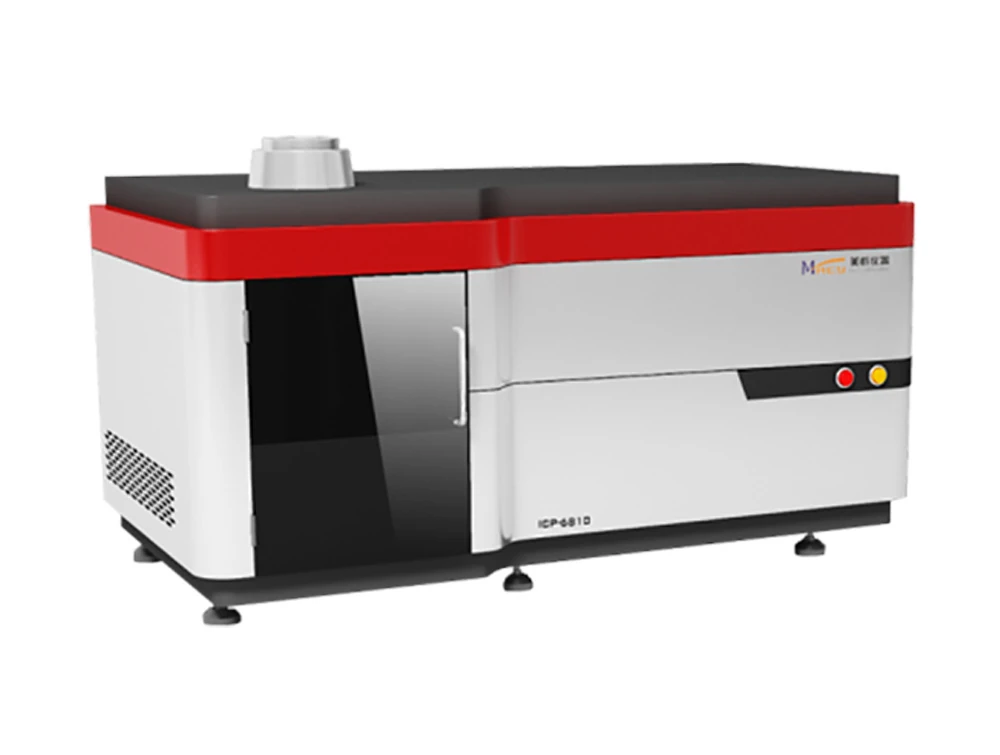
The analytical performance of any water quality monitoring equipment is defined by its core specifications. The following table presents key parameters of a modern ICP-OES system, using the ICP-6800 instrument as a representative model, highlighting the technical advantages that matter most to laboratory buyers.
Parameter ICP-6800 Quantitative Data Value to Buyers
Optical Resolution
≤0.007nm (3600L/mm Grating); ≤0.015nm (2400L/mm Grating)
Resolves spectral interferences in complex matrices
Detection Limit (Zn)
< 3.0 μg/L (at 213.856nm)
Achieves ultra-high sensitivity for trace metals
Wavelength Range
195nm – 800nm (with 2400L/mm grating)
Covers over 70 elements across the periodic table
RF Generator Frequency
27.12 MHz ± 0.05%
Ensures highly stable plasma torch
Stability (RSD)
≤ 2.0% (over 2 hours)
Suitable for high-volume batch runs
Repeatability (RSD)
≤ 1.5%
Guarantees consistent results across testing
These specifications demonstrate that a well-designed icp spectrometer delivers the resolution, sensitivity, and stability required for regulatory compliance. The EN ISO 11885:2009 standard specifies the method for the determination of dissolved elements, elements bound to particles, and total content of elements in different types of water—including ground, surface, raw, potable, and waste water—using ICP-OES, covering elements such as arsenic, cadmium, lead, zinc, and over 30 others.
Core Components & Engineering Excellence: What Sets a High-Performance ICP-OES Apart
The reliability and accuracy of an inductively coupled plasma emission spectrometer depend on the quality of its core subsystems. The ICP-6800 incorporates several engineering innovations that differentiate it from conventional designs.
1. Optical System: Unmatched Optical Precision
The ICP-6800 features a Czerny-Turner optical path design paired with an ion-etched holographic grating. With a focal length of 1000mm and linear dispersion of 0.26nm/mm, this configuration achieves exceptional resolution (≤0.007nm with 3600 lines/mm grating). The ion-etching process ensures high groove definition, minimizing stray light and maximizing signal-to-noise ratio. This optical precision is essential for water analysis in pharmaceutical industry applications, where trace metal impurities must be quantified against complex sample matrices.
2. RF Power Supply: Unmatched Stability
The instrument employs a self-oscillating feedback circuit with automatic matching tuning. Output power stability of <0.3% at 800W–1200W ensures the plasma remains robust regardless of sample matrix variations. The closed-loop power feedback control automatically compensates for load impedance changes, preventing plasma extinction and ensuring consistent excitation conditions.
3. Sample Introduction System: Enhanced Sensitivity
The refrigerated cyclone spray chamber, capable of cooling to -20°C using imported silicone integration technology, significantly improves sample aerosolization efficiency. Lowering the chamber temperature reduces solvent vapor loading in the plasma, minimizing matrix effects and enhancing detection sensitivity.
4. Detection System: Ultra-High Detection Sensitivity
The R293 photomultiplier tube features adjustable negative high voltage (0-1000V) and stability <0.05%, providing the sensitivity required for submicrogram/liter detection, making the ICP-6800 an ideal choice for trace analysis.
Targeted Applications: Pharmaceutical and Municipal Water Monitoring
1. Water Analysis in the Pharmaceutical Industry
The pharmaceutical industry demands the highest purity water for manufacturing and quality control. The United States Pharmacopeia (USP) and European Pharmacopoeia (EP) specify strict limits for trace metals in purified water and water for injection (WFI). For water analysis in pharmaceutical industry settings, an icp spectrometer simultaneously quantifies 20+ elemental impurities, ensuring compliance with USP Chapter <232> and <233> requirements for elemental impurities in drug products. Its ability to handle high-purity water matrices with minimal sample preparation reduces turnaround time and eliminates contamination risks associated with multiple single-element analyses.
2. Municipal Water Supply Monitoring
Customer Pain Point: A municipal water treatment facility responsible for supplying drinking water struggled with the time-consuming, stepwise chemical analysis required to monitor 20 heavy metals. Using traditional colorimetric and AAS methods, each sample required 4 hours of operator time, limiting daily throughput and delaying critical safety decisions.
Solution: The facility adopted the ICP-6800 inductively coupled plasma emission spectrometer, implementing a streamlined workflow that enables simultaneous multi-element analysis after simple acidification and filtration preparation. The instrument’s pre-loaded method library allowed rapid deployment without extensive method development.
Results:
● Single-sample analysis time reduced from 4 hours to 15 minutes
● 20+ elements analyzed simultaneously in each run
● Detection limits consistently below 3.0 μg/L for critical elements
● Full compliance with GB5749-2022, WHO, and EPA standards
● Throughput increased from 5 to 40 samples per day without additional staffing
This case demonstrates how modern water quality monitoring equipment can transform laboratory productivity while ensuring drinking water safety through rapid, accurate, and comprehensive heavy metal analysis.
Environmental Robustness: Reliable Performance Under Challenging Conditions
Laboratory environments vary widely across different regions and facility types. The ICP-6800 instrument is engineered for robust operation under diverse conditions, reducing infrastructure modification costs and ensuring consistent performance worldwide.
l Temperature Tolerance: The instrument’s core optical components employ constant-temperature drift prevention design, maintaining stable performance in ambient temperatures from 15℃ to 30℃, eliminating the need for costly temperature-controlled cleanrooms.
l Humidity Protection: The sealed optical chamber incorporates moisture-proofing measures, enabling reliable operation at relative humidity ≤70%. The optical cavity is equipped with desiccant modules that prevent lens fogging and optical path degradation.
l Voltage Fluctuation Adaptation: The power supply module features wide-range voltage regulation, accommodating 220±10V fluctuations and 50-60Hz frequency variations, preventing plasma instability caused by grid voltage dips.
l Atmospheric Pressure Adaptation: The ICP-6800 functions reliably within 86-106 kPa atmospheric pressure, accommodating installations at different altitudes without manual pressure adjustments.
These environmental adaptations make the ICP-6800 a versatile choice for global deployment across municipal water testing labs, pharmaceutical quality control facilities, and environmental monitoring networks.
Investment Decision: ROI, Cost Savings, and Regulatory Compliance
Comprehensive Certifications
The ICP-6800 instrument holds multiple internationally recognized certifications that facilitate global procurement and regulatory acceptance:
Certification
Standard/Version
Significance
CE
2014/35/EU
Conforms to EU safety standards
FCC
Part 15
Meets US electromagnetic interference requirements
RoHS
2011/65/EU
Restriction of hazardous substances
ISO 9001
Quality Management
Ensures consistent manufacturing quality
ISO 14001
Environmental Management
Demonstrates environmental commitment
These certifications mean laboratories can confidently deploy this water quality monitoring equipment for regulatory reporting, knowing the data generated meets international audit requirements.
Economic Benefits: Quantifiable ROI
1. Time Savings: The transition from single-element AAS to multi-element ICP-OES reduces single-sample analysis time from 4 hours to 15 minutes—a 16-fold efficiency improvement. Processing 20 samples daily translates to approximately 1,900 hours saved annually.
2. Labor Cost Reduction: A single ICP-6800 can replace 1-2 dedicated technicians previously required for manual analysis, yielding significant annual labor savings.
3. Consumable and Maintenance Savings: With over 90% domestic component sourcing, the ICP-6800 reduces annual consumable costs by 60% and maintenance expenses by 70% compared to imported systems.
4. Compliance Assurance: Certified performance ensures test results meet all applicable standards, avoiding penalties and reputational damage.
Frequently Asked Questions (FAQ)
Q1: Which elements can the instrument detect?
A1: The instrument can determine trace and ultra-trace metal elements—as well as certain non-metal elements—that are soluble in acid systems such as hydrochloric, nitric, and hydrofluoric acids. It covers over 70 elements from the periodic table, including common ones like Pb, Cd, Hg, As, Cu, Zn, Fe, Mn, Ni, Cr, Co, V, Ti, Al, Mg, Ca, Na, and K.
Q2: What level of detection limits can the instrument achieve?
A2: The detection limits of the instrument vary depending on the element. For common zinc, the detection limit can be as low as Zn213.856nm<3.0μg/L. For most heavy metal elements, the detection limit can reach the μg/L level, which fully meets the standard testing requirements of domestic and foreign drinking water, food, environmental protection and other industries.
Q3: What are the environmental requirements for the instrument?
A3: Operating environment requirements: temperature 15°C–30°C, relative humidity ≤70%, atmospheric pressure 86–106 kPa, and power supply 220±10V (50–60 Hz). Storage and transport requirements: temperature 15°C–25°C, relative humidity ≤70%. It is recommended that the equipment be placed on a stable experimental surface, avoiding vibration, direct sunlight, strong electromagnetic interference, and corrosive gas environments.
Q4: Is the instrument difficult to operate? Can personnel without prior ICP experience use it?
A4: The instrument is easy to operate and highly suitable for personnel without prior ICP experience. It features a Chinese-language interface and includes built-in standard testing methods for over 20 industries that can be selected directly, eliminating the need for manual method development. Additionally, it offers fully automated sample introduction, testing, and data processing; operators need only perform simple sample pretreatment to complete the entire testing workflow. No specialized ICP expertise is required, and users can become proficient after brief training.
Q5: Are the long-term maintenance costs high? Are consumables easy to procure?
A5: The instrument’s maintenance costs are far lower than those of imported products with similar performance. The localization rate of the entire machine exceeds 90%, and the core components are all independently developed and produced. The price of consumables is only about 1/3 of that of imported products, and there is sufficient domestic stock for quick procurement. At the same time, the instrument has a reasonable structural design and simple daily maintenance. Daily consumable replacement and maintenance can be completed without professional maintenance personnel, which greatly reduces the later maintenance costs and time costs.
Conclusion
The global push for stricter drinking water quality standards has placed unprecedented demands on analytical laboratories. Detecting trace levels of toxic heavy metals like lead, arsenic, and cadmium at sub-ppb concentrations is no longer optional—it is a public health imperative.
The inductively coupled plasma emission spectrometer (ICP-OES) has emerged as the definitive solution. The ICP-6800 delivers exceptional performance, achieving optical resolution of ≤0.007nm, detection limits for zinc below 3.0 μg/L, and stability (RSD ≤2.0%). Simultaneously screening 70+ elements in a single 15-minute run—compared to 3-4 hours for traditional AAS—delivers a 16-fold increase in throughput.
Ready to upgrade your laboratory’s heavy metal analysis capabilities? Contact us today for a personalized consultation, demo request, or to receive the full ICP-6800 technical datasheet and application notes. We’re here to help you meet and exceed global water quality standards with confidence.