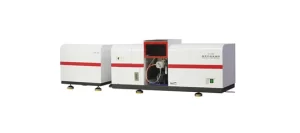
Why Is AFS-680 Dual-Channel Atomic Fluorescence Spectrophotometer a Benchmark for High-Sensitivity Heavy Metal Detection?
1. Introduction: Why Is AFS-680 the Top Choice for Modern Laboratories?
Global food safety and environmental monitoring standards have become increasingly stringent in recent years. Regulatory authorities have raised stricter limits for trace heavy metals like arsenic (As) and mercury (Hg) in food, dairy, soil and water. MarketsandMarkets reports the global spectroscopy market will reach $28.5 billion by 2030 with a 5.9% CAGR, driven by tighter food safety GB and pharmaceutical rules lifting demand for advanced trace element analyzers (Source: https://www.marketsandmarkets.com/). Traditional lab equipment cannot balance ultra-low detection precision and batch efficiency, failing to meet new supervision standards.
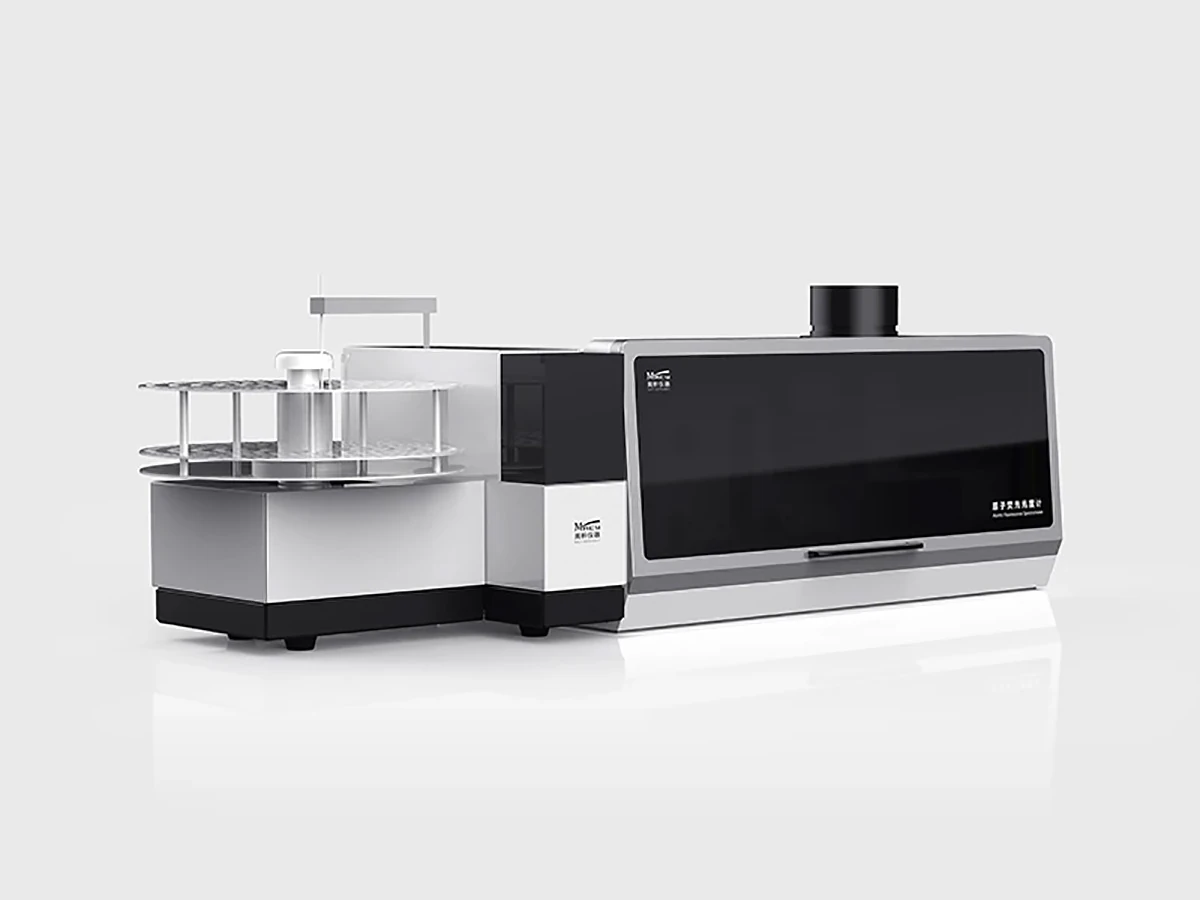
Developed by Macylab Instruments, the AFS-680 solves the core pain points of conventional detection devices with its mature dual-channel parallel detection design. This well-optimized trace element analyzer boosts laboratory testing efficiency by three times compared with traditional single-channel equipment, making it an indispensable tool for modern commercial testing institutions, environmental monitoring stations and scientific research laboratories. As a professional manufacturer of laboratory equipment, Macylab, one of the reliable analytical instrument suppliers, has tailored this device for high-precision trace analysis, positioning it as a mainstream piece of food safety testing instruments across global industries.
2. AFS-680 Element Detection Performance Overview
Instrument detection accuracy and stability are the core indicators that users and search engines focus on most. The following table intuitively displays the detectable elements, detection limits, repeatability and applicable scenarios of the AFS-680 instrument, covering conventional trace elements required for food safety, environmental monitoring and geological testing:
| Detectable Elements | Detection Limit (D.L.) | Precision (RSD) | Typical Application Fields |
| Arsenic (As), Selenium (Se), Lead (Pb) | < 0.01 μg/L | ≤ 0.7% | Soil detection, mineral testing, drinking water quality monitoring |
| Mercury (Hg), Cadmium (Cd) | < 0.001 μg/L | ≤ 0.7% | Goat milk & dairy product testing, cosmetic heavy metal analysis |
| Antimony (Sb), Bismuth (Bi), Tellurium (Te) | < 0.01 μg/L | ≤ 0.7% | Geological exploration, metal smelting industry testing |
| Germanium (Ge) | < 0.05 μg/L | ≤ 0.7% | Semiconductor material detection, health product component analysis |
| Zinc (Zn) | < 1.0 μg/L | ≤ 0.7% | Food nutrition analysis, agricultural product quality testing |
| Gold (Au) | < 3.0 μg/L | ≤ 0.7% | Mineral resource survey and grade evaluation |
Pollutant limits implement the provisions of the “National Food Safety Standard Food Pollutant Limits” (GB2762-2017), The detection methods refer to the Determination of total Arsenic and inorganic Arsenic in Food of National Food Safety Standards (GB5009.9-2014) and the determination of total mercury and organic mercury in Food of National Food Safety Standards (GB5009.17-2014).
3. Disruptive Technological Innovations: Balancing High Precision and Low Operating Cost
Different from conventional analytical instruments that pursue single performance improvement, the AFS-680 realizes comprehensive optimization of accuracy, stability and cost control through three core technological innovations, solving the long-standing industry dilemma of “high precision with high cost”.
3.1 Innovative Optical System for Ultra-High Sensitivity
This professional Atomic Fluorescence Spectrophotometer adopts an optimized light source and photomultiplier tube excitation angle design compared with traditional analytical equipment. This structural upgrade significantly enhances the intensity of received fluorescence signals while effectively reducing background optical interference caused by ambient light and sample impurities. The upgraded optical system fundamentally improves detection sensitivity, enabling accurate capture of ultra-trace heavy metal elements in complex samples that cannot be identified by ordinary equipment.
3.2 Intelligent Gas-Saving Mode to Reduce Long-Term Operating Costs
Equipped with a brand-new throttle-type gas circuit structure, the AFS-680 supports real-time start-stop control of the argon gas source. Unlike traditional instruments that maintain continuous gas supply, this intelligent design avoids unnecessary gas waste, greatly reduces argon consumption in long-term laboratory operation, and effectively cuts down the daily operating cost of the instrument without affecting detection stability.
3.3 Independent Dual-Channel Anti-Interference Technology
The built-in split-channel signal control module is the core competitive advantage of this dual-channel trace element analyzer. In actual testing scenarios, the concentration of two target elements in the same sample often varies greatly. Thanks to the independent signal processing system of the AFS-680, there is no cross-interference between the two channels, ensuring accurate and reliable test data of both elements simultaneously. This feature is highly suitable for batch multi-element testing in professional laboratories.
4. In-Depth Application Solution: Precision Detection of Heavy Metal Residues in Goat Milk
4.1 Industry Testing Challenges
Goat milk is a high-nutrition daily dairy product, but its complex organic matrix brings great difficulties to heavy metal detection. The contents of arsenic and mercury residues in qualified goat milk are extremely low, and traditional detection methods face obvious shortcomings: either the pretreatment process is cumbersome with low testing efficiency, or the detection sensitivity is insufficient to accurately capture ultra-trace pollutants, making it hard to balance testing speed and data accuracy.
4.2 AFS-680 Professional Detection Solution
Targeting the pain points of dairy product detection, the AFS-680 Atomic Fluorescence Spectrophotometer offers a highly efficient and accurate one-stop solution for the determination of heavy metal residues in goat milk:
Ultra-fast batch detection: The AFS-680 is equipped with a patented continuous & intermittent dual-mode flow injection sampling system and a 6-channel high-precision peristaltic pump with adjustable pressure clamps and software stepless speed regulation. Compared with traditional manual injection and single-flow injection equipment, its sampling and reaction efficiency is three times higher. In standardized goat milk heavy metal detection experiments, the instrument can complete three parallel repeated tests of a single pretreated goat milk sample within only 30 seconds. This ultra-fast testing capability completely solves the problem of low efficiency of traditional dairy detection methods, greatly improves the batch sample inspection efficiency of food safety testing institutions, and is fully suitable for daily supervision sampling, commercial batch inspection, and market random testing scenarios.
Stable data output: Bubble generation in the hydride reaction process is the core factor leading to unstable test data and poor repeatability in goat milk detection. The organic protein and fat components in goat milk will cause violent chemical reaction fluctuations and a large number of fine bubbles during the reduction reaction of potassium borohydride, which seriously affects gas-liquid separation and interferes with optical signal acquisition. As a high-performance Atomic Fluorescence Spectrophotometer, the AFS-680 adopts an innovative high-efficiency gusher two-stage chemical gas-liquid reaction separation device and an integrated multifunctional reaction module. This highly integrated structure effectively suppresses bubble generation, realizes thorough gas-liquid separation, and avoids the deviation of fluorescence intensity data caused by bubble interference. Different from ordinary instruments that can only adapt to simple water sample detection, the structural optimization of the AFS-680 is specially optimized for complex organic matrix samples such as dairy products, ensuring continuous, stable and efficient chemical reactions in the detection process.
Powerful anti-interference system to ensure data authenticity. In the process of goat milk detection, common coexisting elements such as calcium, magnesium, potassium, and sodium in dairy products are easy to cause matrix interference. The AFS-680 has excellent anti-interference performance through hardware circuit optimization and software algorithm compensation. Conventional metal elements such as Fe, Al, Mg, Ca, K, and Na will not interfere with the determination results. For trace precious metal elements that may cause interference, the instrument supports standard thiourea interference elimination technology, which can completely eliminate the influence of complex coexisting substances in goat milk on ultra-trace heavy metal detection. At the same time, the closed short-focal-length non-dispersive optical design effectively isolates external light source interference and ambient dust interference, further improving the stability and accuracy of test data.
Authoritative accuracy verification: Multiple actual goat milk heavy metal detection experiments based on national standard detection methods (GB5009.9-2014, GB5009.17-2014) have verified the excellent performance of the AFS-680. The instrument’s standard curve fitting degree reaches r=0.9996, with extremely high linear correlation in ultra-trace concentration ranges. The sample standard addition recovery rate is stably maintained at 106%, which is within the national standard qualified recovery range, fully meeting the accuracy requirements of national food safety detection standards. An RSD of less than 0.7% ensures that the Atomic Fluorescence Spectrophotometer maintains minimal data deviation and superior repeatability when analyzing ultra-trace heavy metals in complex goat milk matrices, ensuring credible and traceable results for food safety supervision.
5. Optimized Hardware Design and User-Friendly Usability
5.1 Humanized Structural Design
The instrument adopts a translucent, corrosion-resistant ABS magnetic absorption front door. On the one hand, the closed magnetic structure isolates external air dust and temperature interference, protecting the internal precision optical and gas circuit components. On the other hand, the translucent design allows laboratory operators to directly observe the real-time chemical reaction state inside the instrument, facilitating timely parameter adjustment and abnormal troubleshooting.
5.2 Intelligent Self-Maintenance System
Equipped with encoded hollow cathode lamp technology, the Atomic Fluorescence Spectrophotometer can automatically identify the lamps and monitor in real-time the working state and remaining service life of the lamps. This intelligent monitoring function avoids detection errors caused by lamp aging or incorrect installation and reminds users of replacement in advance, reducing equipment failure rates and maintenance costs.
5.3 Professional Safety Protection Mechanism
The internal circuit adopts a strong and weak current separation design, which effectively avoids circuit interference and electrical safety risks. Meanwhile, the instrument is equipped with automatic self-inspection and power-off alarm protection functions. It can automatically detect abnormal equipment parameters during operation and trigger protection reminders, ensuring the safety of laboratory personnel and equipment operation.
6. Authoritative Certification and Global After-Sales Support
6.1 Full International and Domestic Certification
As a high-end laboratory analytical device, the AFS-680 has passed a full set of authoritative safety and quality certifications, including CE European safety qualification, ETL North American safety certification, FCC electromagnetic compatibility certification, RoHS environmental protection certification, China CQC quality certification and 3C mandatory safety certification. All performances comply with global industrial and laboratory safety standards, supporting sales and application in countries and regions worldwide.
6.2 Strong Brand and Global Service Backing
Developed and manufactured by Shanghai Macylab Instruments, one of the professional and reliable analytical instrument manufacturers with independent intellectual property rights in the spectral analysis industry, the AFS-680 inherits the brand’s years of accumulation in optical design, hardware R&D and software development. The company has R&D and production bases in Shanghai, Beijing, and Jiangsu, 12 offline service offices across China, and long-term strategic cooperation with more than 20 countries worldwide, providing global users with one-stop equipment selection, technical training, and after-sales maintenance services.
7. FAQ
Q1: What are the core advantages of AFS-680 compared with traditional atomic absorption spectrometers (AAS)?
A1: Traditional atomic absorption spectrometers have limited sensitivity for hydride-forming elements such as arsenic and mercury, and are easily affected by background noise, leading to inaccurate data. In contrast, the AFS-680 features higher detection sensitivity and lower background interference for trace hydride elements. Tailored for food, environmental and geological trace analysis, it is more professional and stable than conventional equipment, standing out as a preferred food safety testing instrument for precise heavy metal detection.
Q2: Is the daily maintenance of the AFS-680 instrument complicated?
A2: The instrument adopts an integrated modular design with extremely low maintenance difficulty. The core reaction module supports direct plug-in and disassembly, which eliminates complex pipeline disassembly and assembly steps. The intelligent monitoring system can automatically feed back equipment operating status, realizing simple and efficient daily maintenance without professional technical barriers.
Q3: Does the AFS-680 support test data export and remote sharing?
A3: Yes. The supporting intelligent software supports one-click export of test data and experimental reports to EXCEL format with customizable report templates. It also connects to a local area network (LAN) to realize remote data sharing, multi-terminal data viewing and unified laboratory data management, which is convenient for experimental data archiving, statistical analysis and report output.
8. Conclusion
With the continuous upgrading of global food safety and environmental monitoring standards, laboratories have put forward higher requirements for the accuracy, efficiency and stability of trace element detection equipment. The AFS-680 dual-channel atomic fluorescence spectrometer stands out among numerous laboratory devices by virtue of its innovative optical technology, anti-interference dual-channel design, low operating cost and user-friendly hardware design.
From daily food safety detection and environmental water quality monitoring to complex geological and mineral sample analysis, this high-performance trace element analyzer can efficiently and accurately complete various ultra-trace heavy metal detection tasks. Backed by full international authoritative certifications and global professional after-sales services, it has become a veritable benchmark device in the field of high-sensitivity trace element detection, providing reliable technical support for standardized and efficient laboratory detection worldwide.