How Does ICP-OES Improve Multi-Element Analysis in Complex Industrial Samples?
Key Takeaways
Inductively Coupled Plasma Emission Spectrometer technology allows laboratories to determine multiple elements within a single analytical workflow, improving testing efficiency.
Complex matrices require appropriate sample digestion, dilution, sample introduction, and interference control to obtain reliable results.
An icp oes spectrometer should be evaluated not only by sensitivity, but also by optical performance, plasma stability, operating requirements, and maintenance needs.
When selecting an optical emission spectrometer Manufacturer, buyers should also consider application support, quality control, technical service, and long-term cooperation.
Why Is ICP-OES Effective for Multi-Element Analysis?
Multi-element analysis is essential for environmental samples, chemical products, metals, ores, food, and materials with varying compositions.
An Inductively Coupled Plasma Emission Spectrometer uses high-temperature argon plasma to excite atoms or ions in a prepared sample. These excited species emit light at characteristic wavelengths. By measuring the wavelength and intensity of the emitted light, the laboratory can identify elements and quantify their concentrations. The U.S. Environmental Protection Agency describes ICP-OES as a technique for multi-element determination in which nebulized samples are transported into an argon plasma and characteristic emission lines are measured.
A Simple ICP-OES Analytical Workflow
The process can be understood in five basic steps:
- Sample preparation: The sample is digested, diluted, or otherwise prepared according to its matrix and target elements.
- Sample introduction: The prepared solution is converted into an aerosol and transported toward the plasma.
- Plasma excitation: Argon plasma provides the energy needed to excite the elements.
- Optical measurement: Characteristic emission wavelengths are separated and detected.
- Quantification: Signal intensity is compared with calibration standards to calculate elemental concentration.
This workflow makes an icp oes spectrometer particularly useful when a laboratory needs multi-element information from the same prepared sample. EPA Method 6010D, for example, covers both sequential and simultaneous ICP-OES systems and axial or radial plasma viewing configurations.
What Challenges Can Complex Samples Create During ICP-OES Analysis?
The advantage of multi-element analysis does not eliminate the challenges created by sample composition. In practice, sample preparation and matrix control can have a significant influence on analytical results.
Heavy metals can enter food through environmental sources such as soil and water and may occur at trace levels, creating a need for suitable analytical methods.
Sample Matrix and Preparation
Samples with high dissolved solids, strong acidity, organic components, or other complicated matrices can affect nebulization, plasma conditions, background signals, and spectral interference. Proper digestion and dilution can therefore be as important as the instrument itself.
There is a practical example using rice and cadmium: the rice sample is first digested into a liquid suitable for instrumental analysis, after which the prepared solution is introduced into ICP-OES, and cadmium is quantified from its characteristic emission signal.
Sample Introduction Matters
The sample introduction system typically includes components such as a nebulizer, spray chamber, torch, and injector. Their suitability should be considered according to the sample matrix.
For example, aggressive acidic samples may require corrosion-resistant materials, while samples containing substantial dissolved solids may require configurations that help reduce salt deposition or clogging. The aim is to match the sample introduction system with the laboratory’s actual workload.
Which ICP-OES Performance Factors Matter Most for Complex Samples?
For laboratories comparing an optical emission spectrometer, the most useful specifications are those that can be connected directly to the intended analytical workflow.
Axial, Radial, or Dual-View Configuration?
Various plasma-viewing configurations offer distinct analytical advantages:
| Configuration | Main Strength | Typical Requirement |
| Axial view | Higher sensitivity potential | Trace-element analysis |
| Radial view | Greater tolerance for concentrated samples | Major-element analysis |
| Dual view | Broader analytical flexibility | Samples with both trace and major elements |
EPA Method 6010D recognizes both axial and radial viewing as established ICP-OES configurations. The appropriate choice depends on the concentration range, matrix, and analytical objectives.
Wavelength Coverage and Spectral Interference
The foundation of ICP‑OES analysis lies in the unique emission spectrum of each element, making wavelength selection the central step in the analytical process. In practice, choosing a suitable wavelength requires careful evaluation of spectral resolution, background correction, potential interferences from overlapping lines, and the appropriate analytical line. This task becomes significantly more challenging when the sample matrix is complex or contains multiple elements. EPA Method 6010D likewise underscores the importance of background correction in trace element analysis and provides detailed guidance on emission line measurement using a grating spectrometer and photodetector.
Plasma and RF Stability
The RF generator supplies the energy required to sustain the plasma. Stable RF output contributes to consistent plasma conditions and, in turn, supports repeatable measurements.
For B2B buyers, frequency stability and power-output stability can therefore be more meaningful than simply looking at maximum power. These specifications should be evaluated together with the intended sample types and laboratory workload.
How Can Laboratories Improve ICP-OES Efficiency and Control Operating Costs?
An icp oes spectrometer should be assessed as a long-term laboratory asset. Argon consumption, consumables, maintenance, sample throughput, and downtime can all contribute to the total operating cost.
Argon and Consumable Management
ICP-OES operation relies on argon gas to maintain plasma. Components such as the torch, atomizer, spray chamber, ejector, and pump tubing require cleaning or replacement after a period of use. Therefore, before purchasing equipment, laboratories should thoroughly understand the instrument’s continuous operating capabilities and daily consumable requirements to avoid discovering unsustainable long-term expenses after installation.
Standby or lower-consumption operating modes can also be useful where the laboratory performs intermittent testing. However, actual gas consumption should always be confirmed from the manufacturer’s technical documentation.
Installation and Laboratory Preparation
Before installing an Inductively Coupled Plasma Emission Spectrometer, laboratories should consider:
- Suitable exhaust and ventilation
- High-purity argon supply
- Appropriate electrical power
- Cooling requirements where applicable
- A clean, stable installation environment
EPA Method 6010D also identifies high-purity argon, an RF generator, and appropriate laboratory equipment among the requirements for ICP-OES analysis.
Good preparation can reduce installation problems and help the instrument operate consistently once routine testing begins.
Q1: What is ICP-OES used for?
A: ICP-OES is used for qualitative and quantitative elemental analysis, particularly when multiple elements need to be determined from prepared samples. Applications can include environmental, food, chemical, metallurgical, agricultural, and other laboratory testing.
ICP-6800: A Practical ICP-OES Solution for Multi-Element Analysis
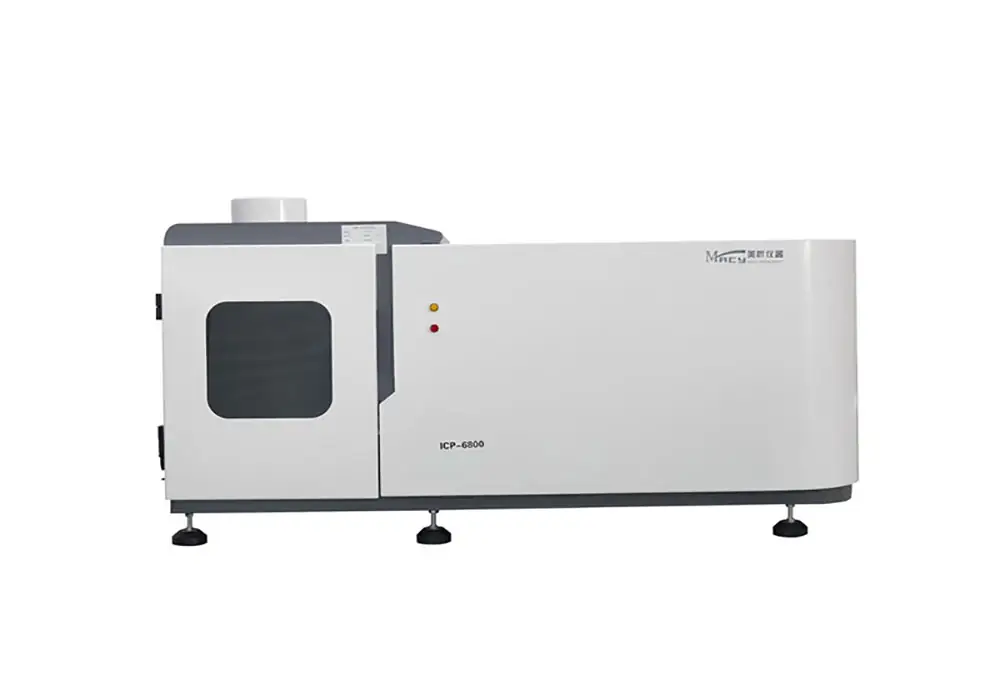
For laboratories looking for a dedicated system, the MacyLab ICP-6800 Inductively Coupled Plasma Emission Spectrometer provides an example of how these technical considerations can be incorporated into an analytical instrument.
| Parameter | ICP-6800 Specification |
| Focal Length | 1000 mm |
| RF Power | 800–1200 W |
| Power Stability | ≤0.3% |
| Frequency Stability | ≤0.1% |
| Application | Trace and ultra-trace metal and non-metal element analysis |
Product Case: Heavy-Metal Analysis in Food
There is a useful application example based on heavy-metal detection in food. It explains that food can accumulate heavy metals through environmental media such as soil and water, while trace-level residues require appropriate analytical sensitivity.
A specific workflow uses cadmium detection in rice. The sample is digested into a suitable liquid, introduced into the plasma, and exposed to high-temperature excitation. Cadmium then produces characteristic emission light, and its concentration can be determined by measuring the intensity of that signal.
This example illustrates an important point for laboratories: the value of ICP-OES is not simply the ability to detect elements, but the ability to integrate sample preparation, plasma excitation, optical measurement, and quantitative analysis into a repeatable workflow.
Where Can ICP-6800 Be Considered?
The supplied company material states that MacyLab’s analytical instruments are applied across areas including organic and inorganic chemistry, pharmaceuticals, environmental protection, metallurgy, petroleum, and agriculture.
Why Choose MacyLab as Your Optical Emission Spectrometer Manufacturer?
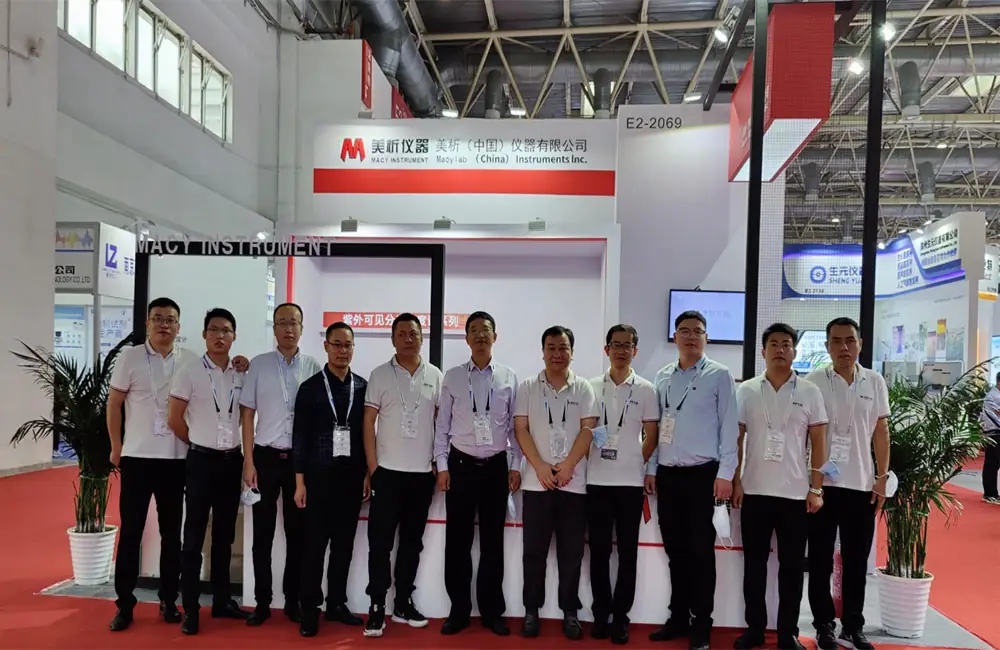
For laboratories investing in an optical emission spectrometer Manufacturer, the instrument itself is only one part of the purchasing decision. Long-term analytical performance also depends on the supplier’s technical expertise, product development capabilities, quality management, and ability to provide application support.MacyLab is a high-tech enterprise specializing in analytical instruments, with products covering UV-Vis spectrophotometers, atomic absorption spectrometers, ICP-OES, ICP-MS, and other laboratory systems. Its products serve industries including environmental protection, pharmaceuticals, metallurgy, petroleum, and agriculture.
MacyLab describes its manufacturing and quality-control processes, multiple R&D bases, domestic application support, and distributor partnerships in more than 20 countries. With expertise in optical engineering, software development, and analytical instrument manufacturing, MacyLab has developed its own ICP product line, including the ICP-6800. The company also provides technical support, application assistance, and after-sales services to support laboratories throughout the equipment lifecycle. For B2B buyers, this combination of instrument capability and manufacturer support can be an important consideration when selecting an ICP-OES solution.
FAQ
Q2: How does ICP-OES perform multi-element analysis?
A: Samples are introduced into an argon plasma, where elements are excited and emit characteristic wavelengths. The optical system separates and detects these signals, while their intensities are used to determine elemental concentrations.
Q3: What sample preparation is required for ICP-OES?
A: Preparation depends on the sample matrix and target elements. Digestion, dilution, filtration where appropriate, and matrix control may be required. ISO 11885 covers determination of selected elements in different water types and also addresses digested water, sludge, and sediment samples.
Q4: Is ICP-OES suitable for trace-element analysis?
A: Yes, ICP-OES can be used for trace-element determination, although the appropriate detection capability depends on the element, wavelength, matrix, sample preparation, and instrument configuration. Laboratories should verify method performance for their specific application.
Q5: How should I choose an optical emission spectrometer manufacturer?
A: Consider analytical performance, sample compatibility, instrument stability, operating costs, consumables, technical support, spare parts, training, and after-sales service. The manufacturer’s ability to understand your application can be as important as the headline instrument specifications.
Conclusion
Complex industrial samples require more than a high-performance analytical instrument. Reliable multi-element analysis depends on the complete workflow, from sample preparation and matrix control to plasma stability, optical measurement, calibration, and routine maintenance.
For laboratories evaluating an Inductively Coupled Plasma Emission Spectrometer, the most practical approach is to match instrument capabilities with actual sample types, target elements, concentration ranges, and testing volume. The ICP-6800 provides one option for laboratories seeking a structured ICP-OES workflow, while application requirements should ultimately guide the final configuration.
Have a complex sample to analyze? Contact us to discuss your elemental testing requirements and find a suitable ICP-OES solution.