
Atomic Fluorescence Spectrometer for Arsenic Analysis: Principle, Benefits, and Applications
Key Takeaways
For laboratories evaluating arsenic testing technologies, an Atomic Fluorescence Spectrometer offers a focused analytical approach for trace arsenic and other hydride-forming elements.
Arsenic is widely distributed in water, soil, and food, while inorganic arsenic is highly toxic. WHO identifies a provisional drinking-water guideline value of 10 μg/L. (WHO)
AFS combines sample preparation, hydride generation, atomization, excitation, and fluorescence detection to quantify trace elements.
Important selection criteria include detection limit, precision, linear range, sample compatibility, interference control, and operating workflow.
How Does an Atomic Fluorescence Spectrometer Detect Arsenic?
Measuring arsenic isn’t just about checking its presence. A laboratory often needs to accurately determine the relatively low arsenic content in samples with diverse compositions.WHO reports that arsenic occurs naturally in the Earth’s crust and can reach elevated concentrations in groundwater in some regions. Long-term exposure to inorganic arsenic through drinking water and food is a recognized public-health concern. (WHO)
An Atomic Fluorescence Spectrometer uses optical fluorescence to determine the concentration of selected elements. For arsenic analysis, the analytical process generally converts arsenic into a form that can participate effectively in hydride-generation chemistry. The resulting volatile species is separated from much of the liquid matrix before entering the atomization and detection system.
The Basic Principle of Atomic Fluorescence Spectrometry
A typical workflow can be simplified into six stages:
Sample preparation → hydride generation → gas-liquid separation → atomization → excitation → fluorescence measurement
After preparation, the target element reacts with appropriate reagents. For hydride-forming elements, this can produce a volatile hydride. The generated gas is carried toward the atomizer, where the target atoms are excited by the light source. Their fluorescence is then measured and related to concentration through calibration.
This separation step is important because complex sample matrices can affect analytical stability. The quality of digestion, reagent preparation, blank control, and calibration therefore remains part of overall measurement performance.
Why Is AFS Suitable for Trace Arsenic Analysis?
Arsenic is particularly relevant to hydride-generation techniques because chemical conversion can help isolate the target element from part of the sample matrix before optical detection. This provides a focused approach for laboratories that routinely analyze arsenic rather than requiring a general-purpose elemental platform for every possible element.
The importance of sensitive arsenic measurement is also reflected in regulatory analytical work. The U.S. Environmental Protection Agency lists arsenic among the elements covered by its trace-element methods for water and waste analysis, while its Method 200.8 specifically addresses trace elements including arsenic in water and waste matrices. (U.S. EPA)
What Should You Look for in an Arsenic Analyzer?
During the selection of an Arsenic Analyzer, detection limit is just the starting point. Precision, calibration range, sample pretreatment, matrix effect, repeatability, every aspect affects the reliability of the results.
Detection Limit, Linear Range, and Precision
Three parameters deserve particular attention:
| Performance factor | What it tells the buyer |
| Detection limit | How low the system can detect the target element |
| Linear range | The concentration range over which calibration remains suitable for quantitative analysis |
| Precision / RSD | How consistently the system reproduces measurements |
A low detection limit is useful only when the instrument can also provide stable and repeatable measurements in the laboratory’s actual sample matrix.
Sample Matrix and Pretreatment Requirements
Sample preparation is often one of the most important steps in trace-element analysis. Soil, wastewater, food, and other complex samples can contain suspended solids, organic matter, salts, or other elements that influence the measurement.
A practical workflow is:
Sample collection → homogenization → digestion or other pretreatment → dilution/filtration when required → hydride generation → detection → quality-control review
The exact digestion procedure should follow the analytical method selected for the sample type. EPA Method 200.8, for example, describes acid preparation procedures for certain total-recoverable determinations and emphasizes that method detection limits depend on the matrix, instrumentation, and operating conditions. (U.S. EPA)
Interference, Carryover, and Gas-Liquid Separation
Trace analysis can be affected by contamination and chemical interference even when the instrument itself has high sensitivity. Gas-liquid separation is therefore important in hydride-generation systems because it helps separate the generated gaseous species from the reaction solution.
Carryover control is another consideration for laboratories analyzing samples with substantially different concentrations. Alternating blanks, appropriate flushing procedures, controlled reagent flow, and suitable reaction-system design can help maintain measurement consistency.
AFS vs. ICP-MS vs. AAS for Arsenic Analysis
Different analytical technologies solve different laboratory problems. A Trace Element Analyzer based on AFS is not a direct substitute for every ICP-MS or AAS application. The better choice depends on the elements, concentration range, sample matrices, throughput, and required analytical breadth.
AFS vs. ICP-MS
ICP-MS is a powerful multi-element technique. EPA Method 200.8, for example, covers arsenic together with numerous other trace elements in water and waste samples. (U.S. EPA)
AFS, in contrast, is more focused on hydride-forming and related trace-element applications. This can be advantageous when a laboratory’s routine workload is concentrated on arsenic, mercury, selenium, antimony, and similar targets.
ICP-MS becomes especially attractive when broad multi-element analysis is a central requirement. AFS can be a more focused option when targeted trace analysis, operational simplicity, and the specific chemistry of the target elements are more important than broad-spectrum multi-element capability.
AFS vs. AAS
AAS remains a widely used technology for elemental analysis and can be configured for arsenic-related applications. However, hydride-generation approaches provide a specialized route for elements that can form suitable volatile hydrides.
So the priority is actual workflow performance. For routine arsenic detection, that boils down to five things: sensitivity, throughput, pretreatment complexity, interference control, and consumable/maintenance costs.
When Should a Laboratory Choose AFS?
AFS is worth considering when:
- Arsenic is one of the laboratory’s primary analytical targets.
- Trace-level measurement is required.
- Hydride-forming elements are frequently tested.
- The laboratory values focused analytical workflows over maximum multi-element coverage.
- Routine sample throughput and operating efficiency are important.
Why Consider the AFS-6801 for Arsenic Analysis?
For laboratories specifically evaluating an Arsenic Analyzer, the AFS-6801 provides several features that directly address routine trace-element testing.
Key Advantages of the AFS-6801
| Advantage | AFS-6801 | Compared with Common Solutions |
| Simultaneous analysis | 2 channels for 2 elements at the same time | Some systems require sequential measurement |
| Integrated reaction system | Hydride generation, gas-liquid separation, and waste-liquid removal are integrated | These functions may be configured separately in some systems |
| Complex sample handling | Two-stage gas-liquid separation for samples such as rock, ore, and soil | Complex matrices may require more extensive sample handling |
| Cross-contamination control | Intermittent flow injection with alternating sample blanks | Carryover-control mechanisms vary among systems |
| Argon management | Carrier gas can be shut off when required | Continuous gas use may occur in some configurations |
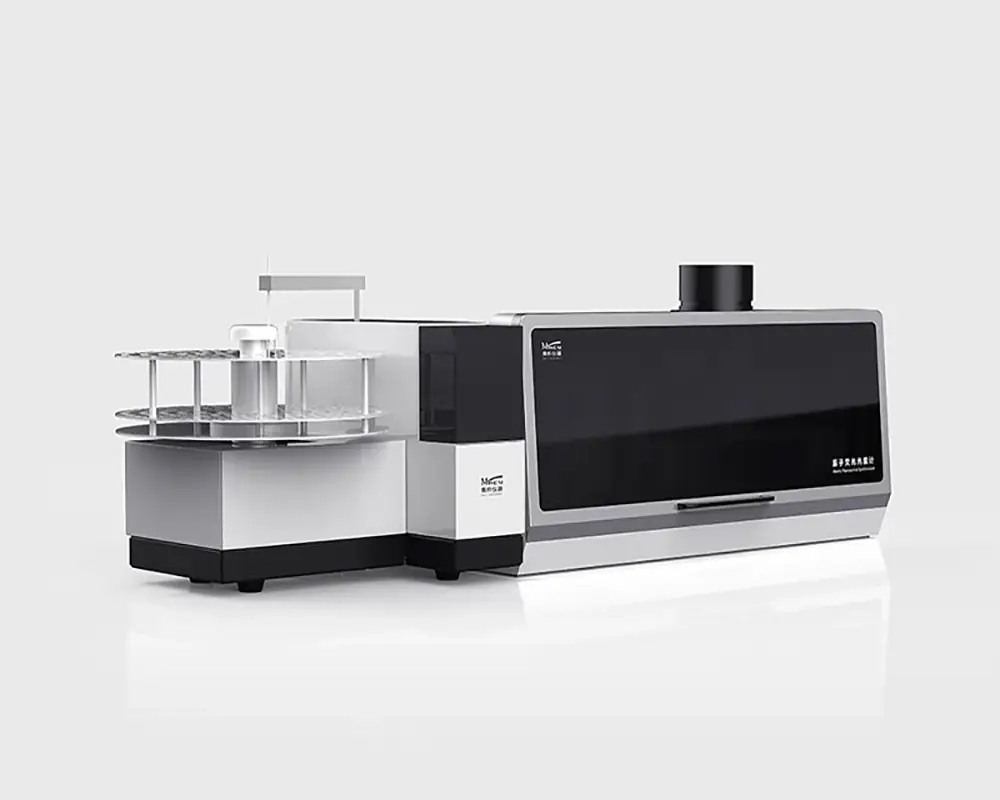
Focused Detection for Arsenic and Other Elements
The AFS-6801 can measure two elements through two channels simultaneously and is designed for trace analysis of 12 elements, including arsenic, mercury, selenium, tin, lead, bismuth, antimony, tellurium, germanium, cadmium, zinc, and gold. This makes it more flexible than an arsenic-only testing platform while retaining a focused AFS architecture.
Its published arsenic detection limit is <0.01 μg/L, while mercury and cadmium are specified at <0.001 μg/L. The manufacturer also reports an RSD of ≤0.7% and a linear range greater than three orders of magnitude.
Dual-Channel Measurement for Higher Throughput
The two channels can operate simultaneously, each measuring its own elements, which is a significant advantage of the system. This greatly improves efficiency for laboratories with large sample volumes or those performing multi-element assays in a single workflow. What’s more valuable, the calibration and dilution of the two channels can be set independently, without interference.
This function is particularly advantageous for laboratories that measure multiple elements. Instead of measuring each element individually, as long as the methodology allows, both channels can be run simultaneously, saving both time and effort.
Hydride Generation and Sample Handling
The AFS-6801 uses a multifunctional reaction module integrating hydride generation, gas-liquid separation, and waste-liquid removal. Its two-stage chemical gas-liquid separation system is specifically described for complex samples such as rock, ore, and soil.
The system also uses intermittent flow injection, alternating sample blanks to reduce cross-contamination. Its carrier-gas stabilization design is intended to reduce bubbles generated during the reaction and improve measurement stability.
A Reliable Partner Behind the AFS-6801
The performance of an analytical instrument depends not only on its technical design but also on the manufacturer’s experience and support capability. The AFS-6801 is developed by Macylab, a company specializing in spectroscopy and elemental analysis instruments.

With a product portfolio covering atomic fluorescence, atomic absorption, ICP emission, and UV-VIS spectrometers, Macylab provides analytical solutions for applications such as environmental testing, food safety, pharmaceuticals, and scientific research.
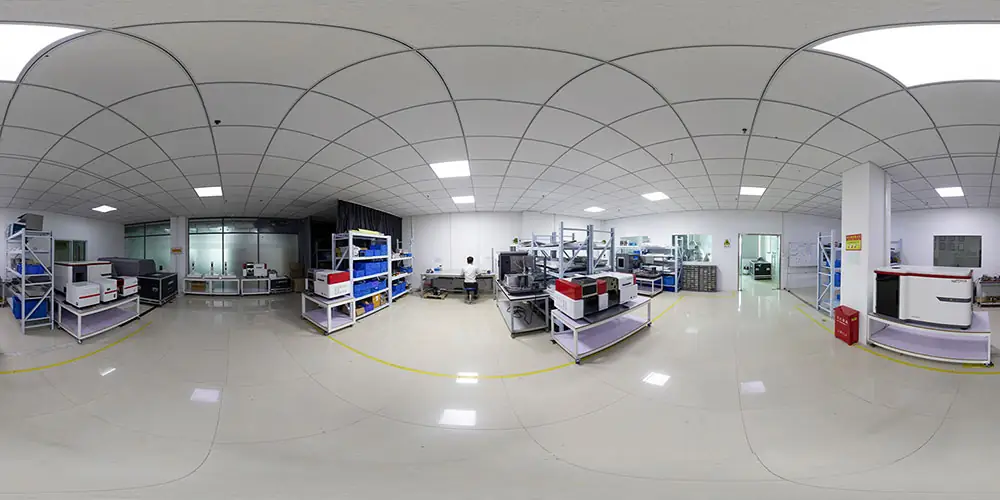
For laboratories selecting an Atomic Fluorescence Spectrometer, supplier capability is also an important consideration. By combining instrument development with application support, Macylab helps users implement trace-element analysis solutions more efficiently. For customers evaluating an Arsenic Analyzer or Trace Element Analyzer, the AFS-6801 offers both a focused analytical platform and support from an experienced analytical instrument manufacturer.
Applications and Practical Considerations for Arsenic Analysis
Arsenic analysis is relevant across environmental, agricultural, food, and industrial laboratories. WHO identifies contaminated groundwater, food prepared with contaminated water, and crops irrigated with high-arsenic water as important exposure pathways. It recommends a provisional drinking-water guideline value of 10 μg/L for arsenic. (WHO)
Environmental and Soil Analysis
Soil and sediment testing can require careful digestion because samples may contain high levels of mineral components and other potentially interfering substances. A suitable Trace Element Analyzer should therefore be evaluated using the actual sample matrix.
For environmental laboratories, applications may include soil, sediment, surface water, groundwater, and wastewater.
Food and Agricultural Testing
Food and agricultural laboratories may need to monitor arsenic in raw materials, crops, and processed products. The analytical challenge is not simply detecting arsenic but obtaining representative results after appropriate digestion and matrix treatment.
The distinction between inorganic and organic arsenic can also matter depending on the regulatory or research objective. WHO notes that inorganic arsenic is substantially more toxic than many organic arsenic compounds commonly found in seafood. (WHO)
Industrial and Process Monitoring
Industrial laboratories can apply trace arsenic analysis to raw materials, process samples, and environmental monitoring. The appropriate Heavy Metal Detector should be selected according to the target elements, sample composition, required detection level, and applicable test method.
FAQ
Q1: Why is an Atomic Fluorescence Spectrometer suitable for arsenic analysis?
A: AFS combines hydride-generation chemistry with fluorescence detection, providing a focused analytical approach for arsenic and other suitable trace elements.
Q2: What sample preparation is required before arsenic analysis by AFS?
A: Preparation depends on the matrix. Soil and food samples may require digestion, while water samples may require preservation, dilution, filtration, or other method-specific preparation.
Q3: What should I consider when choosing an Arsenic Analyzer?
A: Consider detection limit, precision, linear range, matrix compatibility, interference control, throughput, reagent and gas requirements, software, and after-sales support.
Q4: Can an Atomic Fluorescence Spectrometer detect elements other than arsenic?
A: Yes. Depending on the instrument configuration, AFS can be used for other elements such as mercury, selenium, antimony, bismuth, lead, and related trace elements. The AFS-6801, for example, supports 12 listed elements.
Conclusion
For laboratories performing routine trace arsenic testing, the most suitable analytical technology depends on the target elements, sample matrices, detection requirements, and workflow. AFS offers a focused approach that is particularly relevant to arsenic and other hydride-forming elements.
The AFS-6801 combines practical features such as dual-channel measurement and integrated hydride-generation with gas-liquid separation. Its performance specifications include a reported arsenic detection limit below 0.01 μg/L, an RSD of ≤0.7%, and a linear range exceeding three orders of magnitude. For laboratories whose priorities align with these capabilities, it is a practical option to evaluate alongside other trace-element technologies.
If you are evaluating an atomic fluorescence spectrometer for arsenic or trace-element analysis, contact us to discuss your application requirements and find out whether the AFS-6801 fits your laboratory workflow.