Micro-Volume Spectrophotometer Buying Guide for DNA and Life Science Research
Key Takeaways
A micro-volume spectrophotometer is designed to quantify DNA, RNA, proteins, and other biological samples using only microliter-level sample volumes.
The technology behind nanodrop-type instruments is based on UV-Vis absorbance measurement, surface tension-based sample retention, and automatic optical path control.
The UL-2000 Micro-Volume UV-VIS Spectrophotometer provides 0.5 μL minimum sample volume, selectable optical paths, full-spectrum analysis, and dual measurement modes for life science applications.
When selecting a supplier, laboratories should consider measurement performance, technical support, product reliability, and long-term cooperation capability.
1. What Is a Micro-Volume Spectrophotometer?
A micro-volume spectrophotometer is a UV-Vis analytical instrument designed for measuring the concentration and purity of biological samples with extremely small sample volumes. Unlike traditional spectrophotometers that require cuvettes and larger sample quantities, micro-volume systems directly measure samples placed on a detection pedestal.
In molecular biology laboratories, these types of instruments are frequently used to determine the concentrations of DNA, RNA, and proteins. The advantage is that the consumption can be kept very small when processing precious biological samples.According to the National Institutes of Health , accurate nucleic acid quantification is an important step in many molecular biology workflows, including sequencing, PCR, and other downstream applications.
The development of micro-volume UV-Vis technology has changed how laboratories perform routine sample analysis. A typical micro-volume system can measure samples with volumes around 0.5–2 μL and calculate concentration values directly from absorbance data.
1.1 Understanding NanoDrop and Micro-Volume UV-Vis Technology
The term nanodrop is commonly used by laboratory users when searching for small-volume UV-Vis instruments for DNA and protein analysis.
A nanodrop microvolume spectrophotometer is generally expected to provide functions such as:
- Small sample volume measurement
- DNA/RNA concentration calculation
- Protein quantification
- Purity ratio analysis including A260/A280 and A260/A230
Modern micro-volume systems use a pedestal-based measurement method. A small liquid column forms between two optical surfaces through surface tension, creating a defined optical path without requiring a conventional cuvette. This approach enables rapid measurement while reducing sample waste.
When selecting a nano spectrophotometer, sample volume is only one aspect. Optical performance, wavelength accuracy, detection stability, and suitability for your experiments are the key factors determining the equipment’s usability.
1.2 How Does Micro-Volume Spectrophotometry Work?
Micro-volume spectrophotometers operate according to the Lambert-Beer Law, where absorbance is related to analyte concentration and optical path length.
The basic formula is:
A = ε × b × c
Where:
- A represents absorbance
- ε represents the absorption coefficient
- b represents optical path length
- c represents analyte concentration
By adjusting optical path length, micro-volume instruments can analyze samples with different concentration levels while maintaining reliable measurement performance.
The measurement process generally includes four steps:
- Clean the upper and lower measurement surfaces before testing.
- Apply a small amount of sample onto the detection pedestal.
- Allow the liquid column to form between optical surfaces through surface tension.
- Measure absorbance and calculate concentration and purity values automatically.
Compared with traditional cuvette-based measurement, this workflow reduces preparation time and avoids additional consumables.
2. Key Performance Factors for DNA and Life Science Analysis
When selecting a micro-volume spectrophotometer, laboratories should evaluate several technical factors, including sample volume, optical path design, wavelength accuracy, detector performance, and data reliability.
2.1 Sample Volume and Optical Path Design
Sample consumption has always been a major issue in molecular biology experiments. After all, many biological samples are inherently difficult to obtain and are very limited in quantity.
Another important factor is optical path flexibility. Different sample concentrations may require different measurement conditions. A shorter optical path reduces absorbance saturation when measuring higher concentration samples.
2.2 Wavelength Accuracy, CCD Detection, and Spectrum Analysis
Reliable UV-Vis analysis depends on accurate wavelength control, stable optical components, and effective signal detection. These factors directly influence the reliability of concentration calculations and purity evaluations in molecular biology applications.
A micro-volume spectrophotometer typically uses a broadband light source, optical separation system, and high-sensitivity detector to collect absorbance data across different wavelengths. Stable wavelength accuracy is particularly important because biological samples are usually evaluated based on specific absorption peaks, such as 260 nm for nucleic acids and 280 nm for proteins.
The detector plays an important role in spectrum acquisition. Compared with single-wavelength measurement systems, full-spectrum detection can collect absorbance information across a wider wavelength range, allowing users to evaluate sample characteristics and identify potential interference from contaminants.
3. UL-2000 Micro-Volume UV-VIS Spectrophotometer: Features and Advantages
When evaluating a nanodrop microvolume spectrophotometer, the laboratory needs to consider both the technical specifications and how it will be used in daily operations. A truly suitable solution should provide reliable measurements, be easy to use, and be compatible with different sample types.
The UL-2000 Micro-Volume UV-VIS Spectrophotometer is designed for DNA, RNA, protein quantification, and other UV-absorbing sample analysis. It combines micro-volume measurement technology with conventional cuvette measurement capability, allowing laboratories to adapt the instrument to different testing requirements.
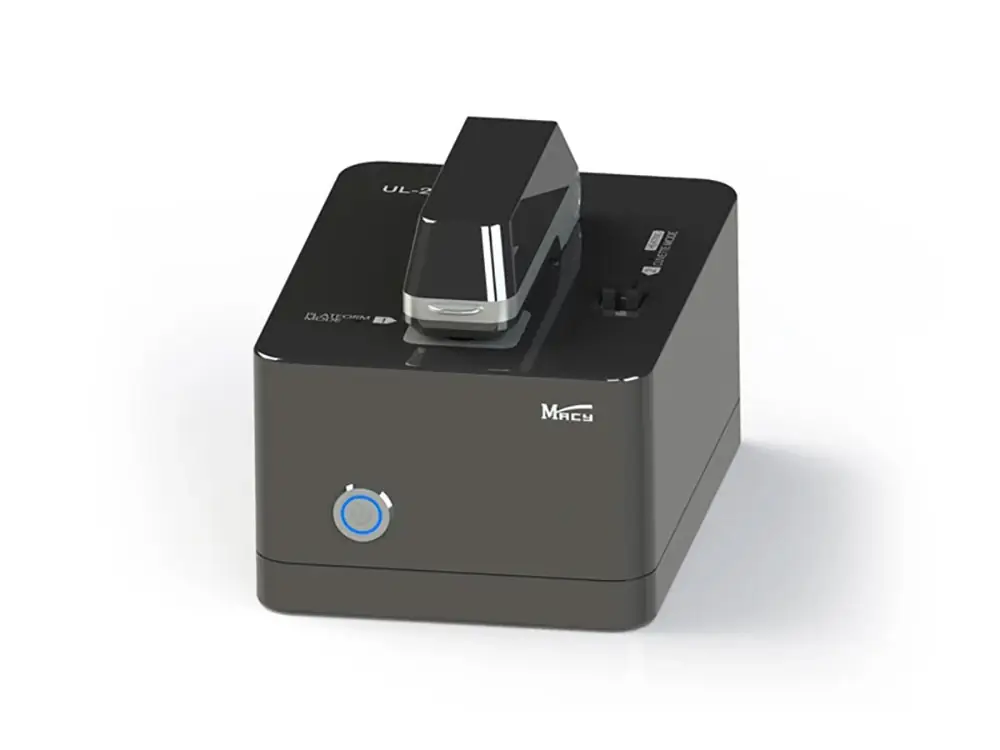
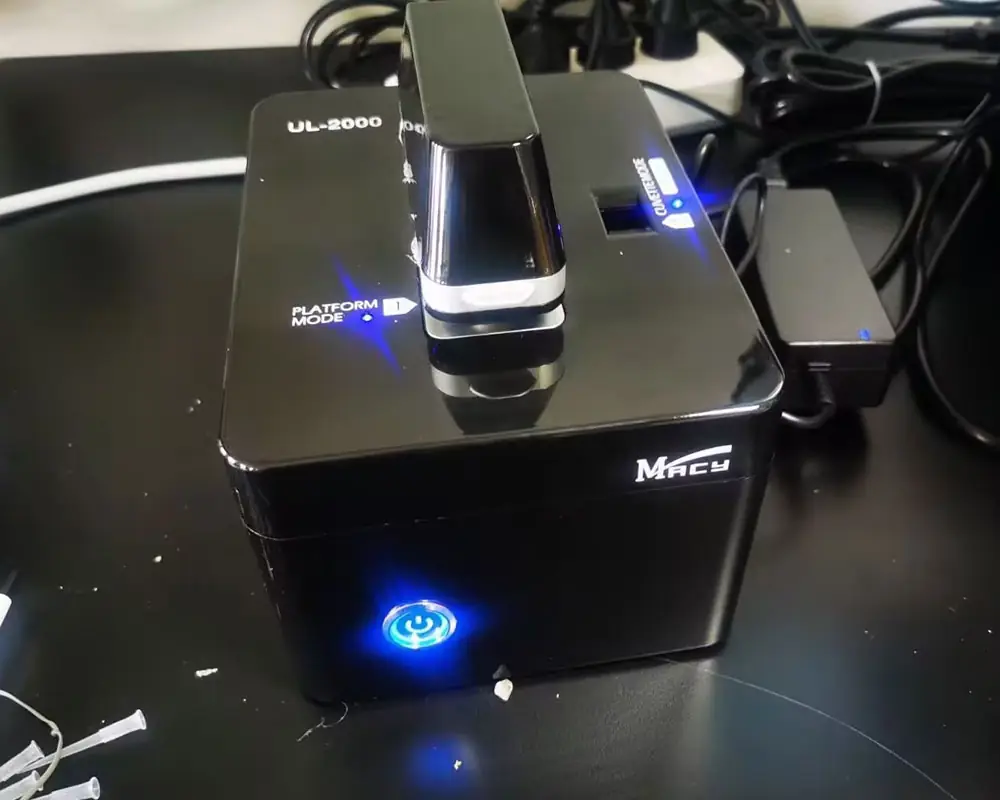
3.1 Technical Specification Comparison: UL-2000 and Typical Micro-Volume Spectrophotometers
When comparing micro-volume spectrophotometers, buyers usually focus on sample consumption, optical design, detection stability, and application flexibility. The following table summarizes key parameters that influence laboratory performance.
| Parameter | UL-2000 Micro-Volume UV-VIS Spectrophotometer | Typical Micro-Volume UV-Vis Spectrophotometers | UL-2000 Practical Advantage |
| Minimum Sample Volume | 0.5 μL | 0.5–2 μL | Helps preserve limited biological samples |
| Micro-volume Optical Path | 1 mm / 0.2 mm / 0.05 mm | Usually 1 mm / 0.2 mm | More options for different concentration ranges |
| Wavelength Range | 190–850 nm | Around 190–850 nm | Supports broad UV-Vis sample analysis |
| Wavelength Accuracy | 1 nm | Around 1 nm | Reliable wavelength measurement |
| Detector | 3648-pixel linear CCD array | CCD array detectors commonly used | High-resolution spectral acquisition |
| Light Source | Xenon flash lamp | Xenon flash lamp commonly used | Stable illumination with fast measurement |
| Measurement Time | <5 seconds | Several seconds | Improves routine laboratory efficiency |
| Measurement Mode | Micro-volume + cuvette mode | Micro-volume mode or optional cuvette mode | Supports more laboratory workflows |
Note: Specifications of typical micro-volume spectrophotometers vary by manufacturer and model. This comparison focuses on common technical factors used for laboratory instrument evaluation.
The comparison shows that UL-2000 focuses on flexibility rather than only basic concentration measurement. The selectable optical path design allows researchers to handle different sample concentrations without frequently changing workflows.
3.2 Flexible Optical Path and Dual Measurement Modes
One of the important design features of UL-2000 is its adjustable optical path system.
Traditional UV-Vis spectrophotometers normally use a 10 mm cuvette path. Micro-volume instruments shorten the optical path to measure concentrated samples using very small volumes.
UL-2000 provides three micro-volume optical paths:
- 1 mm
- 0.2 mm
- 0.05 mm
This design helps laboratories analyze samples with different concentration levels while reducing dilution requirements.
In addition, UL-2000 supports both micro-volume and cuvette measurement modes. This allows laboratories to continue using conventional measurement workflows when required while benefiting from micro-volume analysis for valuable biological samples.
3.3 Applications in Molecular Biology and Life Science Research
Micro-volume UV-Vis technology is widely used because many biological workflows require accurate measurement while preserving sample quantity.
Typical applications include:
- DNA and RNA concentration measurement before PCR, sequencing, and molecular analysis
- Protein quantification in biotechnology and biochemical research
- Purity evaluation using A260/A280 and A260/A230 ratios
- General UV-absorbing sample analysis in life science laboratories
For nucleic acid analysis, absorbance values provide useful information about sample quality. The A260/A280 ratio is commonly used to evaluate potential protein contamination, while A260/A230 helps identify possible contamination from salts, carbohydrates, or organic compounds.
According to the National Center for Biotechnology Information (NCBI), UV absorbance measurements at 260 nm and 280 nm are widely used for nucleic acid and protein analysis.
4. How to Choose a Reliable Micro-Volume Spectrophotometer Supplier
Selecting laboratory equipment requires more than comparing specifications. Long-term performance also depends on supplier capability, technical support, and product reliability.
Before purchasing a micro-volume spectrophotometer, laboratories should evaluate:
- Product quality control and technical documentation
- Application support for different testing requirements
- After-sales service and maintenance guidance
- Supply capability for distributors and international customers
A professional supplier should not only provide instruments but also help customers select suitable configurations according to their laboratory applications.
4.1 Why Choose MACYLAB as Your Laboratory Instrument Partner?
MACYLAB specializes in analytical laboratory instruments and provides solutions for scientific research, industrial testing, and laboratory applications.

With experience in instrument development and manufacturing, MACYLAB focuses on providing reliable analytical equipment, technical support, and flexible cooperation options for global customers.
For laboratories, distributors, and research organizations searching for a nano spectrophotometer solution, MACYLAB provides:
- Professional support for instrument selection and application requirements
- Stable manufacturing capability for international supply
- Technical documentation and product guidance
- Flexible cooperation opportunities for different market needs

The UL-2000 Micro-Volume UV-VIS Spectrophotometer represents MACYLAB’s approach to combining compact design, reliable optical performance, and practical laboratory usability.
FAQ
1. Is NanoDrop the same as a micro-volume spectrophotometer?
A: NanoDrop is originally a commercial product name associated with micro-volume UV-Vis spectrophotometer technology. In laboratory searches, terms such as nanodrop are often used to describe instruments designed for small-volume DNA, RNA, and protein measurement. A micro-volume spectrophotometer refers to the broader instrument category.
2. What sample volume is required for a micro-volume spectrophotometer?
A: The required volume depends on instrument design. Many micro-volume systems operate with microliter-level samples. The UL-2000 requires a minimum sample volume of 0.5 μL, helping laboratories reduce sample consumption during biological analysis.
3. What do A260/A280 and A260/A230 ratios indicate?
A: A260/A280 is commonly used to evaluate nucleic acid sample purity and possible protein contamination. A260/A230 provides additional information about contamination from substances such as salts, carbohydrates, or organic compounds. These ratios should be interpreted together with sample preparation conditions.
4. How can measurement accuracy be improved when using a micro-volume spectrophotometer?
A: Users should ensure proper sample mixing, avoid air bubbles, maintain sufficient sample volume for stable liquid column formation, and clean the measurement pedestal regularly. Correct blank selection and matching buffer conditions also help improve measurement reliability.
Conclusion
Micro-volume spectrophotometers have become essential tools for modern life science laboratories because they reduce sample consumption while providing rapid UV-Vis analysis.
When selecting an instrument, buyers should consider more than the ability to measure small sample volumes. Important factors include optical path flexibility, wavelength accuracy, detector performance, application range, and supplier support.
For research institutions, testing laboratories, and distributors looking for a reliable micro-volume UV-Vis solution, UL-2000 offers a balanced combination of performance, flexibility, and operational efficiency.For customers interested in DNA, RNA, and protein analysis solutions, contact us to discuss UL-2000 specifications, application requirements, and suitable laboratory configurations.