How to Ensure High-Precision SO2 Detection in Edible Fungi: A Comparative Guide Featuring the UV-1700 Spectrophotometer
Introduction: The High Stakes of Food Safety Compliance
For global food exporters and testing labs, SO2 residue detection for edible fungi is vital for cross-border trade compliance. According to 2026 data from Mordor Intelligence, the global edible fungi market was valued at USD 67.49 billion in 2025 and is projected to grow to USD 71.74 billion in 2026, reaching USD 99.04 billion by 2031 at a CAGR of 6.66%. (Source: https://www.mordorintelligence.com/industry-reports/edible-fungus-market). Global authorities, including EFSA and FDA, enforce strict SO2 limits to control sulfite preservative abuse. Traditional Iodimetry fails the precision requirements set by NY/T1373-2007. Verified lab tests confirm Macylab UV-1700 delivers balanced accuracy and cost efficiency, supporting standardized food additive testing for mushroom products.
Why the UV-1700 Outperforms Traditional Methods
A 2025 controlled laboratory assessment compared three mainstream sulfur dioxide (SO2) detection methods widely used by commercial food testing laboratories and export companies’ quality control departments: manual iodometric titration, ion chromatography, and automated spectrophotometry. Global customs and regulatory bodies, including the European Food Safety Authority (EFSA), the U.S. Food and Drug Administration (FDA), and food safety regulatory agencies in various countries, have implemented uniform standards for sulfite residue audits to curb the illegal use of preservatives. Excessive sulfur dioxide residue can impair the body’s digestive function and nutrient absorption. Therefore, a qualified test result is a necessary condition for the clearance of goods. To meet the growing demand for high-volume testing, many laboratories are phasing out manual testing tools that offer lower precision. The Macylab UV-1700 high-end UV-Vis spectrophotometer, with its three core advantages specifically designed for the detection of complex mushroom matrices, is an ideal choice for routine B2B laboratory testing:
1. Solving the Visual “Endpoint” Problem
Traditional Iodimetry titration relies entirely on naked-eye judgment of blue titration endpoints to calculate SO2 content. As stated in the 2026 Mordor Intelligence market analysis, button mushrooms take 60.39% of global mushroom output, and this mainstream mushroom variety contains rich natural water-soluble pigments, reducing polysaccharides and endogenous organic impurities. These substances will shade the standard blue color change during titration, leading to subjective human judgment errors, frequent false-positive results and poor test repeatability. Unlike error-prone manual titration, the UV-1700 adopts automatic fixed-wavelength optical detection instead of manual visual observation. Its optimized enclosed optical path design precisely controls stray light to isolate target chromogenic signals, eliminating sample background interference brought by mushroom endogenous substances fundamentally.
2. Superior Quantitative Linearity Performance
The UV-1700 analytical instrument achieves a linear correlation coefficient of 0.9989 – 0.9993 in standard SO2 colorimetric tests. Such stable linear performance supports accurate quantification of trace residues as low as 1.0μg/ml, complying with zero-residue requirements for fresh edible fungi export. Ordinary lab optical devices fail to maintain stable detection data under low-concentration samples, which will not pass official regulatory inspection. Qualified equipment sourced from trusted analytical instrument manufacturers guarantees audit-ready test results for global food projects.
3. Stable Batch Sample Recovery Rates
In unified testing of 54 batches of Northeast China fresh and dried edible fungi samples, the spectrophotometric method using the UV-1700 delivered stable recovery rates ranging from 85.1% – 118.5%, with an average RSD value of 5.4%. Compared with Iodimetry recovery fluctuation of 81.5% – 130.5%, this instrument delivers far higher data consistency for high-volume daily lab testing, cutting repeated sample testing workload for food factory QC teams.
Engineered for Demanding Daily Laboratory Environments
Global mushroom producers adopt conventional and organic cultivation modes for commercial sales, while organic mushroom products gain fast market growth at a 7.84% CAGR due to rising consumer health awareness. Premium organic mushroom exports require stricter traceable residue detection than common conventional products, putting higher demands on lab instrument stability and detection accuracy. Tailored for ROI-focused food labs and export-oriented food factories, the UV-1700 balances professional optical precision and long-term industrial durability, solving long-term pain points of frequent recalibration and unstable data of generic lab devices:
1. Unmatched Long-Term Optical Stability
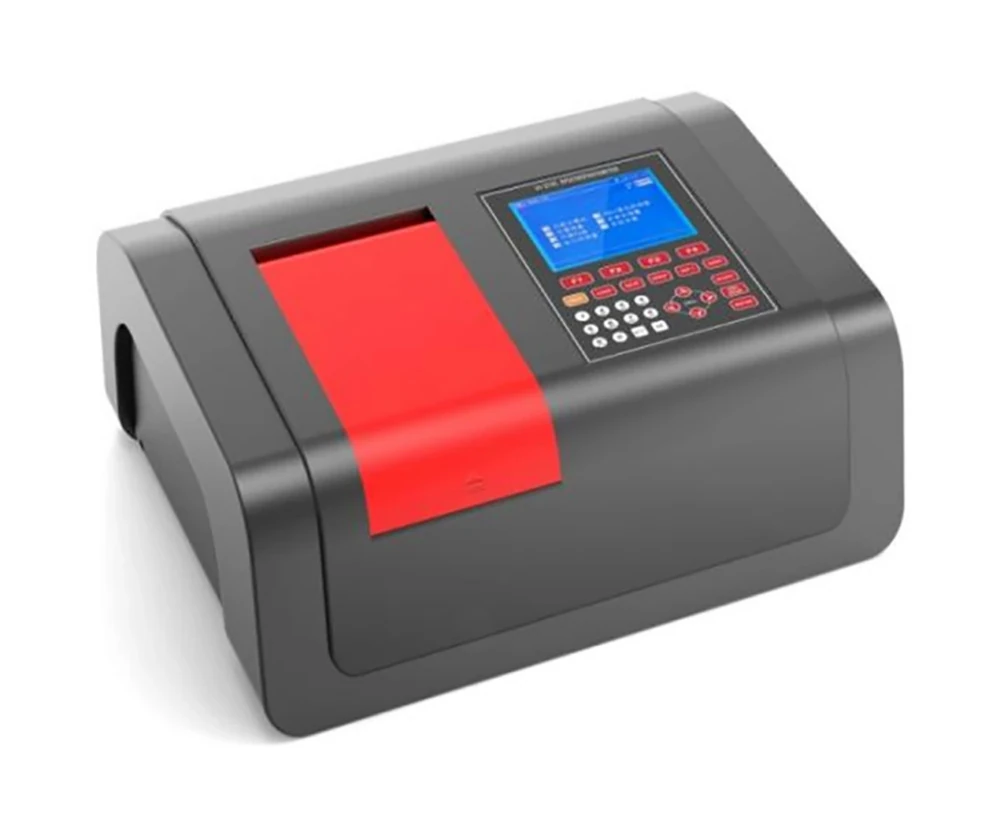
The Macylab UV-1700 advanced UV-Vis spectrophotometer owns industry-leading photometric stability of 0.0005A/h after standard 30-minute preheating, with ultra-low stray light controlled below ≤0.03% τ. Most edible fungi contain macromolecular proteins, crude polysaccharides and natural colorants that generate miscellaneous optical absorbance during testing. This professional optical design effectively filters external optical noise from complex mushroom matrices, maintaining a stable instrument baseline and consistent testing data throughout full-day continuous batch detection, suitable for long-hour heavy-duty laboratory work.
2. Professional Precision Optical Engineering
Equipped with a fixed 1.8nm standard spectral bandwidth and wavelength accuracy of ±0.3nm, the UV-1700 uv visible spectrophotometer owns qualified optical resolution fully matching the Pararosaniline Hydrochloride colorimetric method specified in NY/T1373-2007. The matched imported light source and photoelectric detector ensure wavelength locking precision, which is the core hardware qualification for official regulatory edible fungi SO2 spot inspection.
3. Controllable Low Lifecycle Maintenance Costs
Equipped with an original imported Deuterium ultraviolet lamp and Tungsten visible light lamp, the UV-1700 has 2-3 times longer light source service life than ordinary domestic spectrophotometers. Supported by nationwide after-sales calibration and spare parts service from Macylab, it reduces component replacement frequency and overall Total Cost of Ownership for lab managers, ideal for long-term heavy-duty laboratory operation.
Key Technical Specifications at a Glance
| Core Feature | Benefit |
| 190–1100nm Wavelength Range | Multi-purpose for SO2, nutrient and additive analysis |
| 6-inch High-Brightness LCD | Direct onsite data viewing without external PC |
| USB Port + Official PC Software | ISO-compliant traceable data for food additive testing audit |
| Imported Silicon Photodiode | High sensitivity for high-throughput mushroom sample testing |
| ≤0.03% τ stray light | Strong anti-interference for pigment-rich edible fungi samples |
How to Choose Qualified Analytical Instrument Manufacturers for Food Labs
For food testing labs and mushroom export enterprises, picking reliable analytical instrument manufacturers directly determines detection accuracy, audit compliance and long-term lab operational cost. Many procurement managers fail to distinguish qualified suppliers and purchase mismatched spectrophotometers with poor anti-interference performance. Based on the edible fungi SO2 inspection requirements, here are three core criteria to select trustworthy instrument manufacturers:
First, verified independent R&D capability and customized optical design. Credible manufacturers own complete intellectual property for optical path design. Generic suppliers adopt universal optical structures that cannot adapt to complex edible fungi detection scenarios. The company has professional optical R&D centers in Shanghai and Beijing, and collaborates with distributors in more than 20 countries around the world to provide localized testing support.
Secondly, it has a comprehensive global localized after-sales service system. Standardized food testing requires regular instrument calibration, method adjustment, and personnel training. Leading suppliers have established offline service outlets and international after-sales teams worldwide. Macylab has 12 service branches in China and an overseas technical team, which can provide on-site maintenance and operation guidance for laboratories around the world, thus avoiding long-term downtime caused by the lag in cross-border after-sales service.
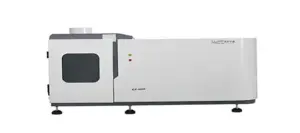
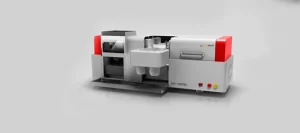
Third, it provides a comprehensive portfolio of laboratory products needed for one-stop procurement. High-quality suppliers offer a full range of analytical instruments, including high-end UV-Vis spectrophotometers, atomic absorption spectrometers, ICP-AES (inductively coupled plasma atomic emission spectrometers), and ICP-MS (inductively coupled plasma mass spectrometers). This helps laboratories standardize instrument operation, simplify supplier management, and reduce overall maintenance costs. As a certified national high-tech enterprise, Macylab can meet the diverse testing needs of industries such as food, environment, and pharmaceuticals with its full range of analytical instruments.
FAQ: Everything B2B Buyers Need to Know
Q1: Why choose Macy Lab?
A: ①Professional manufacturer with more than 10 years of experience; ②Mainly exported to the European and American markets, and we are also involved in other markets.
Q2: How does the UV-1700 uv visible spectrophotometer handle “Matrix Interference” in complex mushroom samples?
A: This is a key advantage. Unlike titration, which relies on visual color changes, the UV-1700 uses a high-performance silicon photodiode detector and ultra-low stray light (≤0.03% τ) to isolate the specific absorbance of the SO2-complex, ensuring pigments in the fungi don’t skew the results.
Q3: Is the instrument difficult for lab technicians to operate?
A: Not at all. The UV-1700 features a 6-inch high-brightness LCD and an intuitive interface. It supports automatic wavelength adjustment and can be controlled via PC software. This reduces human error and speeds up the training process for new staff.
Q4: What about the after-sale service?
A: Our spectrophotometer consumables are fully equipped, with a good after-sales service system and a one-year warranty commitment, which can solve customers’ worries. We can ensure that our customers purchase the components and parts within 5 years. And the product updates and replacement will not be affected.
Q5: Can I export data for audit trails and ISO compliance?
A: Yes. The UV-1700 supports USB data output and can be connected to a printer or a PC. Our professional software allows for full spectral scanning and data management, which is essential for laboratories maintaining ISO/IEC 17025 accreditation.
Conclusion
Global mushroom trade requires error-free SO2 detection to comply with international food safety regulations. Traditional Iodimetry has inherent detection flaws, while ion chromatography brings high procurement costs for grassroots laboratories. Developed by reputable analytical instrument manufacturers, the Macylab UV-1700 serves as a cost-effective professional spectrophotometer for food analysis, equipped with reliable anti-interference capability, consistent test data and low lifecycle maintenance cost. It is the optimal upgrade choice for laboratories switching from error-prone manual titration to automated, high-precision SO2 detection for edible fungi batches.
Contact Macylab today to get customized food testing solutions and exclusive instrument quotations for your laboratory.