The Macylab UV-1700 is an automated ultraviolet-visible (UV-Vis) spectrophotometer designed for routine qualitative and quantitative molecular analysis across the 190nm to 1100nm wavelength spectrum. Utilizing a Czerny-Turner optical configuration with a 1200 lines/mm holographic grating, it provides continuous optical coverage from the deep ultraviolet through the visible and near-infrared regions.
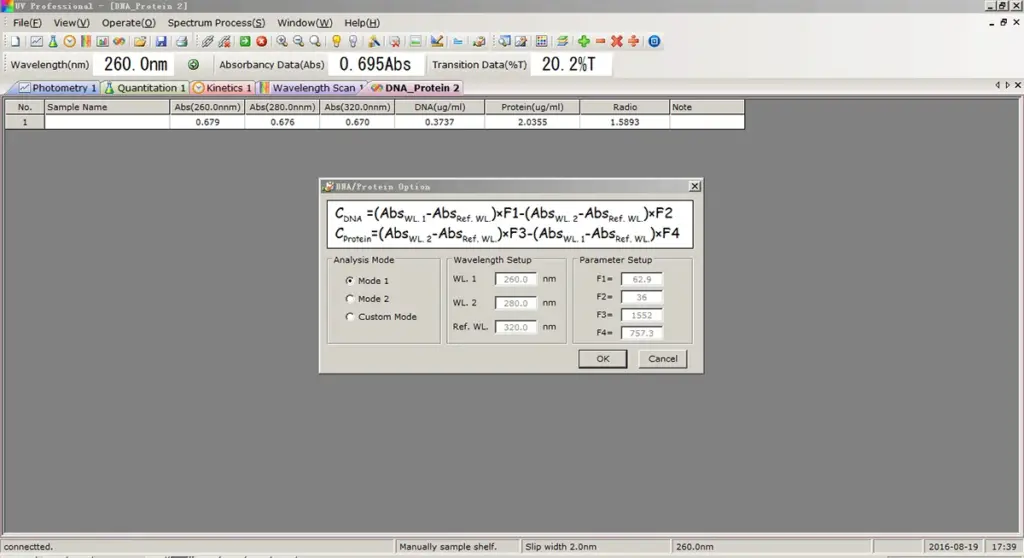
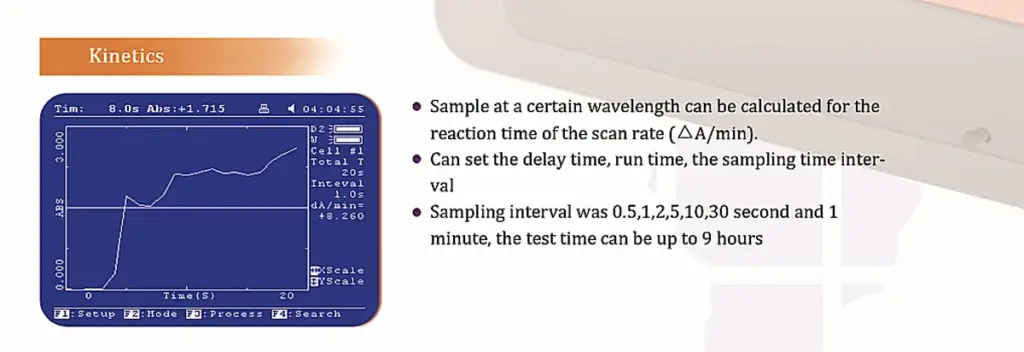
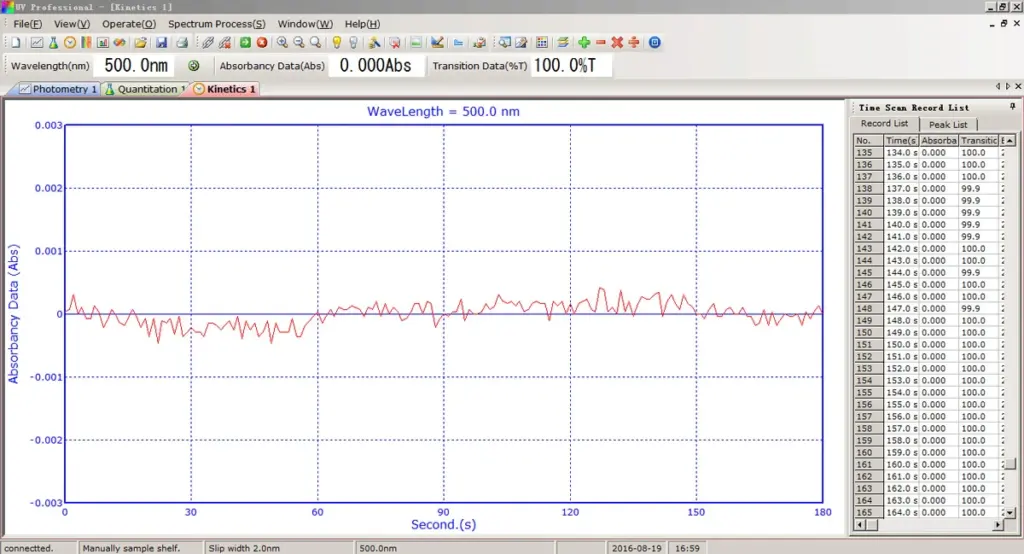
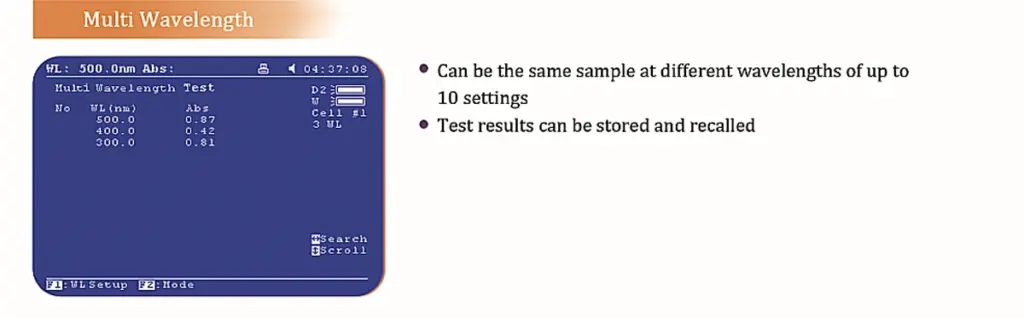
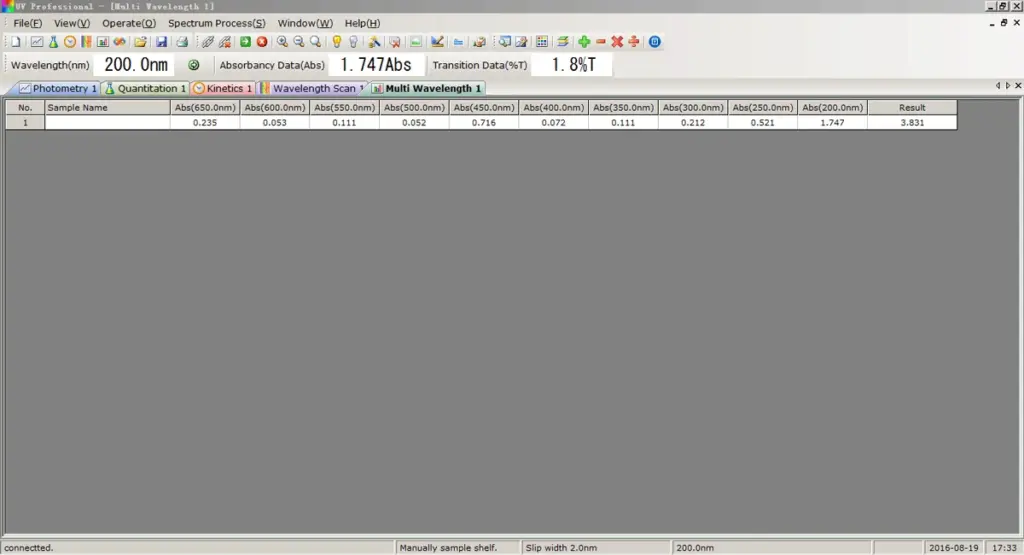
Equipped with a standard fixed 2nm spectral bandwidth, an automated wavelength setting mechanism, and dual imported light sources (deuterium and tungsten halogen lamps), the UV-1700 is tailored for standard laboratory protocols. It operates independently via its built-in microcomputer and 6-inch blue LCD screen, or connects to a PC via USB for comprehensive spectral processing, time-scan kinetics, and multi-wavelength testing.
Key Features
Standard 2nm Fixed Spectral Bandwidth: Delivers the optical resolution specified by international pharmacopoeias and general testing standards, ensuring consistent, repeatable measurements without the need for manual slit calibration.
Automated Dual-Lamp Configuration: Employs an imported deuterium lamp for ultraviolet testing (190–340nm) and a tungsten halogen lamp for visible and near-infrared testing (340–1100nm), featuring programmable automatic light source switching.
Photometric Stability & Low Stray Light: Engineered for reliable photometric repeatability (≤0.15% T) and low stray light (≤0.03% T at 220nm NaI and 340nm NaNO2), maintaining a baseline drift of 0.0005 A/h at 500nm after warm-up.
Onboard 6-Inch LCD Interface: The integrated high-brightness blue screen displays photometric data, multi-sample calibration points, and standard curves directly, supporting standalone benchtop operation.
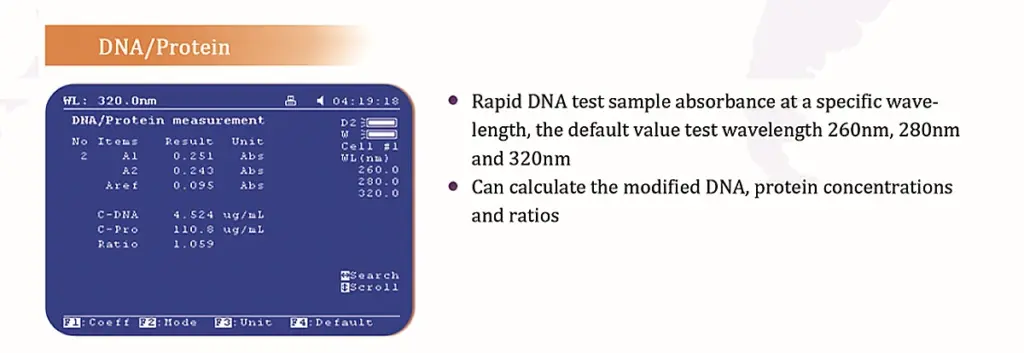
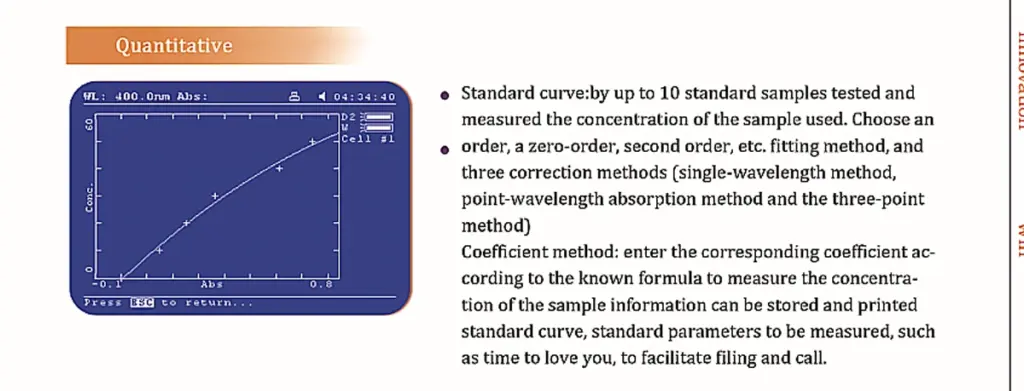
Multiple Testing Programs: Pre-configured for direct transmission (%T), absorbance (A), concentration determination (C via standard samples or factor entry), kinetics, and nucleic acid/protein calculation modes.
Standard Output & Communication Ports: Features USB interfaces and a parallel printer port for connecting to external USB flash drives, direct printing via local printers, or communication with Windows-based PC software.
Specifications
Parameter
Specification (Official Verified Data)
Wavelength Range
190 ~ 1100 nm
Spectral Bandwidth
2 nm (fixed)
Wavelength Accuracy
±0.3 nm
Wavelength Repeatability
≤0.1 nm
Photometric Display Range
0 ~ 200% T | -4.0 ~ 4.0 A | 0 ~ 9999 C
Photometric Accuracy
±0.3% T (0–100% T) | ±0.002A (0–0.5A) | ±0.003A (0.5A–1A)
Photometric Repeatability
≤0.15% T (0–100% T) | ±0.001A (0–0.5A) | ±0.0015A (0.5A–1A)
Baseline Flatness
±0.001 A
Stability
0.0005 A/h (at 500 nm, preheated)
Noise Level
±0.0002 A (at 500 nm, preheated)
Stray Light
≤0.03% T (at 220 nm NaI & 340 nm NaNO2)
Photometric Mode
T, A, C, E (Transmittance, Absorbance, Concentration, Energy)
Wavelength Setting
Automatic
Display Mode
6-inch high-brightness blue LCD screen
Detector
Imported Silicon Photodiode
Light Source
Imported Deuterium Lamp & Imported Tungsten Lamp
Output Interfaces
USB Interface, Parallel Printer Port
Power Requirements
AC 220V/50Hz or AC 110V/60Hz | 120W
Dimensions & Weight
560 × 450 × 230 mm | Net Weight: 28 Kg
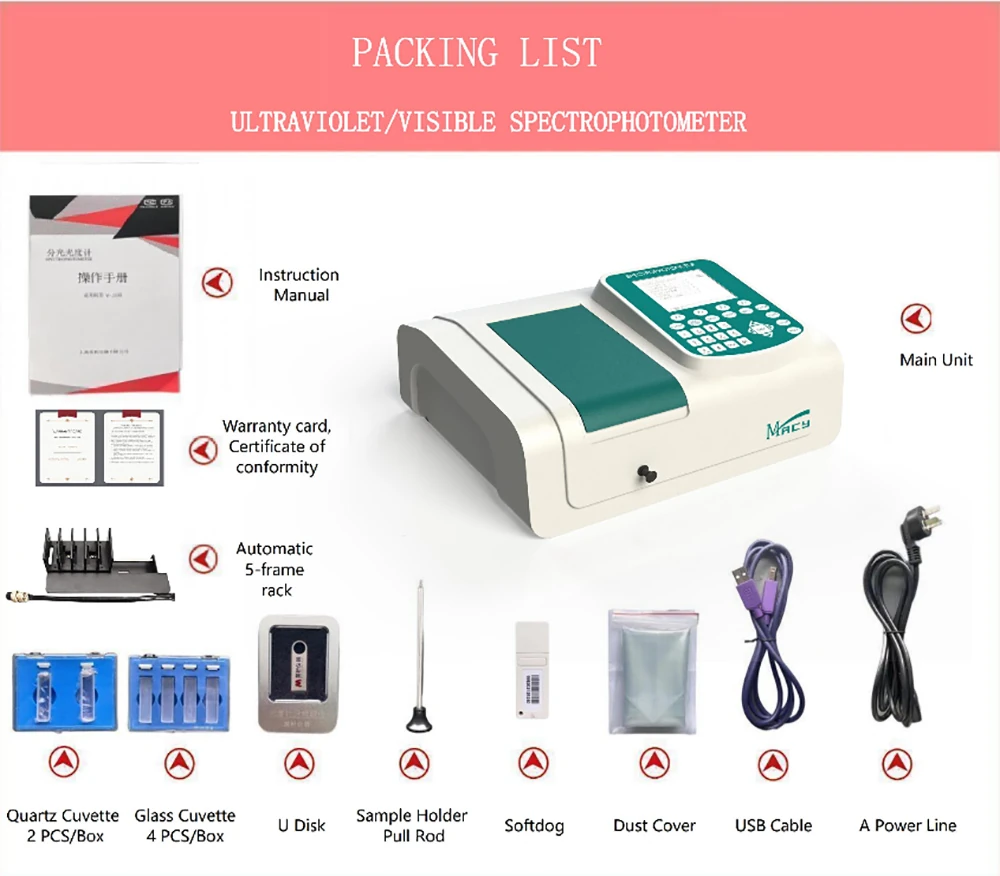
Standard Configuration
Applications
The UV-1700 is designed for standardized analytical procedures across ultraviolet and visible spectra:
Pharmaceutical Quality Control: Routine quantification of active pharmaceutical ingredients (APIs), raw chemical inspection, and dissolution absorbance testing following standardized 2nm bandwidth protocols.
Biochemical & Life Sciences: Concentration checks and purity ratios (A260/A280) for DNA, RNA, and protein solutions, as well as time-dependent enzyme kinetics assays.
Environmental Analysis: Spectroscopic testing of wastewater and natural surface water for chemical oxygen demand (COD), nitrates, phosphates, and organic solvent residues.
Food Safety & Agriculture: Concentration screening of food colorants, preservation agents, agricultural residues, and liquid formulation quality.
Who is it for?
Industrial and Municipal QC Laboratories: Testing facilities in water treatment, food manufacturing, and chemical production requiring a dependable UV-Vis instrument for standardized daily sample testing.
University and Academic Teaching Labs: Chemistry, biology, and pharmacology departments needing a standalone UV-Vis spectrophotometer with an intuitive screen interface for student laboratory courses.
Commercial Testing Centers: Facilities running established testing standards that require a fixed 2nm slit width without the ongoing mechanical adjustments of variable-slit systems.
Why choose it?
Standardized 2nm Bandwidth: A 2nm spectral bandwidth matches the requirement for the vast majority of standard chemical and pharmacopoeial test procedures, providing sufficient optical resolution without unnecessary mechanical complexity.
UV-1700 vs. UV-1700S Selection Logic: The base UV-1700 features a fixed 2nm slit width, making it a budget-friendly option for routine testing. If your lab specifically requires variable resolution (0.5nm, 1.0nm, 2.0nm, 4.0nm) for fine peak separation in research or specialized regulatory assays, choose the variable-slit UV-1700S.
UV-1700 vs. UV-1800 Selection Logic: Both instruments share a standard 2nm bandwidth. However, the UV-1700 operates on a single-beam optical platform, offering an economical choice for laboratories that do not require continuous real-time reference-beam splitting.
Software features
DNA Protein
Kinetics
Multi Wavelength
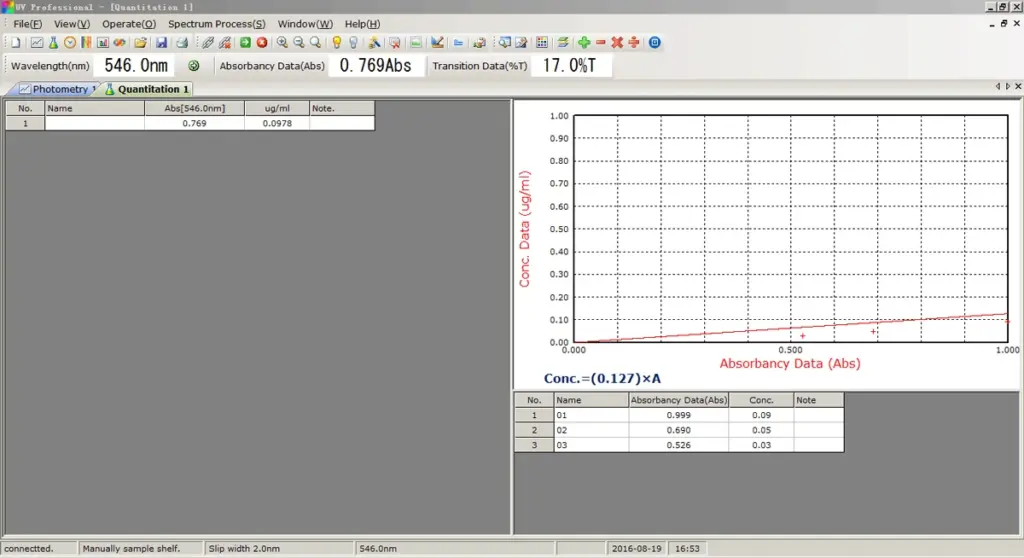
Quantitive
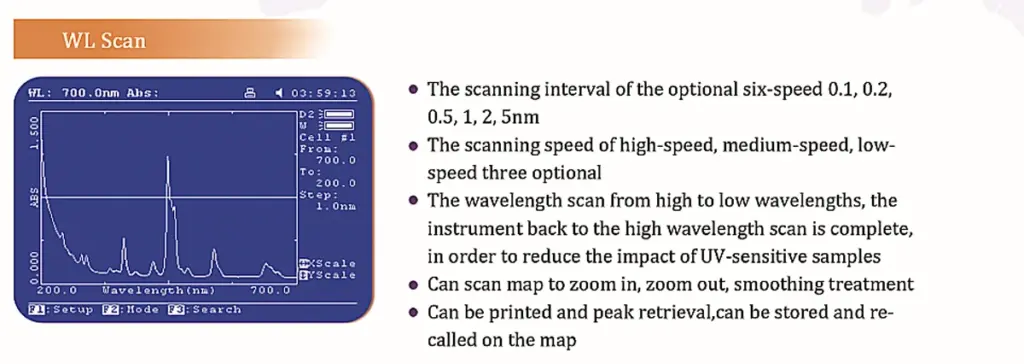
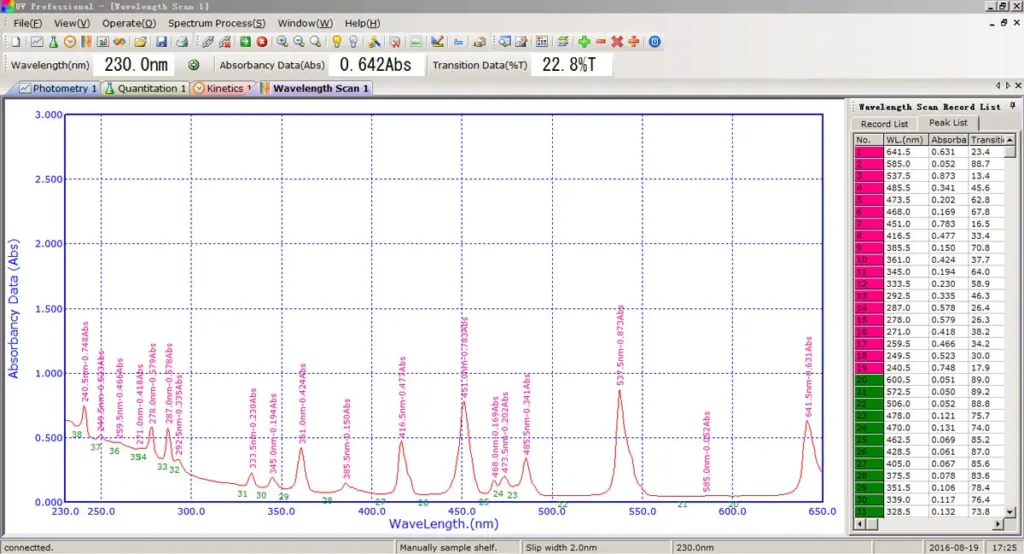
WL Scan
Packaging, Installation & Operation
Packaging & Shipping
After unpacking the instrument, compare the contents with the packing list and check that all items are present and undamaged.
Installation & Setup
Place the spectrophotometer in a suitable location away from direct sunlight, dust, corrosive gases, and strong vibrations. For stable operation, keep it away from strong magnetic or electrical fields and electrical devices that may generate high-frequency fields.
Keep the area around and underneath the instrument clear to allow adequate airflow.
Use the appropriate power cord and connect the instrument to a grounded outlet.
Initial Operation
Turn on the spectrophotometer and allow it to warm up for the recommended time before taking measurements. Follow the instrument’s operating instructions to complete any required system initialization, calibration, or wavelength verification before measurement.
Exhibition
FAQ (Frequently Asked Questions)
The UV-1700 has a fixed 2nm spectral bandwidth, which is standard for general analytical and educational laboratories. The UV-1700S incorporates a mechanical slit selector offering four adjustable bandwidths (0.5nm, 1.0nm, 2.0nm, and 4.0nm) to meet variable optical resolution requirements.
Yes. With an optical range extending down to 190nm and an imported deuterium lamp, the UV-1700 supports ultraviolet measurements. It includes built-in calculation modes for DNA/RNA concentration at 260nm, protein concentration at 280nm, and purity ratio assessments (A260/A280).
Yes, for measurements in the ultraviolet range below 320nm, quartz cuvettes are required because optical glass and common plastic cuvettes absorb UV radiation. Standard optical glass or visible-grade plastic cuvettes can be used for measurements in the visible spectrum above 320nm.
The UV-1700 features a USB port that allows direct data export to a USB flash drive. It can also connect to a local printer via its parallel port, or connect to a PC via USB for data archiving and processing using compatible software.
No. The UV-1700 functions as a complete standalone system using its internal microprocessor, keypad, and 6-inch blue LCD screen. Operators can adjust wavelengths, blank the baseline, establish calibration curves, and read results directly on the instrument. Connecting to a PC is optional.