The Macylab UV-1900 is an automated, double-beam ultraviolet-visible (UV-Vis) spectrophotometer designed for high-precision quantitative and qualitative analysis across the 190nm to 1100nm spectral range. Featuring a true double-beam optical architecture, it splits light from its dual sources (deuterium and tungsten lamps) into separate sample and reference beams. This continuous referencing actively compensates for optical drift, lamp fluctuations, and solvent absorbance in real time.
Equipped with a motorized wavelength drive, a selection of adjustable spectral bandwidths (from 0.1nm to 4.0nm), and a 6-inch display, the UV-1900 complies with standard pharmacopoeia testing requirements. It operates as a standalone unit for routine absorbance and concentration tests, or connects to a PC for spectral scanning, kinetics, and multi-wavelength assays.
Key Features
Double-Beam Optical Path: Splits the light beam into sample and reference paths to monitor and compensate for energy variations in real time, delivering high baseline stability (±0.001A) and low photometric drift.
Adjustable Spectral Bandwidth: Offers selectable bandwidth settings (0.1nm, 0.2nm, 0.5nm, 1.0nm, 2.0nm, and 4.0nm) to meet the resolution criteria required by various international pharmacopoeias and research standards.
Dual Light Source Configuration: Combines an imported deuterium lamp for ultraviolet measurements (190–340nm) with a tungsten halogen lamp for visible and near-infrared analysis (340–1100nm), featuring automatic lamp switching.
Integrated Display and Data Ports: Includes a built-in 6-inch high-brightness display for direct curve viewing and parameter setting. Equipped with USB and parallel communication interfaces for external PC control, flash drive data export, and direct printing.
The UV-1900 is engineered for applications across ultraviolet, visible, and near-infrared spectra:
Pharmaceutical Analysis: Quality assurance and compliance testing meeting strict pharmacopoeial resolution tests, including purity analysis and active pharmaceutical ingredient (API) quantification.
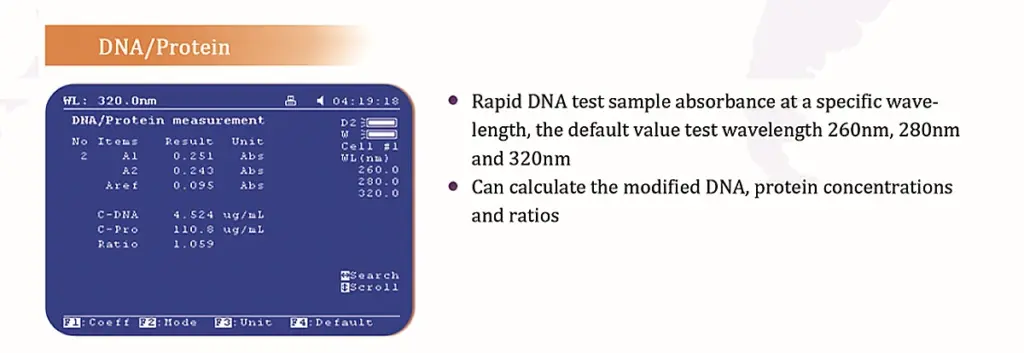
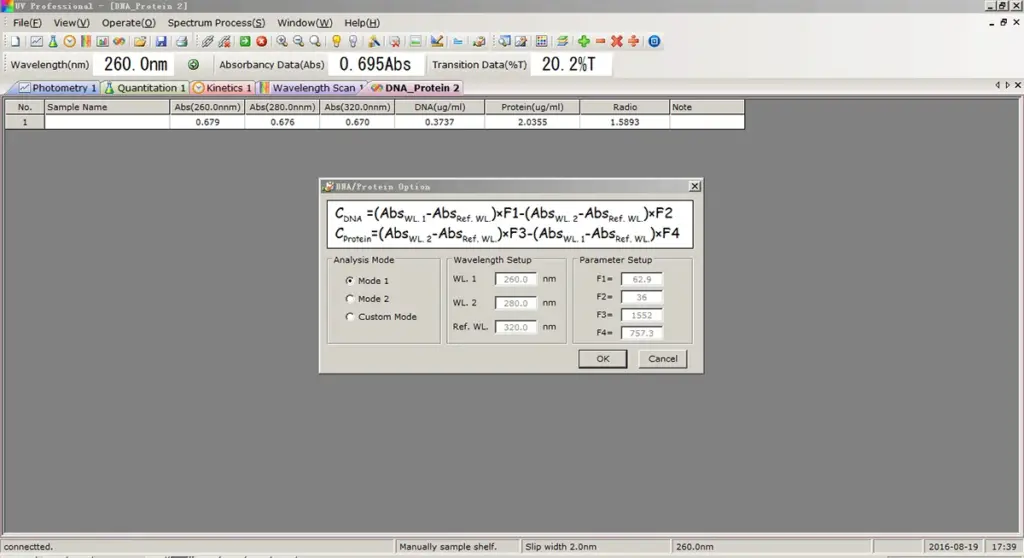
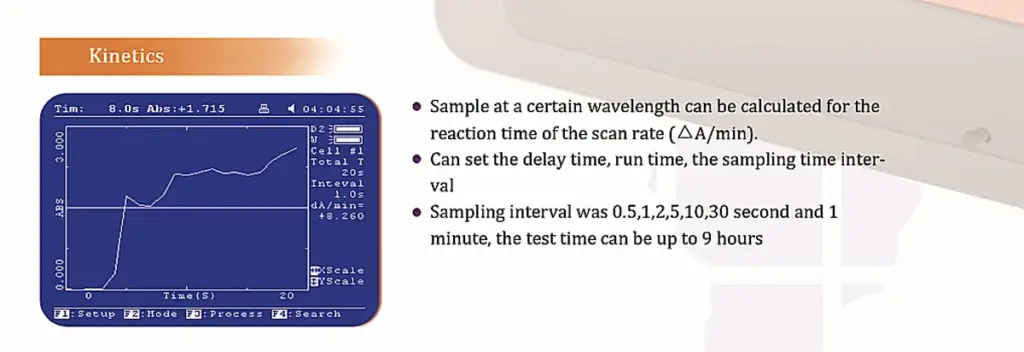
Biochemical & Life Sciences: Direct quantification and purity assessment of nucleic acids (DNA/RNA at 260nm) and proteins (at 280nm), alongside enzyme reaction kinetics.
Environmental Monitoring: Quantitative determination of trace organic pollutants, nitrates, surfactants, and chemical oxygen demand (COD) in wastewater and surface water.
Chemical & Petrochemical QA: Tracking reaction progress, monitoring degradation kinetics, and measuring component concentrations in organic solvents.
Who is it for?
Pharmaceutical and Biotech Laboratories: QC and QA analysts requiring compliance with pharmacopoeia criteria and variable slit widths for fine peak separation.
University and Scientific Research Institutes: Academic research groups conducting molecular characterization, complex kinetic tracking, and full-spectrum scanning.
Third-Party Inspection Bodies: Testing agencies that demand a stable double-beam platform to minimize daily recalibration while maintaining high sample throughput.
Why choose it?
Real-Time Reference Compensation: Unlike single-beam spectrophotometers that require regular re-blanking to account for optical drift, the UV-1900’s double-beam geometry continuously references the blank cell, ensuring baseline stability over extended operational periods.
Broad Bandwidth Flexibility: With bandwidth settings adjustable down to 0.1nm, the instrument can resolve fine, overlapping absorption bands that 2nm or 4nm fixed-slit instruments cannot separate.
Full UV-to-NIR Coverage: Covering 190nm to 1100nm with automated deuterium and tungsten lamp transitions, the unit handles both UV-absorbing biomolecules and visible-range colorimetric reagents on a single platform.
Software features
DNA Protein
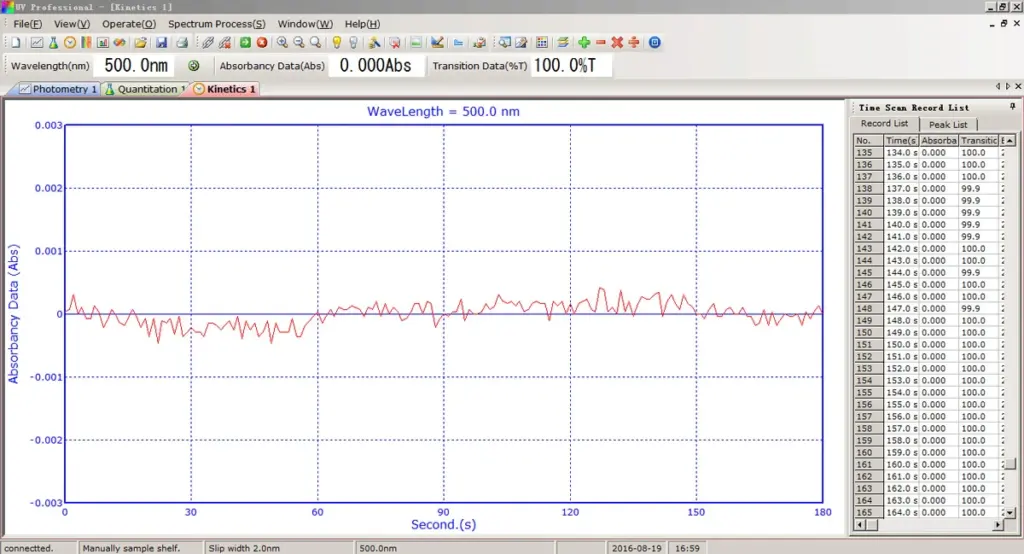
Kinetics
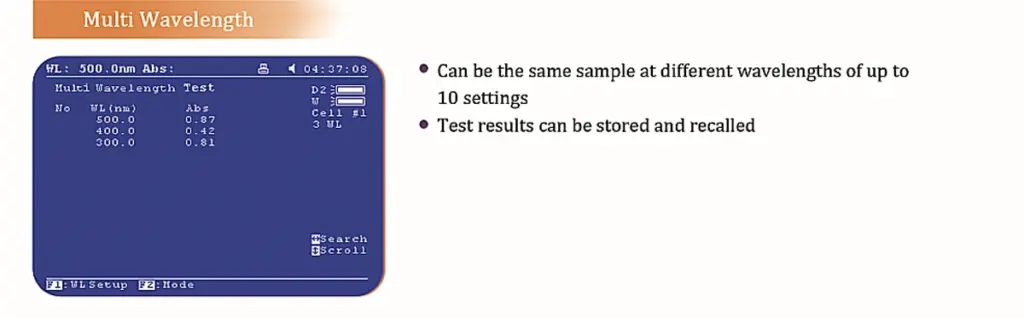
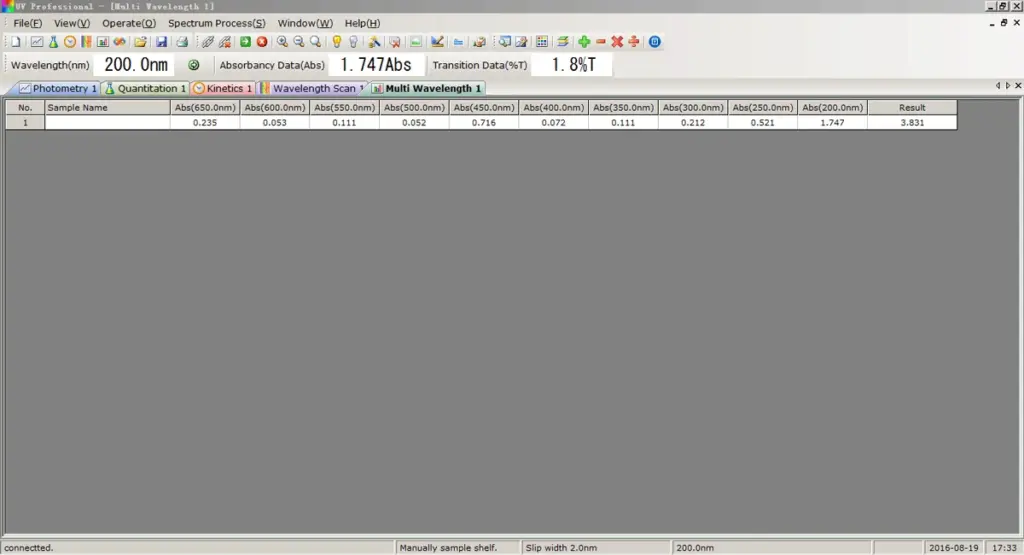
Multi Wavelength
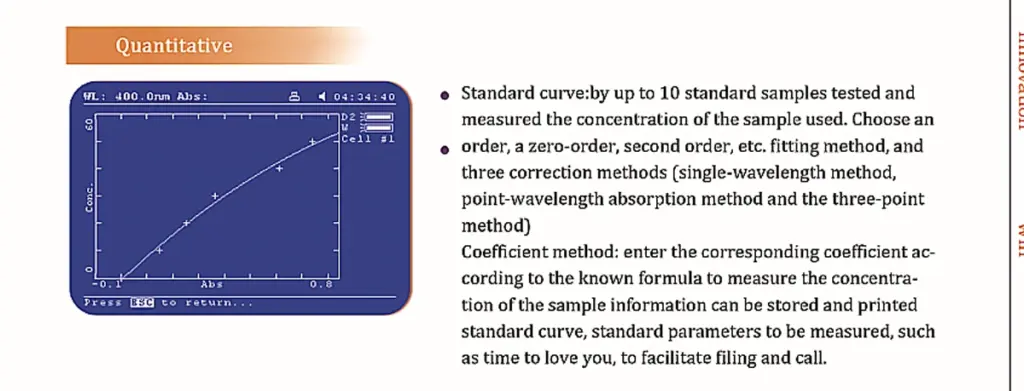
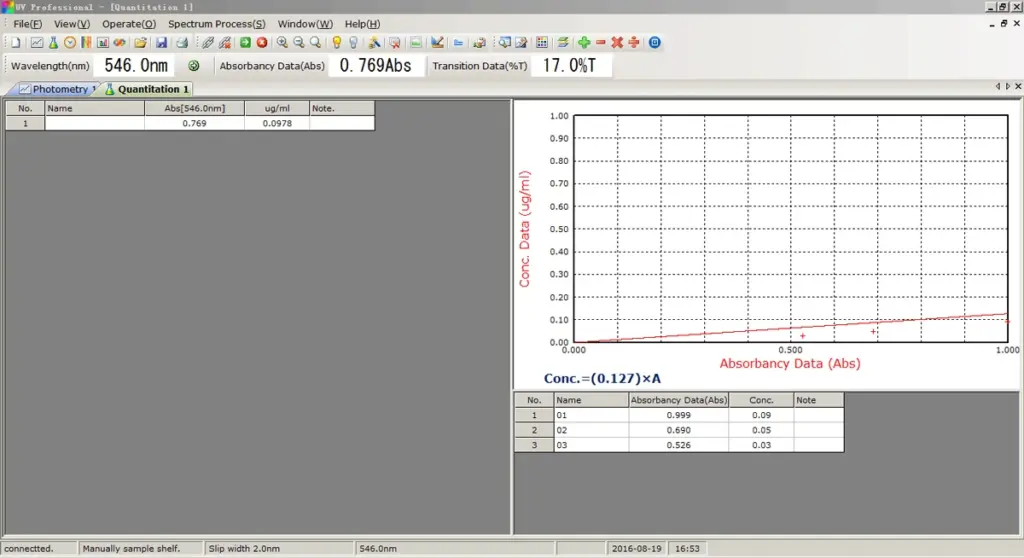
Quantitive
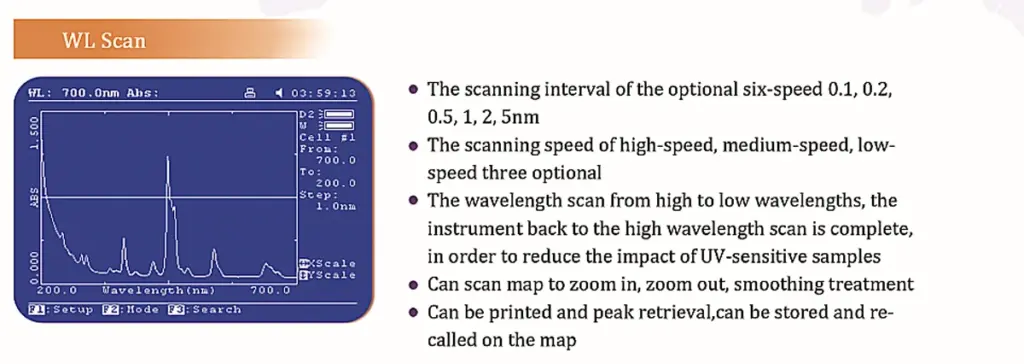
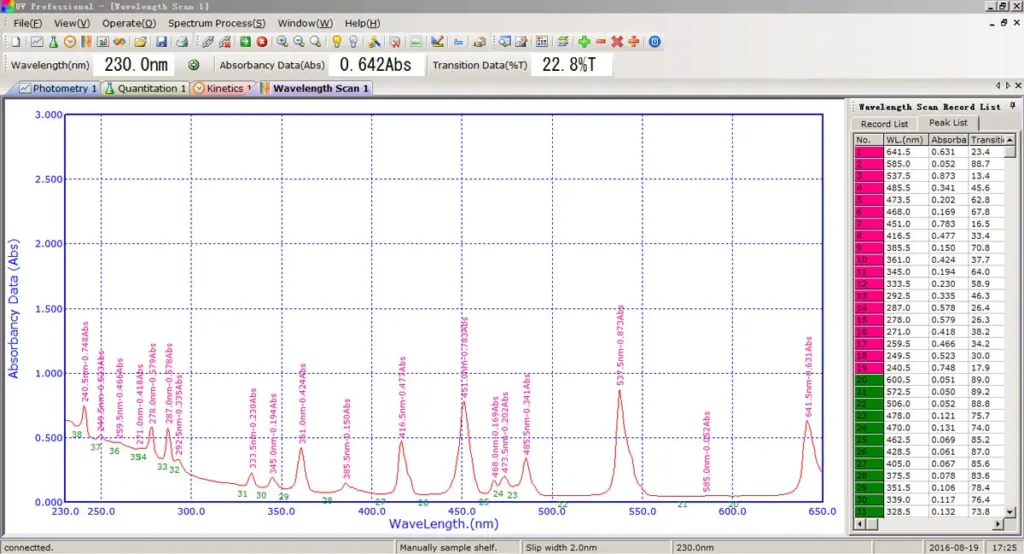
WL Scan
Packaging, Installation & Operation
Packaging & Shipping
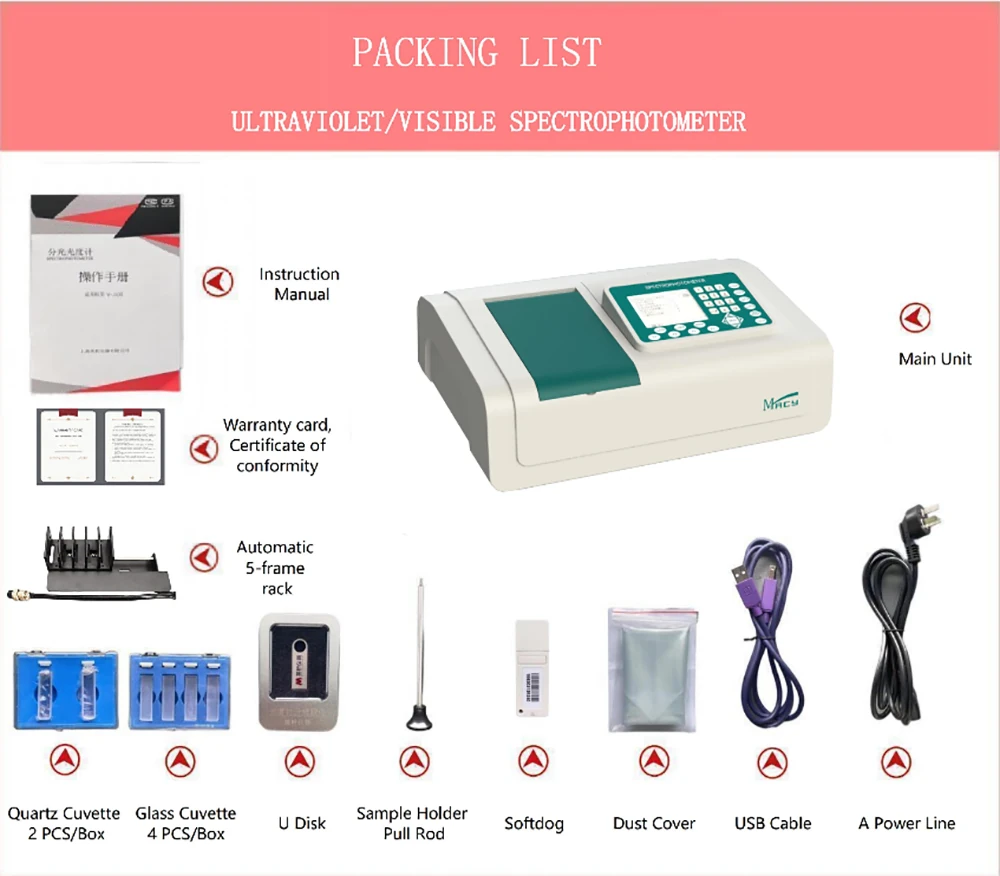
After unpacking the instrument, compare the contents with the packing list and check that all items are present and undamaged.
Installation & Setup
Place the spectrophotometer in a suitable location away from direct sunlight, dust, corrosive gases, and strong vibrations. For stable operation, keep it away from strong magnetic or electrical fields and electrical devices that may generate high-frequency fields.
Keep the area around and underneath the instrument clear to allow adequate airflow.
Use the appropriate power cord and connect the instrument to a grounded outlet.
Initial Operation
Turn on the spectrophotometer and allow it to warm up for the recommended time before taking measurements. Follow the instrument’s operating instructions to complete any required system initialization, calibration, or wavelength verification before measurement.
Exhibition
FAQ (Frequently Asked Questions)
A single-beam spectrophotometer passes light through one path at a time, meaning lamp drift or voltage variations directly affect readings unless the user recalibrates frequently. The double-beam UV-1900 simultaneously splits light through a reference cell and a sample cell, continually subtracting baseline changes and providing higher photometric stability over long measurement runs.
Yes. Operating down to 190nm and equipped with a deuterium lamp, the UV-1900 supports ultraviolet measurements. It includes dedicated calculation modes for nucleic acids (A260), protein concentration (A280), and ratio checks (A260/A280).
Yes, for measurements below 320nm in the ultraviolet range, quartz cuvettes are required because standard glass and common plastic cuvettes absorb UV light. Standard optical glass cuvettes can be used for measurements in the visible range above 320nm.
The UV-1900 features mechanical slit switching allowing users to select bandwidths of 0.1nm, 0.2nm, 0.5nm, 1.0nm, 2.0nm, or 4.0nm depending on whether the assay requires high energy throughput or fine optical resolution.
Yes. The UV-1900 can run standalone using its built-in keypad, microprocessor, and 6-inch screen for routine photometric, quantitative, and scanning procedures. Connecting to a PC via USB is available when more extensive curve processing, export, and compliance data logging are required.