The Macylab UV-1800 is an automated, double-beam ultraviolet-visible (UV-Vis) spectrophotometer designed for precise quantitative and qualitative spectral analysis across the 190nm to 1100nm wavelength range. Operating on a true double-beam optical geometry, the system continuously divides the light from its dual light sources into separate sample and reference paths. This optical design compensates for lamp fluctuations and system drift in real time, delivering consistent photometric stability during extended analytical runs.
Equipped with a fixed 2nm spectral bandwidth (standard configuration), an automatic motorized wavelength mechanism, and a 6-inch high-brightness display, the UV-1800 provides the precision required for routine quality control, environmental testing, and pharmaceutical analysis. The instrument operates effectively as a standalone system or connects via USB to a PC for spectral scanning, kinetics, and multi-wavelength processing.
Key Features
Double-Beam Optical Geometry: Splits the incident beam into simultaneous sample and reference channels, continuously correcting for baseline drift and light source variations to achieve baseline stability (≤0.001 A/h at 500nm).
Standard 2nm Spectral Bandwidth: Delivers the optical resolution required for general pharmacopoeial and standard laboratory testing procedures without requiring manual slit adjustments.
Automated Dual-Lamp System: Utilizes an imported deuterium lamp for ultraviolet measurements (190–340nm) and a tungsten halogen lamp for visible and near-infrared analysis (340–1100nm), featuring programmable automatic lamp changeover.
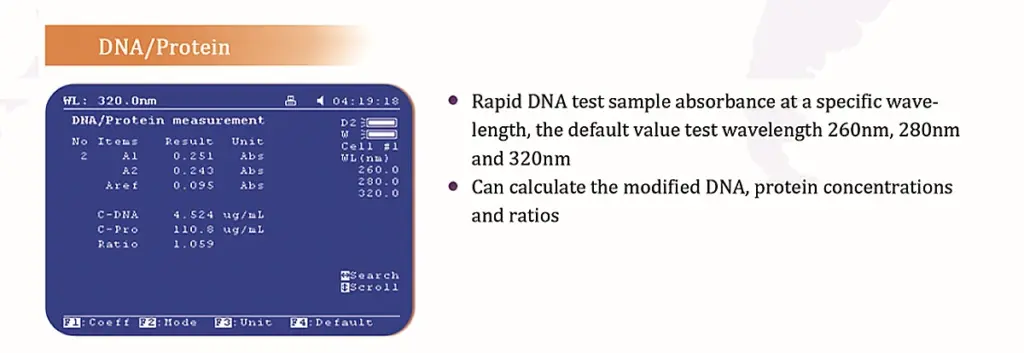
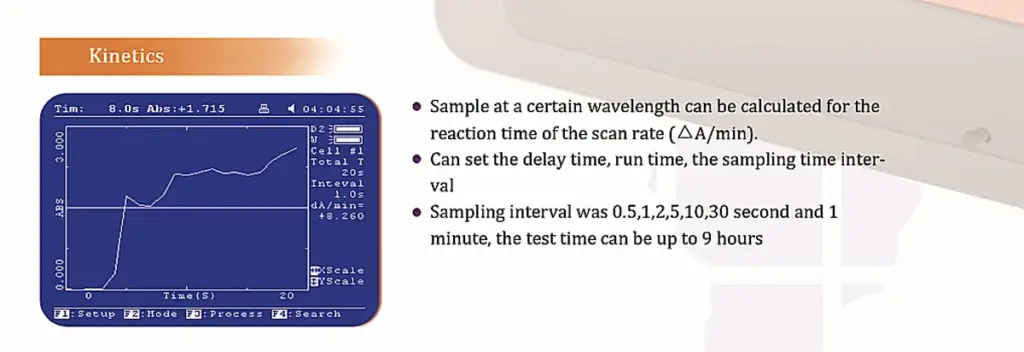
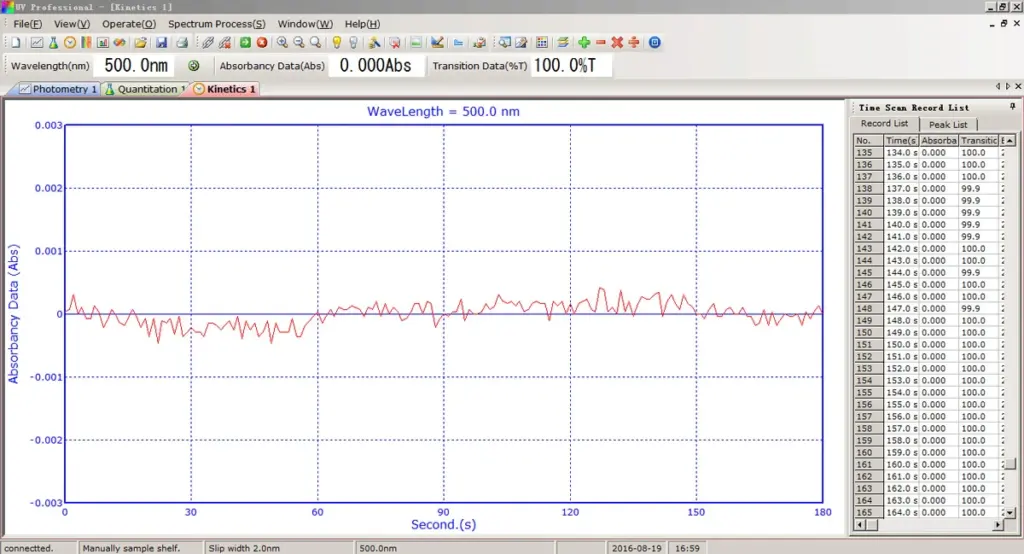
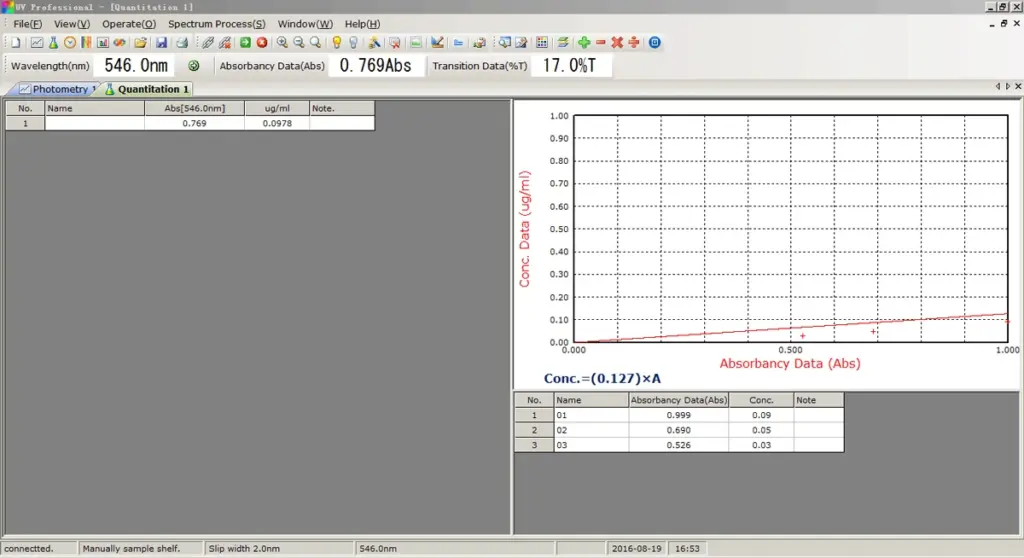
Multiple Measurement Methods: Supports fundamental photometric testing, quantitative concentration determination using standard curves or factor entry, continuous wavelength scanning, time-based kinetic assays, and nucleic acid/protein calculation modes.
Standalone Data Visualization: Includes an integrated 6-inch display that shows test parameters, standard curves, and spectra directly on the instrument without requiring an external computer.
Comprehensive Interfaces: Built with USB and parallel printer ports, allowing direct export of measurement data and curves to USB storage devices, local printers, or PC software.
Fits standard manual sample holders (10mm to 50mm pathlengths)
Output Interfaces
USB Port, Parallel Printer Port
Power Requirements
AC 220V/50Hz or AC 110V/60Hz | 120W
Dimensions & Weight
560 × 450 × 230 mm | Net Weight: 28 Kg
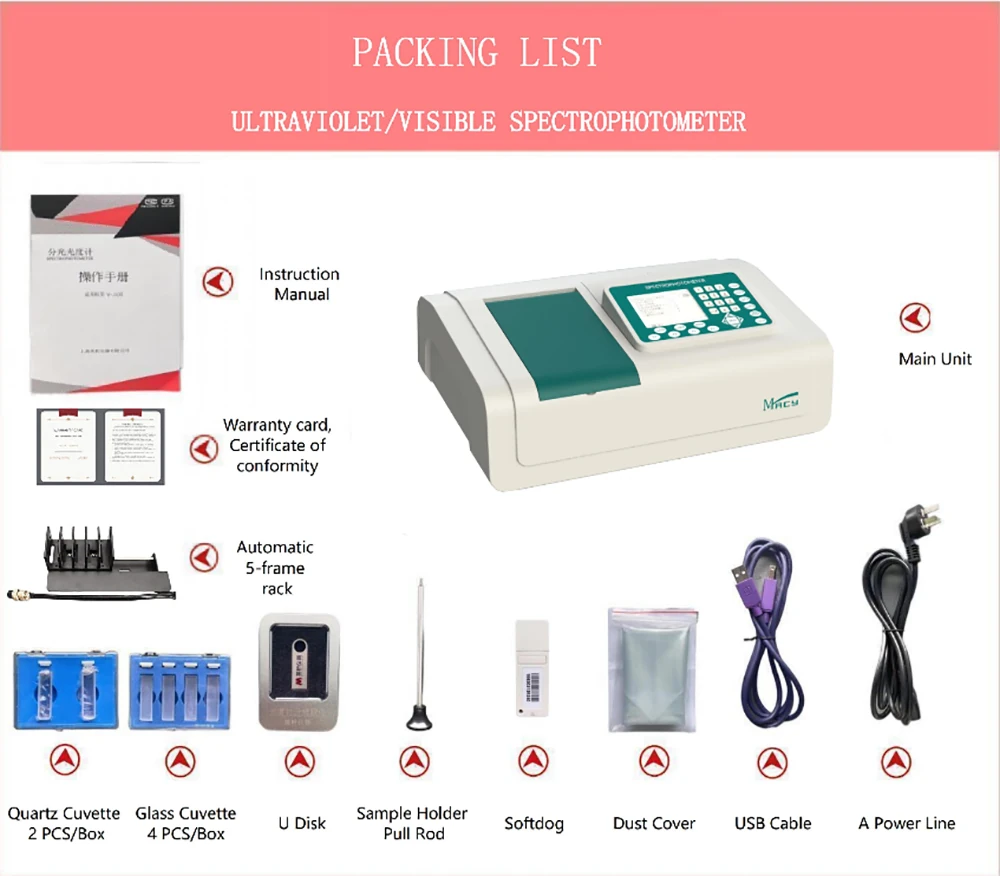
Standard Configuration
Applications
The UV-1800 is utilized in industrial, clinical, and environmental laboratories requiring reliable ultraviolet-visible analytical coverage:
Pharmaceutical Quality Control: Quantitative assay determination of active pharmaceutical ingredients (APIs), raw material inspection, and dissolution profile monitoring.
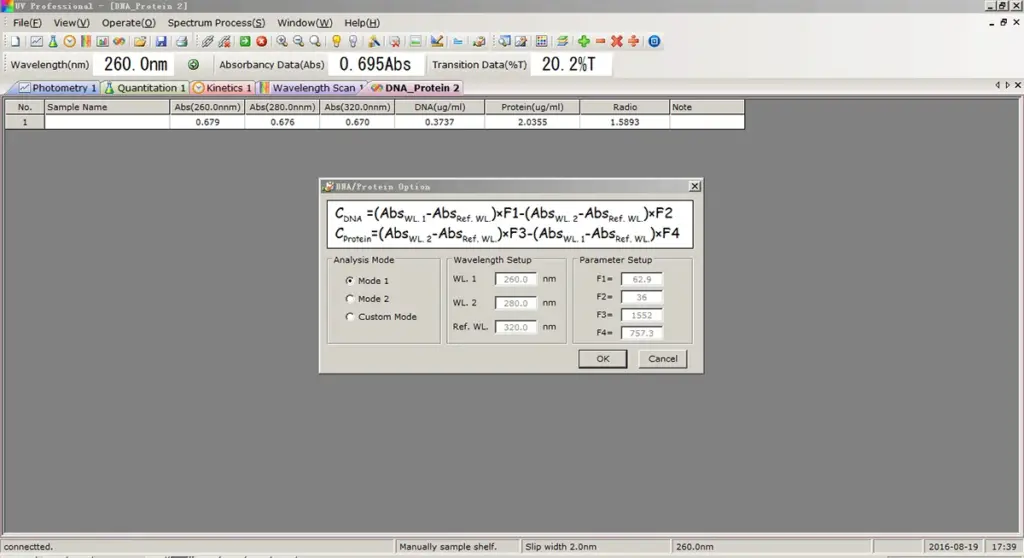
Life Sciences & Biotechnology: Quantitative concentration testing of nucleic acids (DNA/RNA at 260nm) and protein solutions (at 280nm), along with routine enzymatic kinetics.
Environmental Monitoring: Spectroscopic testing of wastewater and surface water for organic pollutants, nitrates, phosphates, and chemical oxygen demand (COD).
Chemical & Material Testing: Purity assessment of organic compounds, chemical solution analysis, and colorimetric concentration verification.
Who is it for?
Pharmaceutical and Industrial QC Laboratories: Facilities needing a double-beam UV-Vis instrument with a standard 2nm fixed bandwidth that delivers stable baseline performance without constant re-blanking.
University and Academic Departments: Chemistry and biology laboratories seeking a stable, easy-to-operate double-beam spectrophotometer for routine research and advanced coursework.
Third-Party Testing Laboratories: Analytical laboratories processing high daily sample volumes that require reliable, drift-free operation.
Why choose it?
Real-Time Reference Compensation: Compared to single-beam instruments that experience baseline drift from lamp aging and temperature shifts, the UV-1800 continuously references the solvent blank, maintaining stable readings over long measurement periods.
UV-1800 vs. UV-1800S Selection Logic: The standard UV-1800 features a fixed 2nm slit width, offering an economical, simplified configuration for laboratories that run standard standardized protocols. If your testing requires adjustable slit widths (0.5nm, 1.0nm, 2.0nm, 4.0nm) to meet specific pharmacopoeial resolution tests, the variable-slit UV-1800S is recommended.
Complete Standalone Capability: With its built-in microprocessor, onboard memory, and 6-inch screen, the UV-1800 can plot standard curves and perform photometric assays independently, conserving bench space in crowded testing environments.
Software features
DNA Protein
Kinetics
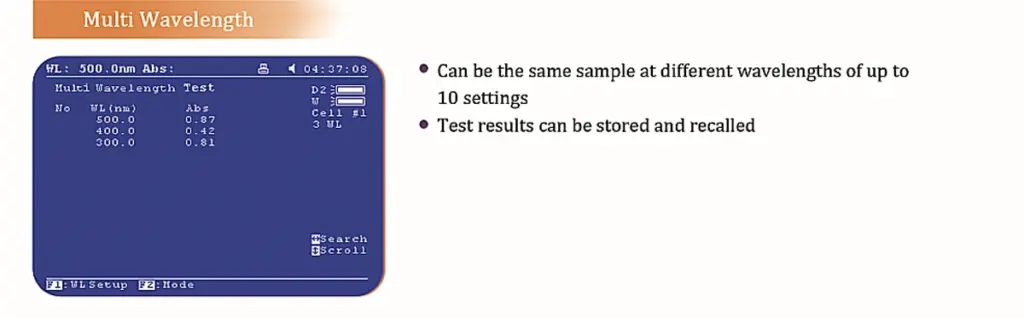
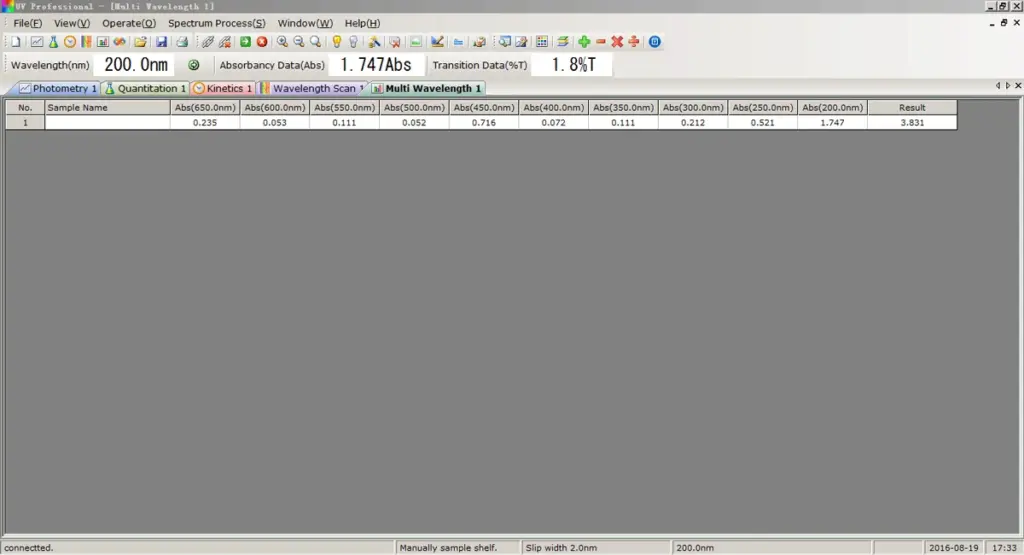
Multi Wavelength
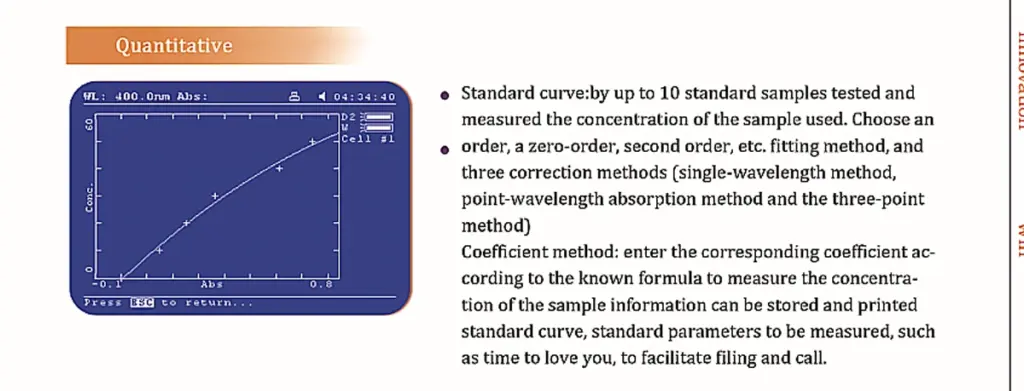
Quantitive
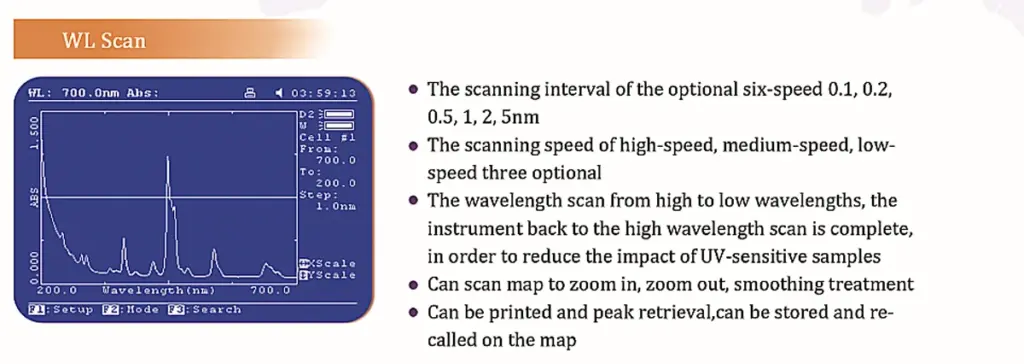
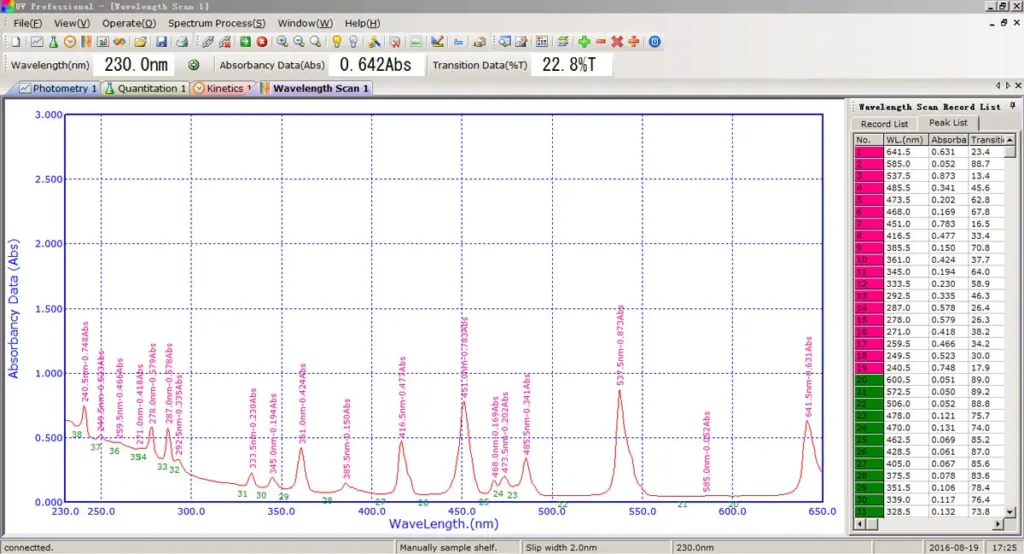
WL Scan
Packaging, Installation & Operation
Packaging & Shipping
After unpacking the instrument, compare the contents with the packing list and check that all items are present and undamaged.
Installation & Setup
Place the spectrophotometer in a suitable location away from direct sunlight, dust, corrosive gases, and strong vibrations. For stable operation, keep it away from strong magnetic or electrical fields and electrical devices that may generate high-frequency fields.
Keep the area around and underneath the instrument clear to allow adequate airflow.
Use the appropriate power cord and connect the instrument to a grounded outlet.
Initial Operation
Turn on the spectrophotometer and allow it to warm up for the recommended time before taking measurements. Follow the instrument’s operating instructions to complete any required system initialization, calibration, or wavelength verification before measurement.
Exhibition
FAQ (Frequently Asked Questions)
The UV-1800 has a fixed spectral bandwidth (typically 2nm), which is suitable for standard routine testing and standard assays. The UV-1800S features four mechanically selectable bandwidths (0.5nm, 1.0nm, 2.0nm, and 4.0nm), designed for laboratories that must alter optical resolution according to specific regulatory pharmacopoeia protocols.
Yes. Covering the range from 190nm to 1100nm and equipped with a deuterium lamp, the UV-1800 can measure ultraviolet absorption at 260nm and 280nm for nucleic acid and protein quantification and purity ratio calculations.
Yes, for measurements in the ultraviolet region below 320nm, quartz cuvettes are required because optical glass and common plastic cuvettes absorb ultraviolet light. Standard optical glass cuvettes can be used for measurements in the visible spectrum above 320nm.
The UV-1800 includes a USB interface that allows direct export of measurement data and curves to a USB flash drive. Additionally, it can connect directly to a PC running compatible software or output to a local printer via its parallel port.
No. The spectrophotometer operates as a fully standalone unit using its front panel controls, microprocessor, and 6-inch LCD display. Connecting to a PC via USB is optional and utilized when advanced spectrum manipulation, file export, or automated data logging are required.