UV-Vis Spectrophotometer Buying Guide: How to Select the Right Double Beam System for Industrial and Pharmaceutical Analysis
Key Takeaways
- A UV-Vis spectrophotometer uses ultraviolet and visible light measurements to analyze sample concentration, purity, and chemical properties.
- A double beam UV-Vis spectrophotometer uses separate sample and reference beams during measurement. The reference beam serves as a baseline for monitoring changes in the measurement signal during testing.
- Other aspects related to laboratory operation include compliance documentation, data management, software functions, and technical support.
- The Macylab M-2800 Touch Screen UV-Vis Visible Spectrophotometer is equipped with a double-beam optical system and covers a wavelength range of 190–1100 nm. Key specifications include ±0.3 nm wavelength accuracy, ±0.3%T photometric accuracy, and stable baseline performance at 500 nm, which are designed for accurate sample measurement.
Understanding UV-Vis Spectrophotometers and Their Role in Modern Laboratories
How UV-Vis Spectrophotometry Supports Quantitative Chemical Analysis
UV-Vis spectrophotometry is used to study the absorption behavior of samples during quantitative analysis. Based on the Beer-Lambert law, the measured absorbance is associated with the concentration of the absorbing substance in a solution. As the sample absorbs light, the change in light intensity can be used to evaluate the concentration of the component being analyzed. The absorbance value is then used to calculate the concentration of the target component.
Common laboratory applications include:
Drug content determination and active pharmaceutical ingredient (API) assay testing
Chemical composition analysis and reaction monitoring
Water quality and environmental pollutant monitoring
Material analysis and optical coating evaluation
The Role of Measurement Stability in Industrial Quality Control
Long-term laboratory testing may involve changes in temperature, light source condition, sample preparation, and solvent background. Changes in these conditions may lead to differences in absorbance readings when samples are analyzed repeatedly.
The Macylab M-2800 uses a stable optical system and precise spectral measurement technology for applications such as pharmaceutical analysis and extended quality control testing. The system is suitable for repeated absorbance measurements in long-term laboratory testing.
Single Beam vs. Double Beam UV-Vis Spectrophotometers: Which System Fits Your Application?
How Double Beam Optical Systems Improve Baseline Stability
Single-beam systems measure the reference and sample at different times, so changes in lamp output during testing may influence the results. Double-beam optical systems use a beam splitter to divide light from the monochromator into two paths, allowing the sample and reference signals to be monitored together.
Sample Beam: Passes through the cuvette containing the target solution.
Reference Beam: Passes through an identical blank or air path simultaneously.
By constantly ratioing the sample and reference signals, double-beam architecture achieves real-time correction of lamp energy fluctuations, drastically reduces baseline drift, ensures superior repeatability during long kinetic runs, and eliminates the need for frequent blank recalibration.
Specifications (Macylab M-2800):
Optical system: Double beam
Wavelength range: 190–1100 nm
Baseline stability: ≤0.0005 A/h (500 nm)
Technical Comparison: Single Beam vs. Double Beam UV-Vis Systems
| Technical Feature | Single Beam UV-Vis Spectrophotometer | Double Beam UV-Vis Spectrophotometer |
| Optical Design | Measures sample and reference separately | Simultaneously compares sample and reference beams |
| Baseline Stability | More affected by lamp fluctuation | Automatically compensates for light source changes |
| Long-Term Testing | Requires more frequent recalibration | Suitable for extended measurement cycles |
| Measurement Repeatability | Moderate | Higher repeatability for quantitative analysis |
| Recommended Applications | Routine basic testing | Pharmaceutical QC, research, industrial analysis |
| Initial Cost | Lower | Higher investment with better operational stability |
Key Technical Specifications to Evaluate Before Purchasing a UV-Vis Spectrophotometer
Optical Performance: Wavelength Accuracy, Photometric Accuracy, and Stability
Procurement teams must establish clear technical parameters when evaluating global suppliers:
Wavelength range and spectral bandwidth flexibility (e.g., 1.0 or 2.0 nm options)
Wavelength accuracy (±0.3 nm)
Photometric accuracy (±0.3%T)
Stray light rejection (critical for high-concentration API measurements)
Baseline stability (≤0.0005 A/h at 500 nm)
Higher wavelength accuracy improves identification reliability, while precise photometric and low stray light parameters prevent measurement compression errors at high absorbance levels.
Lamp Technology and Long-Term Operating Costs
The light source is an important part of UV-Vis spectrophotometer performance and maintenance planning. Deuterium lamps are typically used for UV measurements between 190–370 nm, while tungsten-halogen lamps cover the visible and near-infrared range from 340–1100 nm. The service life of the lamp and the availability of replacement support can differ between UV-Vis spectrophotometer models.
Accessory Options for Different Testing Needs
Laboratories may use different accessories depending on their testing requirements. For specific applications, accessories such as automated 8-cell changers, Peltier temperature controllers for enzymatic assays, micro-volume adapters, and solid sample holders can be added to the system. It can also be connected with automated dissolution testers and laboratory automation systems when needed.
UV-Vis Spectrophotometer Applications in Pharmaceutical and Industrial Testing
Pharmaceutical Analysis: Drug Content Determination and Quality Control
Analytical testing is performed throughout pharmaceutical manufacturing to check drug content and product quality. Two common tests used for this purpose are content determination and dissolution testing. However, obtaining reliable results can be more challenging than it seems. Small differences in wavelength settings, sample preparation, matrix absorption, or cuvette cleanliness may affect the accuracy of UV-Vis measurements. The combined effect of these factors may introduce variations in the measured data.
Chemical, Environmental, and Material Testing Applications
The same measurement approach is also used in wastewater analysis, organic chemical purity testing, and thin-film transmittance measurement for material research.
Compliance Requirements: USP, EP, and 21 CFR Part 11 for Pharmaceutical Laboratories
Meeting USP and EP Performance Verification Requirements
Regulated laboratories must execute formal Installation Qualification (IQ), Operational Qualification (OQ), and Performance Qualification (PQ) protocols. Qualification routines evaluate wavelength accuracy using holmium oxide filters, photometric accuracy using certified neutral density glass filters, spectral resolution, and stray light limits.
Data Integrity and 21 CFR Part 11 Software Requirements
Hardware precision must be paired with secure software architecture. Compliant software requires multi-level user access management, electronic signatures, unalterable audit trails, and secure database storage to guarantee complete result traceability during FDA or EMA inspections.
Common UV-Vis Measurement Problems and How to Improve Testing Reliability
Managing Common Interference Factors in Drug Content Determination
During drug content analysis, variations in test conditions may affect the final results. Wavelength selection, sample matrix effects, and the condition of optical surfaces are some factors that may influence quantitative measurements. A double-beam design reduces the impact of measurement fluctuations, with sample preparation and instrument operation also affecting the final results.
Managing Baseline Drift for More Stable UV-Vis Measurements
Several factors may influence baseline stability during UV-Vis measurements, including:
Use a double-beam optical system to reduce the impact of light source fluctuations.
Keep cuvettes and optical surfaces clean to minimize the impact of contamination on measurement results.
NIST-traceable calibration is typically performed at scheduled intervals to check instrument performance.
Macylab M-2800 Double Beam UV-Vis Spectrophotometer: Advanced Solution for Precise Laboratory Measurement
Key Features and Technical Specifications of M-2800 UV-Vis Spectrophotometer
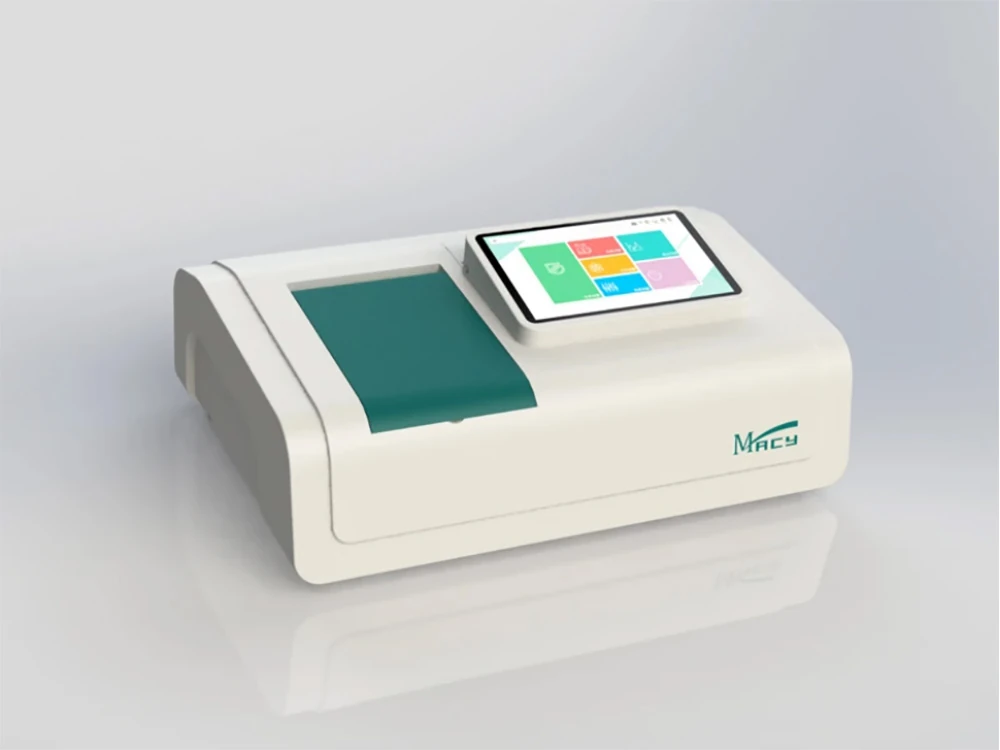
The Macylab M-2800 integrates a robust double-beam optical system with a responsive 10-inch high-definition touch screen running a full English operating system.
Wavelength range: 190–1100 nm
Wavelength accuracy: ±0.3 nm
Photometric accuracy: ±0.3%T
Baseline stability: ≤0.0005 A/h (500 nm)
Advanced Design and Performance Advantages of M-2800 Double Beam System
By running sample and reference paths simultaneously, the M-2800 neutralizes electrical and optical noise in real time. The optical system is designed to provide stable quantitative measurements and support consistent baseline performance in longer testing procedures.
Case Study: UV-Vis Spectrophotometry for Drug Content Determination in Pharmaceutical Analysis
Pharmaceutical active ingredient quantification demands uncompromising accuracy. Variability in sample preparation, solvent choice, and background absorption can skew assay results. Laboratories solve these challenges by standardizing sample extraction protocols and utilizing stable instrument platforms.
The Macylab M-2800 Double Beam UV-Vis Spectrophotometer helps laboratories achieve stable and repeatable measurements through its double-beam optical system. Its accurate wavelength control, reliable photometric performance, and baseline stability (≤0.0005 A/h) support consistent drug content determination results day after day.
Frequently Asked Questions
Q1:What is the primary operational advantage of a double-beam UV-Vis spectrophotometer over a single-beam system?
A: A double-beam spectrophotometer splits light into a sample beam and a reference beam simultaneously. This enables real-time lamp fluctuation correction, eliminates baseline drift, and greatly improves productivity during continuous or extended analytical testing sessions.
Q2:How do pharmaceutical manufacturers ensure UV-Vis spectrophotometers comply with USP and 21 CFR Part 11?
A: Manufacturers and laboratories ensure compliance by executing rigorous OQ/PQ performance verifications using certified reference materials, coupled with software features that enforce encrypted audit trails, electronic signatures, and restricted user permission controls.
Q3: What specifications matter most when sourcing an industrial UV-Vis spectrophotometer?
Key parameters include wavelength accuracy, photometric accuracy, stray light rejection performance, lamp lifespan, availability of NIST-traceable calibration documentation, and responsive technical support from the manufacturer.
Q4: Can UV-Vis spectrophotometers integrate with automated laboratory systems?
A: Yes, advanced research-grade instruments support multi-cell changers, automated sampling accessories, fiber-optic probes, and direct integration with multi-vessel dissolution testing and robotic laboratory workflows.
Conclusion: Selecting the Right Double Beam UV-Vis Spectrophotometer for Long-Term Laboratory Performance
Selecting a UV-Vis spectrophotometer requires evaluating more than the initial purchase price. Beyond the initial cost, laboratories also need to consider optical stability, compliance requirements, software functions, and available technical support when evaluating an instrument. Double-beam systems are widely used in pharmaceutical, industrial, and research laboratories where stable and repeatable measurements are required. The Macylab M-2800 combines a double-beam optical system, broad wavelength coverage, and stable quantitative measurement performance for a variety of laboratory applications.