How to Choose an Inductively Coupled Plasma Emission Spectrometer: A Complete B2B Buying Guide for Industrial Laboratories
Introduction
The types of samples faced by laboratories are often very diverse, ranging from industrial oils and polymers to wastewater and coatings, among others. At this point, the challenge is no longer limited to whether elements can be detected, but rather whether accurate and stable results can be maintained while responding quickly. An unreliable analytical system often leads to repeated testing, data fluctuations, and rising costs. An Inductively Coupled Plasma Emission Spectrometer (ICP-OES) provides a practical multi-element analysis approach, covering multiple elements in a single test with a broad analytical range, and has been widely used in environmental and industrial testing fields. The United States Environmental Protection Agency (EPA) also points out that ICP technology is commonly used for trace element determination in regulated scenarios.
This guide explains the key factors to consider when choosing an ICP-OES system and introduces how Macylab ICP-6810 supports elemental analysis for polymers, additives, industrial oils, water, abrasives, and paints.
Understanding the Value of ICP-OES Technology
Why ICP-OES Has Become a Standard Solution for Multi-Element Analysis
ICP-OES utilizes high-temperature argon plasma to excite atoms and ions in samples, causing them to emit characteristic spectra, thereby enabling the identification and quantification of elements. Compared to traditional single-element methods, it can simultaneously detect multiple elements, offering high speed and efficiency, making it suitable for large-scale sample analysis. Modern ICP spectrometers cover a broad range of elements and are widely used in industrial quality control, environmental testing, chemical analysis, and material research.
For industrial users, its value lies not only in its detection capabilities but also in supporting standardized testing processes. A single measurement can complete the synchronous analysis of multiple elements, reducing repetitive steps and effectively enhancing overall laboratory efficiency.
Key Factors Driving ICP Spectrometer Investment Decisions
When purchasing an ICP system, laboratories should evaluate whether the instrument matches their actual testing requirements. The most important factors usually include analytical accuracy, system stability, and application compatibility.
| Evaluation Factor | Importance for Industrial Laboratories |
| Accuracy | Ensures reliable elemental concentration results for quality control |
| Stability | Maintains consistent performance during continuous operation |
| Application Compatibility | Supports different sample types and testing requirements |
The selection process should begin with understanding the elements to be measured, required detection limits, sample characteristics, and applicable testing standards. This approach helps laboratories select a suitable configuration instead of focusing only on individual specifications.
Advanced Technical Factors of an ICP Spectrometer
Plasma System and Optical Performance: Ensuring Stable Analytical Results
The plasma system is the heart of ICP analysis. The RF generator maintains the energy supply of the argon plasma, and its stability directly relates to signal consistency and measurement reliability. For industrial laboratories that frequently handle complex samples such as oils, polymers, coatings, and additives, a stable plasma source helps reduce analytical errors and improve reproducibility. The optical system affects the instrument’s ability to capture and separate emitted wavelengths, with evaluation metrics including wavelength range, resolution, and interference correction capability. A wider wavelength coverage allows a single instrument to meet the detection needs of more elements.
Macylab ICP-6810 is designed for industrial multi-element analysis with the following specifications:
| Parameter | ICP-6810 Specification |
| Power Output | 800W-1500W |
| Power Output Stability | <0.3% |
| Wavelength Range | 160-1000nm |
| Frequency Stability | <0.1% |
These parameters ensure stable operation of the device while providing extensive element detection capabilities, sufficient to meet various industrial testing needs.
Sample Compatibility and Pretreatment for Industrial Analysis
Industrial samples often vary significantly in composition and physical properties. Water samples, oils, polymers, paints, and abrasive materials require different preparation methods before ICP analysis. Therefore, sample compatibility is one of the most important considerations when selecting an analytical system.
Adapting ICP Systems to Different Industrial Samples
The ICP-6810 application solution covers six common industrial sample categories, including polymers, chemical additives, industrial oils, water lead analysis, abrasives, and paints.
| Sample Type | Testing Focus |
| Polymers | Detection of heavy metals and residual metal elements such as Pb, Cd, Hg, Cr, Al, Ti, and Zn |
| Chemical Additives | Analysis of functional elements including Zn, P, Mo, B, Ca, and Mg |
| Industrial Oils | Detection of wear metals and impurity elements such as Fe, Cu, Al, Pb, and Cr |
| Water Samples | Trace lead and heavy metal analysis |
| Abrasives | Control of impurity elements affecting hardness and polishing performance |
| Paints | Detection of harmful metals and functional pigment elements |
Different pretreatment methods are applied according to sample characteristics. Water samples may require filtration and acidification, while oils and additives may require dilution or digestion. Solid materials such as polymers, abrasives, and paints typically require decomposition processes to release metal elements for analysis.
Improving Accuracy Through Proper Sample Preparation
Complex industrial samples may cause matrix interference, unstable signals, or contamination if preparation procedures are not properly designed. Optimized sample introduction and pretreatment methods help maintain measurement accuracy and improve laboratory efficiency.
The key considerations include:
· Selecting suitable sample introduction components according to sample characteristics
· Applying appropriate digestion or dilution methods before testing
· Using calibration and interference correction procedures to improve result reliability
For example, polymer and paint analysis requires effective decomposition of solid matrices, while oil testing requires methods that reduce the influence of organic components on plasma performance.
ICP-OES Performance Optimization: Improving Accuracy, Efficiency, and Data Reliability
Software Optimization and Data Management for Reliable Results
Accuracy in elemental analysis relies on hardware, while data processing is key. When dealing with complex industrial samples, spectral overlap is a common issue, and inadequate interference correction can lead to inaccurate results. Modern ICP-OES systems utilize background correction, wavelength optimization, and intelligent algorithms to ensure data reliability. For testing samples such as polymers, coatings, oils, and chemicals, software processing capabilities determine batch consistency and long-term stability. Data management is equally important; industrial laboratories typically require traceable test records.
A comprehensive system should support standard workflows, method archiving, result review, and report generation, enhancing daily management efficiency.
Understanding Detection Limits: When ICP-OES Is Suitable and When ICP-MS Is Required
ICP-OES and ICP-MS, although both belong to elemental analysis technologies, have different focuses. ICP-OES focuses on routine detection, performing well in detection efficiency, elemental coverage, and cost control, making it suitable for daily multi-element analysis tasks. ICP-MS excels in extremely low detection limits, making it more suitable for trace element analysis with high sensitivity requirements.
The U.S. Environmental Protection Agency (EPA) notes that ICP-based methods have been widely used for the determination of trace elements in environmental samples. The actual choice of technology depends on sample characteristics, target sensitivity, and corresponding regulatory requirements.
| Technology | Main Advantage | Typical Applications |
| ICP-OES | Efficient multi-element analysis with broad application range | Industrial quality control, environmental testing, material analysis |
| ICP-MS | Higher sensitivity for ultra-trace detection | Advanced research and extremely low concentration analysis |
For many industrial laboratories, ICP-OES provides a practical balance between analytical performance, testing speed, and operating cost.
Reducing the Total Cost of Ownership for ICP spectrometers
Managing Operating Costs Through Gas Consumption and Maintenance Planning
The total cost of an analytical instrument includes not only the initial purchase price but also daily operation, consumables, maintenance, and technical support.
Argon consumption is one of the important operating considerations for ICP systems because plasma generation requires a stable argon supply. Optimized instrument design and proper operating procedures can help laboratories manage long-term usage costs.
Consumable components, including torches, nebulizers, and spray chambers, also influence instrument performance. Regular maintenance and selecting suitable components according to sample conditions can reduce unexpected downtime and improve system reliability.
When evaluating an Inductively Coupled Plasma Emission Spectrometer, laboratories should consider:
· Long-term operating expenses, including gas and consumables
· Maintenance requirements for different sample types
· Availability of technical support and replacement components
A complete evaluation helps laboratories select equipment that provides stable performance throughout its service life.
Choosing the Right Supplier for Long-Term Laboratory Support
Choosing ICP-OES is not only about purchasing hardware, but also about selecting a technology partner. A reliable optical emission spectrometer Supplier should provide comprehensive services including installation, operation training, application support, and after-sales service. Industrial users have higher demands for suppliers because the testing needs vary across different industries. A supplier with experience in fields such as polymers, chemicals, environment, and industrial products can bring more valuable application support to the laboratory.
Macylab ICP-6810: A Reliable ICP Solution for Industrial Analysis
System Overview and Core Analytical Advantages
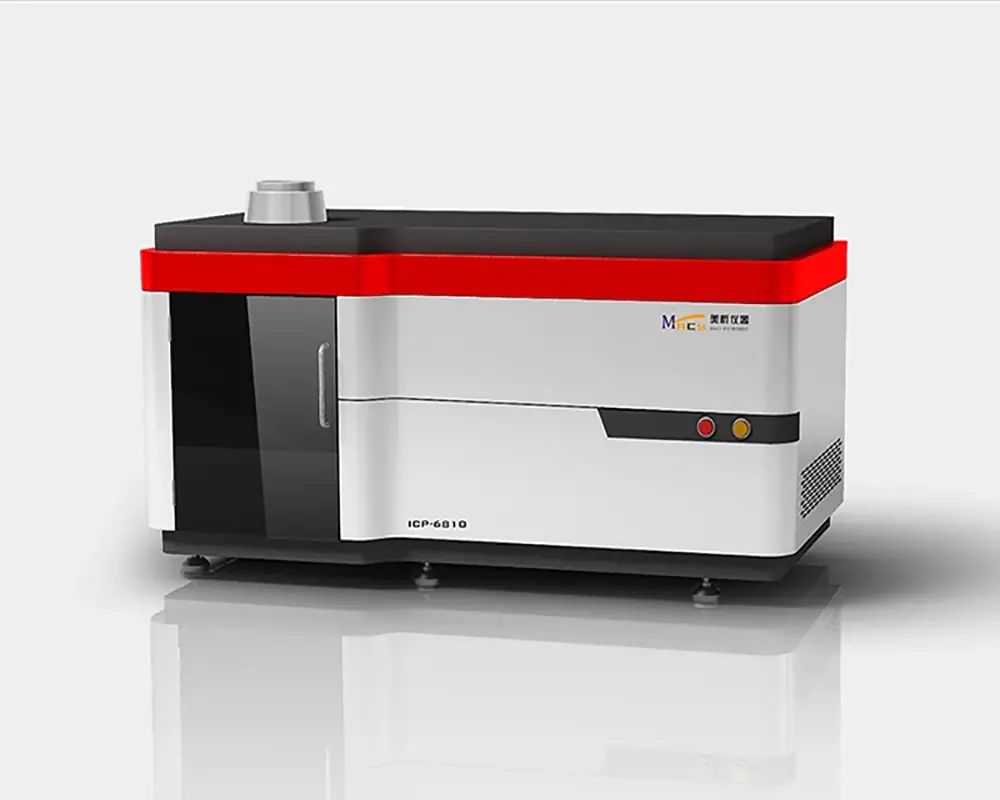
Macylab ICP-6810 is designed for laboratories requiring stable multi-element analysis across different industrial applications. The system combines ICP-OES technology with flexible analytical capability to support testing requirements in material analysis, environmental monitoring, chemical production, and quality control.
The instrument is suitable for laboratories that need reliable elemental testing while maintaining practical operation costs. Its design focuses on stable plasma performance, broad wavelength coverage, and compatibility with different sample categories.
Key Performance Features of ICP-6810
The main technical specifications include:
| Parameter | Specification |
| Power Output | 800W-1500W |
| Power Output Stability | <0.3% |
| Wavelength Range | 160-1000nm |
| Frequency Stability | <0.1% |
With a wide wavelength range, ICP-6810 can support simultaneous detection of multiple elements required in industrial analysis. The system is suitable for laboratories that need consistent measurement performance across different sample types.
Industrial Applications and Testing Workflow
ICP-6810 can be applied to various testing scenarios including polymers, chemical additives, industrial oils, water quality lead content, abrasives, and coatings. Polymer detection can identify harmful heavy metals such as lead, cadmium, mercury, and chromium, providing a basis for compliance and quality control. In terms of chemical additives, the system can analyze elements such as zinc, phosphorus, molybdenum, boron, calcium, and magnesium, assisting in formulation evaluation.
Industrial oil testing focuses on wear metals like iron, copper, aluminum, lead, and chromium, providing a basis for equipment condition monitoring. Water quality analysis supports trace lead determination, meeting environmental and safety control requirements. Abrasive and coating testing focuses on impurity elements and functional components, as these indicators directly impact product performance.
From sampling and preprocessing to measurement, data analysis, and report output, standardized processes are implemented throughout the entire process, providing reliable and traceable results for the laboratory.
FAQ
What Is the Difference Between ICP-OES and ICP-MS?
A: ICP-OES determines elements quantitatively based on the light emission of excited atoms and ions, while ICP-MS identifies and measures ions through their mass-to-charge ratio. The former performs stably and efficiently in conventional multi-element analysis, whereas the latter excels in ultra-low detection limits, making it suitable for the precise analysis of trace elements.
How Does an ICP Spectrometer Handle High-Salt or Complex Industrial Samples?
A: ICP spectrometers processing complex industrial samples rely on appropriate sample pre-treatment, sample introduction optimization, and correction methods. Dilution, digestion, or special configurations can effectively reduce matrix interference and improve measurement stability and accuracy.
What Factors Should Be Considered When Choosing an Optical Emission Spectrometer Supplier?
A: Laboratories should consider technical experience, application support capability, product reliability, maintenance service, and availability of consumables. A supplier with industry-specific experience can provide more suitable solutions for different testing requirements.
What Applications Are Suitable for an Inductively Coupled Plasma Emission Spectrometer?
A: ICP-OES can meet the detection needs in fields such as environmental protection, metallurgy, chemical industry, polymers, oil products, coatings, and abrasives, and is suitable for various application scenarios requiring precise multi-element determination.
Conclusion
When selecting an ICP system, analyzing requirements, sample characteristics, instrument performance, and long-term operational costs are all essential. An ideal device needs to have stable plasma output, reliable multi-element synchronous detection capabilities, adaptability to various sample matrices, and also consider laboratory management efficiency. Macylab ICP-6810 offers a relatively balanced choice for industrial laboratories. It is suitable for element analysis of common samples such as polymers, additives, oils, water, abrasives, and coatings. Precisely matching instrument configuration with detection tasks is an effective way to improve detection efficiency and stabilize analytical quality.
If your laboratory is seeking a reliable ICP spectrometer solution, please contact us. We will recommend a matching configuration based on your sample type and testing requirements.