How to Choose an Atomic Fluorescence Spectrophotometer for Trace Mercury Analysis
Key Takeaways
- Match the instrument to the mercury concentration range, sample matrix, and required reporting limit.
- Compare detection limits with precision, calibration range, and the conditions used for testing.
- Check sample preparation and analytical method requirements before selecting an instrument configuration.
- Review performance records, accessories, consumables, and service terms before purchasing.
Introduction
Trace mercury analysis can be difficult because the target concentration may be extremely low. Contamination during sample handling can affect results, while dissolved substances in a sample may interfere with measurement. A low instrument detection limit alone does not guarantee reliable results.
When choosing an Atomic Fluorescence Spectrophotometer, buyers should compare the published specifications with the laboratory’s analytical method.
How to Define Your Trace Mercury Testing Requirements
The first step is to establish what the laboratory needs to measure and report. This helps narrow the selection before comparing instrument specifications.
Identify the Sample Type and Expected Mercury Concentration
Drinking water, surface water, groundwater, and industrial wastewater may require different sample preparation and quality-control procedures. Food samples, soil extracts, and geological materials can present other matrix challenges.
Start by listing the sample types the laboratory handles most often. Estimate the expected mercury concentration, daily sample volume, and testing frequency. A laboratory processing large batches of water samples may prioritize a consistent injection workflow. One that handles varied sample matrices may need more preparation steps, such as digestion or dilution.
A Mercury Analyzer should therefore match a defined testing workload. Before contacting suppliers, prepare the sample matrix, expected concentration range, and required reporting limit. Include the analytical method if testing must follow a specific regulation or customer protocol.
Match the Detection Limit to the Reporting Requirement
An instrument detection limit, method detection limit, quantitation limit, and reporting limit describe different aspects of analytical performance. The method detection limit reflects the complete procedure under defined conditions, including sample preparation and quality control.
- S. EPA Method 1631, Revision E, reports a method detection limit of 0.2 ng/L and a minimum level of quantitation of 0.5 ng/L for mercury in water under the method’s specified conditions. The method also emphasizes careful sample handling because contamination and interference can affect low-level results.
When comparing instruments, first establish the laboratory’s reporting limit. Then examine the detection-limit data and test conditions supplied by each manufacturer. The instrument’s stated value should not be treated as the method detection limit for every sample.
Which Technical Specifications Matter Most When Comparing Instruments?
After defining the analytical target, compare the specifications that influence result quality and daily work. Detection limits matter, but precision, calibration range, measurement channels, and sample introduction also affect practical suitability.
Compare Detection Limits, Precision, and Calibration Range
Check the mercury detection limit rather than relying on a figure listed for another element. Review the relative standard deviation (RSD), which describes variation between repeated measurements under stated conditions. Ask for the test concentration and number of replicates behind the reported result.
The calibration range is equally important. If routine samples fall outside it, the laboratory may need dilution or additional measurements. A very low detection limit offers limited value when the instrument cannot cover the concentrations commonly found in the samples.
Request the mercury detection limit, RSD, linear range, and test conditions together. This allows the laboratory to compare instruments against its routine concentration range rather than a single headline figure.
Evaluate Single-Channel and Dual-Channel Measurement
A single-channel instrument may suit laboratories that usually measure one target element at a time. Dual-channel measurement may help when two compatible elements are regularly tested together. However, two channels do not mean every pair of elements can be measured simultaneously.
Ask which element combinations the instrument supports and whether performance data are available for those combinations. Dual-channel measurement is most useful when it fits the laboratory’s actual workload. It should not be treated as an automatic improvement for every analytical task.
Check Sample Introduction and Daily Operating Requirements
Sample introduction affects reagent use, handling steps, and maintenance. Hydride-generation methods are used for suitable elements that form volatile hydrides, while mercury analysis may use cold-vapor techniques. These approaches are related to atomic fluorescence analysis, but they are not interchangeable.
A Hydride Generator is a component used in applicable analytical methods, not another name for the complete spectrometer. Buyers should confirm which accessories and procedures their selected method requires. They should also check the carrier gas, tubing, reagents, cleaning procedure, and routine consumables.
The final configuration should suit the laboratory’s preparation method and daily sample volume. A clear consumables list and maintenance schedule also make it easier to estimate ongoing costs.
How to Verify Analytical Performance and Method Suitability
Specifications can narrow the shortlist, but the laboratory still needs to establish whether the proposed configuration suits its sample matrix and analytical method. This is particularly important when results must meet regulatory or customer requirements.
Review Sample Preparation and Matrix Interference
Mercury contamination can occur during sample collection, storage, transport, or preparation. Laboratories should follow the containers, reagents, preservation procedures, and handling practices specified by the selected method. Samples with high dissolved solids or organic material may also require suitable pretreatment.
Ask whether the instrument can support the intended preparation procedure. Where possible, request a demonstration using a representative sample. Blanks can help identify contamination, while matrix spikes and duplicate samples can help assess recovery and precision when required by the method.
A published detection limit does not prove that every sample will meet the laboratory’s reporting limit. Evidence from comparable sample conditions provides a more useful basis for judging performance.
Check Applicable Standards and Performance Evidence
For U.S. water testing, EPA Method 245.7 covers mercury determination in filtered and unfiltered water using cold-vapor atomic fluorescence spectrometry. The method includes sample digestion and the use of high-purity argon. EPA lists it among the approved Clean Water Act metals methods.
This does not mean that every instrument using atomic fluorescence automatically complies with the method. The laboratory must confirm that its configuration and procedures meet the applicable requirements, including quality control.
Before ordering, identify the required method and ask the supplier which instrument specifications and accessories support it. Also clarify which validation steps the laboratory must complete independently.
Request Test Conditions and Acceptance Criteria
Performance figures are easier to evaluate when their test conditions are documented. Ask the supplier to state the target element, test solution, sample preparation procedure, measurement conditions, and calculation basis for the detection limit and precision.
For a purchase evaluation, define acceptance criteria in advance. These may include repeatability at a specified concentration, calibration performance, or successful analysis of a representative sample using the intended method.
Request supporting test records where available. If the instrument will be used for regulated testing, confirm that the proposed configuration can support the required method and that the laboratory can complete the necessary quality-control procedures.
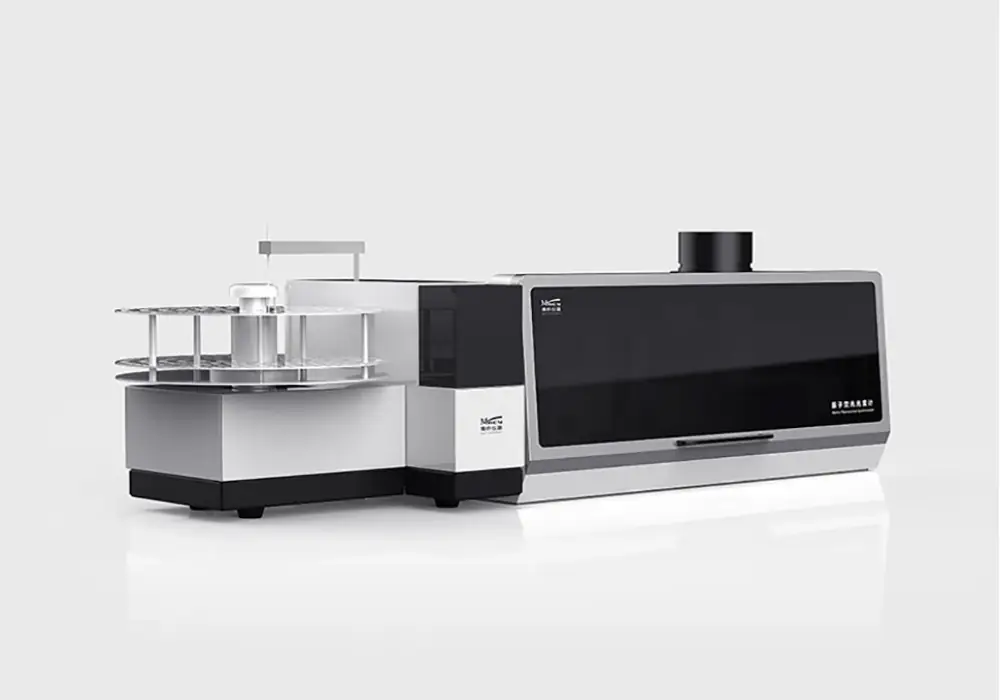
Why Choose AFS-6801 for Trace Mercury and Element Analysis?
The published specifications below provide a starting point for comparing this model with the laboratory’s requirements. Confirm the test conditions, supplied accessories, and final configuration with the supplier before purchase.
Key Specifications
| Item | Published specification |
| Measurement channels | Dual-channel simultaneous measurement |
| Mercury detection limit | <0.001 μg/L |
| Cadmium detection limit | <0.001 μg/L |
| Precision | RSD ≤0.7% |
| Linear range | Greater than three orders of magnitude |
| Sample introduction | Six-channel peristaltic pump; continuous-flow and intermittent injection |
Dual-Channel Measurement for Compatible Element Combinations
The instrument provides simultaneous dual-channel measurement. This can be relevant to laboratories that routinely analyze compatible element combinations as part of the same testing workflow.
For example, a laboratory that measures two supported elements across a regular batch of samples may be able to include both measurements in its analytical plan. The actual benefit depends on the element combination and method. Confirm the supported combinations before assuming that two target elements can be measured together.
Low Detection Limits for Mercury and Cadmium
The published detection limit is below 0.001 μg/L for both mercury and cadmium. This specification may be relevant to laboratories that work with low-concentration samples and need to compare instruments against demanding analytical targets.
A Trace Element Analyzer should be assessed against the laboratory’s intended concentration range. The reported detection limit is only one part of that assessment; precision, sample preparation, and method-level performance also affect the final result. Ask for the conditions behind the published figures before using them as a purchasing benchmark.
Two Sample Introduction Options and a Six-Channel Pump
The instrument lists continuous-flow and intermittent injection, together with a six-channel peristaltic pump. These features give laboratories options to consider when planning reagent delivery and sample handling.
A laboratory that follows a fixed preparation procedure should confirm which injection mode fits that workflow. It should also check the required tubing, reagents, and accessories, rather than assuming that every item is included in the standard package.
Support for 12 Listed Elements
The product information lists 12 elements: arsenic, mercury, selenium, tin, lead, bismuth, antimony, tellurium, germanium, cadmium, zinc, and gold. This range may interest laboratories that handle several of these elements and want to evaluate one instrument for more than one analytical task.
Applications in Environmental, Food, and Geological Testing
The listed application fields include environmental, food, and geological analysis. For water laboratories, the main consideration is whether the instrument can support the required mercury method. For food and geological samples, sample digestion, matrix effects, and preparation procedures may require additional evaluation.
When comparing a Heavy Metal Analyzer, laboratories should look at the elements they need to measure and the methods they must follow. The listed element range can help establish whether a model deserves further evaluation, but it does not replace application-specific verification.
Frequently Asked Questions and Final Buying Recommendation
Is the AFS-6801 suitable for trace mercury analysis?
Its published mercury detection limit is below 0.001 μg/L. Suitability depends on the sample matrix, required reporting limit, analytical method, and validation results. Confirm the test conditions before making a purchasing decision.
Can it measure mercury and another element simultaneously?
The instrument offers dual-channel simultaneous measurement. Confirm that the two target elements are a supported combination and that the arrangement meets the intended method’s requirements.
Which accessories should be included in the quotation?
Confirm the required injection arrangement, gas supply, tubing, reagents, and any additional sample preparation equipment. The final list depends on the analytical method and sample type.
What is the difference between atomic fluorescence and atomic absorption?
Atomic fluorescence measures light emitted by excited atoms, while atomic absorption measures the reduction in light intensity as atoms absorb radiation. The appropriate technique depends on the target element, required performance, available methods, and laboratory workflow.
How should I choose the detection limit?
Start with the required reporting limit, then compare method-level performance under similar sample and preparation conditions. A lower instrument detection-limit figure alone does not guarantee a lower reporting limit.
Conclusion
Instrument selection should account for more than a single performance figure. A laboratory may need to handle several target elements, maintain consistent sample preparation, and meet different reporting requirements across its workload. An instrument that offers suitable measurement channels and sample introduction options may help accommodate those needs, provided the configuration supports the required analytical methods.
The best purchasing decision comes from matching the instrument’s documented capabilities with the laboratory’s regular testing tasks. Confirm the element coverage, method requirements, supporting performance data, and required accessories before committing to a configuration.
If you are sourcing an Atomic Fluorescence Spectrophotometer for trace mercury analysis, please provide your target elements, sample types, expected concentration range, required reporting limits, analytical methods, and daily sample volume. Contact SHMACY to discuss the AFS-6801 configuration and request a quotation tailored to your laboratory’s testing requirements.