How Does Hydride Generation Improve Trace Element Analysis with an Atomic Fluorescence Spectrophotometer?
Key Takeaways
- Hydride generation converts compatible elements into volatile hydrides, helping separate them from much of the original sample matrix before detection.
- Combined with atomic fluorescence, this technique supports sensitive analysis of elements such as arsenic, selenium, and antimony under suitable chemical conditions.
- Reliable results depend on sample preparation, reagent purity, oxidation-state control, gas-liquid separation, and method validation.
- The Macylab AFS-680 combines dual-channel measurement, a six-channel peristaltic pump, and two-stage gas-liquid separation for applicable trace-element analysis workflows.
Introduction
Trace-element analysis often requires measuring very low concentrations in samples with complex chemical compositions. Hydride generation helps address this challenge by converting selected elements into volatile compounds that can be transferred to the detection system with less of the original sample matrix.
When combined with an Atomic Fluorescence Spectrophotometer, this technique supports sensitive measurements in environmental testing, geological analysis, and food safety laboratories. However, the final result depends on more than instrument sensitivity. Sample preparation, reaction conditions, interference control, and quality assurance all influence analytical performance.
This guide explains how hydride generation works, which applications can benefit, and how the Macylab AFS-680 fits into a laboratory’s analytical workflow.
How Does Hydride Generation Work in Atomic Fluorescence Analysis?
Converting Target Elements into Volatile Hydrides
Hydride generation is a chemical sample-introduction technique used for elements that can form volatile hydrides under suitable conditions. Common examples include arsenic, selenium, antimony, and bismuth.
In a typical procedure, the prepared sample reacts with a reducing reagent, often potassium borohydride or another reagent specified by the analytical method. The reaction converts the target element into a volatile hydride that can be carried into the detection system.
The reaction is sensitive to several factors, including acidity, oxidation state, reagent concentration, and the chemical form of the analyte. For example, arsenic and selenium may require oxidation-state adjustment before hydride generation can proceed reliably. The appropriate procedure depends on the element and the analytical method.
Hydride generation is only one stage of the measurement process. After the volatile compound forms, it is transported to an atomizer, where the analyte is converted into free atoms for fluorescence detection.
Separating Analytes from the Sample Matrix
A major advantage of hydride generation is the separation it provides between the target analyte and much of the original liquid sample. The generated gas carries the volatile analyte away from nonvolatile components, including many dissolved salts.
Gas-liquid separation helps prevent liquid droplets and unwanted matrix components from entering the atomizer. This can reduce certain sources of interference and improve measurement stability.
However, the process does not remove every potential interference. Volatile interfering substances, incomplete reactions, aerosol carryover, and residual matrix effects can still affect the result. These risks are particularly relevant when analyzing geological digests, mineral extracts, wastewater, and food samples, which may differ considerably in composition.
Measuring Fluorescence from the Target Atoms
Inside the detection system, the analyte is atomized and illuminated by an appropriate excitation source. The excited atoms emit characteristic fluorescence as they return to lower energy states. A photomultiplier tube (PMT) detects this light and converts it into an electrical signal.
Under validated analytical conditions, the signal can be related to analyte concentration through calibration. An element-specific hollow cathode lamp provides the excitation source for the relevant measurement.
In the Macylab AFS-680, coded hollow cathode lamps support lamp identification and status monitoring, while the PMT detects the fluorescence signal. Argon gas circuits and the instrument’s applicable atomizer configuration support analyte transport and atomization. The exact gas and reaction conditions depend on the element and selected method.
Which Trace Elements and Samples Benefit from Hydride Generation AFS?
Arsenic, Selenium, Mercury, and Other Target Elements
Hydride generation is especially useful for selected elements that form volatile hydrides under controlled reaction conditions. Arsenic, selenium, antimony, and bismuth are common examples. Other elements, including tellurium and tin, may also be measured using suitable procedures.
Mercury requires a different distinction. It is commonly measured by cold-vapor generation, which produces volatile elemental mercury rather than relying on conventional hydride formation. Although both techniques can be used with atomic fluorescence detection, their chemical preparation and operating conditions are not interchangeable.
The Macylab AFS-680 lists 12 target elements, including arsenic, mercury, selenium, lead, bismuth, antimony, tellurium, tin, germanium, zinc, gold, and cadmium. The appropriate reaction chemistry and achievable performance must be assessed for each element.
| Analytical target | Typical generation approach | Important consideration |
| Arsenic (As) | Hydride generation | Oxidation-state control and digestion may affect recovery |
| Selenium (Se) | Hydride generation | Reaction conditions and chemical form affect hydride formation |
| Mercury (Hg) | Commonly cold-vapor generation | Oxidation, reduction, and contamination control are important |
| Antimony (Sb), bismuth (Bi), tellurium (Te) | Hydride generation where method-compatible | Chemistry and interference control vary by element |
| Lead (Pb), zinc (Zn), cadmium (Cd), and other targets | Method- and configuration-dependent | Confirm the generation procedure and validated analytical performance |
This table is a general workflow guide, not a universal method specification.
Environmental, Geological, and Food Testing
An Atomic Fluorescence Spectrophotometer can support several types of laboratory work when the selected method is appropriate.
- Environmental testing: Water and wastewater analysis may require low reporting limits for toxic elements. Blank control, contamination prevention, and method validation are particularly important.
- Geological and mining analysis: Digested rocks, ores, and soils can contain substantial amounts of iron, aluminum, and other matrix components. Suitable preparation and interference control help improve result reliability.
- Food safety testing: Prepared food and agricultural samples may require digestion or other chemical treatment before analysis. The procedure must match the target element and applicable regulatory requirements.
For laboratories measuring individual chemical forms rather than total elemental concentration, additional separation may be necessary. For example, HPLC can separate different arsenic species before detection by a compatible system.
A compatible instrument alone does not establish that a complete speciation method is validated. Sample preservation, chromatographic separation, recovery, and method-specific performance must also be considered.
Which Instrument Features Improve Hydride Generation and Fluorescence Measurement?
Gas-Liquid Separation and Reaction Stability
Consistent gas generation and analyte transfer are essential for reliable measurements. Unstable gas flow, incomplete reactions, and liquid droplets carried into the atomizer can contribute to signal variation or interference.
The Macylab AFS-680 uses a two-stage chemical gas-liquid separation system and a carrier-gas flow stabilizer. These features are intended to support phase separation and more stable analyte transfer. They can help control certain sources of variability, but they do not eliminate every matrix effect or replace proper sample preparation.
Dual-Channel Detection and Optical Design
Dual-channel measurement allows two compatible elements to be measured simultaneously in supported configurations. This can reduce measurement cycles when the selected element pair and analytical method permit simultaneous detection.
The AFS-680 combines dual-channel signal control with a short-focal-length, non-dispersive, closed optical design. Its coded hollow cathode lamps provide element-specific excitation, while the PMT detects the resulting fluorescence.
The practical benefit depends on the laboratory’s workload. Sample digestion, calibration, rinsing, and quality-control checks still contribute to total turnaround time. Dual-channel operation should therefore be evaluated against the actual sample mix rather than treated as a guarantee of higher throughput in every application.
Injection, Reagent Control, and Routine Operation
The AFS-680 uses a six-channel peristaltic pump with software-controlled speed adjustment. Depending on the method and configuration, continuous-flow or intermittent injection can support different sample-introduction procedures. Integrated waste-liquid removal also supports routine operation.
Lamp identification, status monitoring, instrument self-checks, and operating alerts can help laboratory staff monitor equipment condition. However, equipment diagnostics and analytical quality assurance serve different purposes. A successful instrument self-check does not establish that calibration, recovery, or sample preparation meets method requirements.
How Should Detection Limits and Precision Be Interpreted?
Specifications are useful for screening an instrument, but they need context.
- Instrument detection limit (IDL): Describes detection capability under specified instrument test conditions.
- Method detection limit (MDL): Reflects the performance of a defined analytical method, including relevant preparation and measurement steps.
- Limit of quantification (LOQ): Represents a concentration at which the method can quantify an analyte with acceptable performance under defined criteria.
The Macylab AFS-680’s specifications include the following values.
| Parameter | Manufacturer-provided specification | Interpretation |
| Measurement channels | Dual-channel | Simultaneous measurement of two elements in supported configurations |
| Precision | RSD ≤0.7% | Test conditions and concentration level must be established |
| Linear range | Greater than three orders of magnitude | Confirm the range for the target element and method |
| Detection limit: As, Se, Pb, Bi, Sb, Te, Sn | Below 0.01 μg/L | Verify element-specific test conditions |
| Detection limit: Hg, Cd | Below 0.001 μg/L | Not automatically equivalent to a validated MDL |
| Detection limit: Ge | Below 0.05 μg/L | Confirm method-specific performance |
| Detection limit: Zn | Below 1.0 μg/L | Check suitability for the required reporting limit |
| Detection limit: Au | Below 3.0 μg/L | Confirm preparation and interference-control requirements |
| Injection system | Six-channel peristaltic pump | Supports configured reagent and sample-introduction workflows |
Actual results depend on reagents, blank levels, sample preparation, calibration, matrix effects, and the calculation procedure. These conditions matter when comparing a Trace Element Analyzer with other instruments or deciding whether its performance meets a laboratory’s requirements.
How Can Laboratories Validate Results and Control Interference?
Sample Digestion and Chemical Preparation
Sample preparation determines whether the target element can be measured reliably. Water samples may need limited preparation, while food, rock, and ore samples may require digestion to release the analyte into a suitable solution.
Acidity, oxidation state, dilution, reagent purity, and contamination must be controlled according to the selected method. Using the same preparation procedure for every matrix can lead to incomplete recovery or unreliable measurements.
Managing Chemical and Matrix Interference
Elements such as iron, aluminum, magnesium, calcium, potassium, and sodium can affect particular analytical procedures or reaction conditions. Gold, silver, platinum, and palladium may also interfere in some workflows, depending on the analyte and chemistry.
Gas-liquid separation can limit the transfer of nonvolatile matrix components, while suitable masking agents or modified reducing-agent conditions may help address specific interferences. The AFS-680’s separation system supports this process, but reagents such as thiourea should only be used when supported by the applicable method. No single interference-control approach works for every element and sample.
Calibration, Blanks, Recovery, and Precision
A practical quality-control sequence includes reagent blanks, calibration standards, independent calibration checks where appropriate, replicate measurements, and matrix spikes. Recovery and precision results help establish whether the method performs acceptably for the intended samples.
Carryover, contaminated blanks, and calibration drift can undermine trace-level measurements even when the instrument is functioning normally. Routine maintenance and lamp monitoring help control instrument condition, while analytical quality assurance confirms the validity of the results.
Which Standards and Methods Are Relevant?
The appropriate method depends on the analyte and sample type. Relevant references include:
- ISO 17378-1: Covers the determination of arsenic and antimony in water using hydride-generation atomic fluorescence spectrometry within its defined scope.
- ISO/TS 19620:2018: Addresses arsenic speciation in applicable water samples using HPLC coupled with ICP-MS or hydride-generation AFS.
- EPA Method 1631: Covers mercury in water using oxidation, purge-and-trap, and cold-vapor atomic fluorescence spectrometry.
Always confirm the current edition and applicability of the selected method. Instrument certifications such as CE or RoHS do not, by themselves, demonstrate compliance with a specific analytical method.
How Does the Macylab AFS-680 Fit a Laboratory’s Analytical Workflow?
Core Configuration and Workflow Advantages
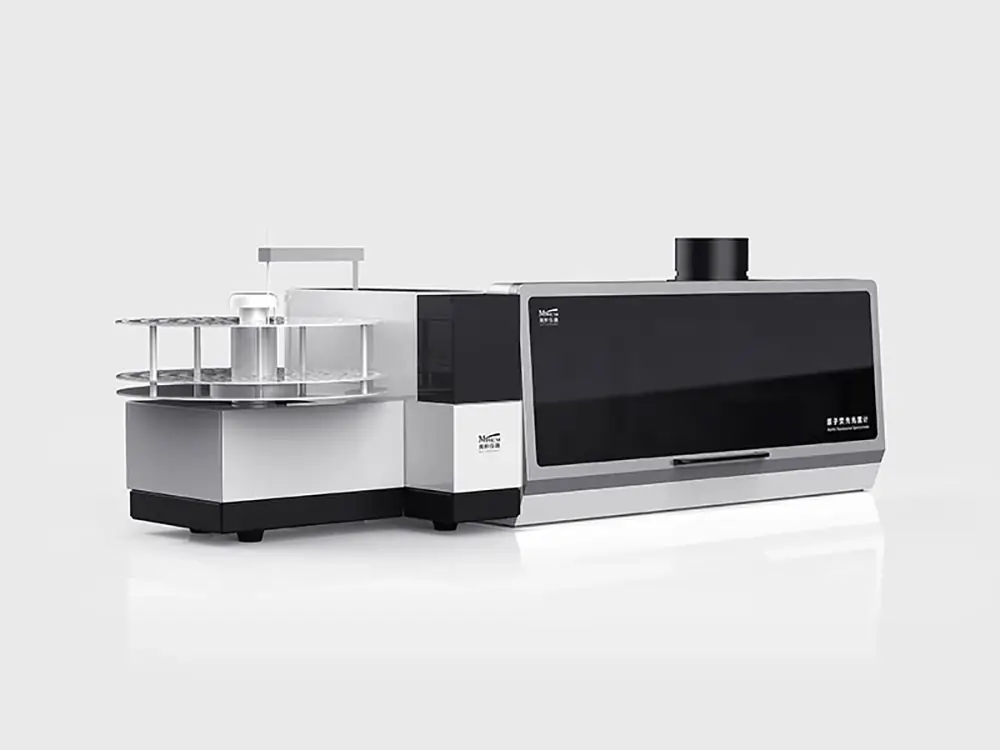
The Macylab AFS-680 combines dual-channel measurement, a six-channel peristaltic pump, two-stage gas-liquid separation, coded hollow cathode lamps, and PMT detection. These features support applicable trace-element workflows involving chemical vapor generation and atomic fluorescence measurement.
Independent channel curve correction and automatic dilution of high-concentration samples may also support routine analysis where the relevant configuration and method permit. However, the instrument’s listed element coverage should not be interpreted as proof that every element can be analyzed using identical preparation or reaction conditions.
Before selecting a Heavy Metal Analyzer or Mercury Analyzer, match the configuration to the required elements, sample matrices, reporting limits, and validated methods.
Installation, Maintenance, and Operating Considerations
Reliable operation requires a stable installation environment, grounded electrical power, adequate ventilation, and sufficient airflow clearance. Protect the instrument from direct sunlight, dust, corrosive gases, and strong vibration.
Operating plans should also account for argon, reagents, lamps, tubing, waste handling, and routine maintenance. Macylab lists CE, ETL, FCC, RoHS, CQC, and 3C qualifications for the instrument; confirm the relevant documentation for the intended market and configuration.
AFS Compared with AAS, ICP-MS, and ICP-OES
| Technique | Typical strength | Main consideration |
| AFS | Sensitive measurement of selected elements using hydride or cold-vapor generation | Target-element chemistry and method suitability |
| AAS | Established analysis for many routine applications | Element coverage, sensitivity, and throughput |
| ICP-MS | Broad multi-element analysis, including many trace-level applications | Instrument and operating costs, matrix effects, and interference control |
| ICP-OES | Multi-element measurement across a broad concentration range | Suitability for the required reporting limits and sample matrix |
These techniques serve different analytical needs. The best choice depends on the required elements, concentration range, sample composition, workload, and total operating cost.
Frequently Asked Questions
What Is Hydride Generation in Atomic Fluorescence Spectrometry?
Hydride generation converts compatible elements into volatile hydrides for transport to an atomizer and subsequent fluorescence measurement. It can reduce the transfer of much of the original sample matrix.
Which Elements Can Be Analyzed Using Hydride Generation AFS?
Arsenic, selenium, antimony, and several other elements can be analyzed using suitable hydride-generation procedures. Mercury commonly uses cold-vapor generation, while other elements may require different chemistry.
Does Hydride Generation Improve Detection Limits?
It can improve analytical selectivity by separating compatible volatile analytes from much of the sample matrix. Actual detection and quantification limits depend on the instrument, method, reagents, sample preparation, and quality-control results.
Can an Atomic Fluorescence Spectrophotometer Perform Elemental Speciation?
Yes, when paired with a suitable separation system and validated method. HPLC–AFS can support the analysis of individual chemical species, but total-element measurement alone cannot distinguish them.
Conclusion
Hydride generation supports sensitive trace-element analysis when the chemical preparation, separation process, and analytical method are properly controlled. The Macylab AFS-680 combines dual-channel measurement and two-stage gas-liquid separation for applicable laboratory workflows.
Contact Macylab for the AFS-680 datasheet and application support tailored to your target elements, sample types, and analytical requirements.