The Macylab UV-1300 is an automatic ultraviolet-visible (UV-Vis) spectrophotometer operating in the 190nm to 1100nm wavelength range with a fixed 4nm spectral bandwidth. Controlled by a single-chip microcomputer, the instrument features a 128×64 dots LCD screen that displays multiple sets of data and standard curves directly on the interface.
Equipped with imported deuterium and tungsten halogen lamps, the UV-1300 supports automatic wavelength adjustment and automatic filter changing. It is designed to accommodate various quantitative and qualitative measurement requirements across physics, chemistry, biology, medicine, and environmental science.
Key Features
Automated Optical Adjustments: Features automatic wavelength adjustment, automatic filter changing, and an auto-zero (100% adjustment) function to streamline testing procedures and improve measurement repeatability.
Digital Data Display & Storage: Equipped with a 128×64 dots LCD screen capable of displaying multiple data sets. The internal memory space stores standard curves and measurement data, utilizing a power-off save function to retain curve parameters.
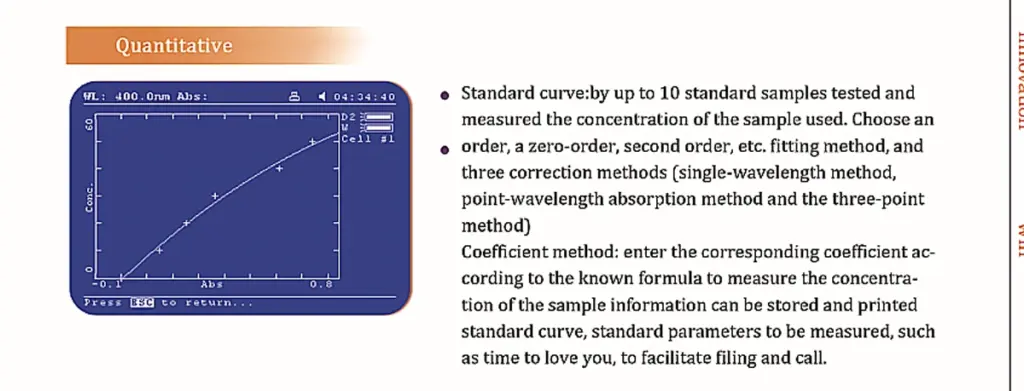
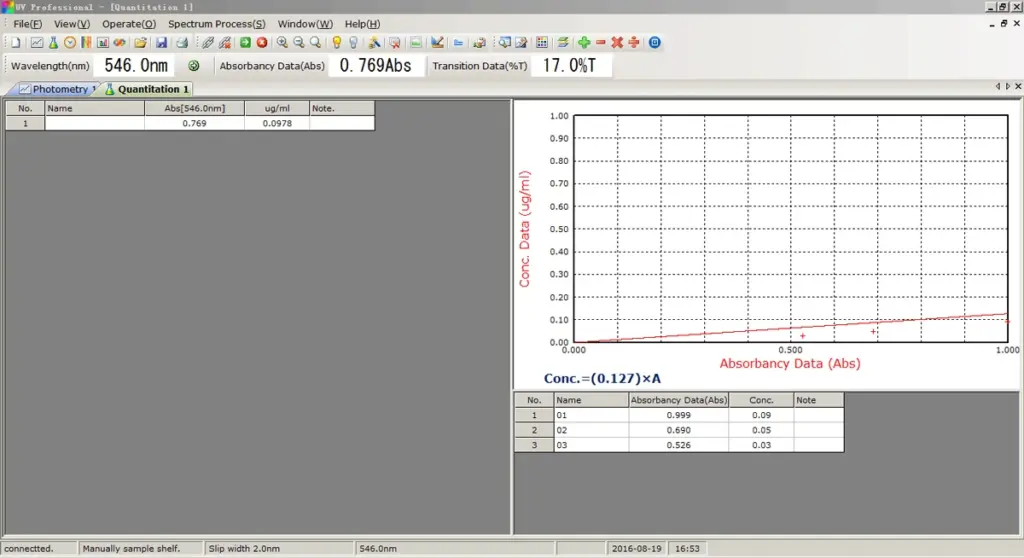
Quantitative Measurement Modes: Supports the establishment of standard curves by testing up to ten standard samples. Users can also directly input standard concentration values or K and B factors to establish curves for quantitative testing.
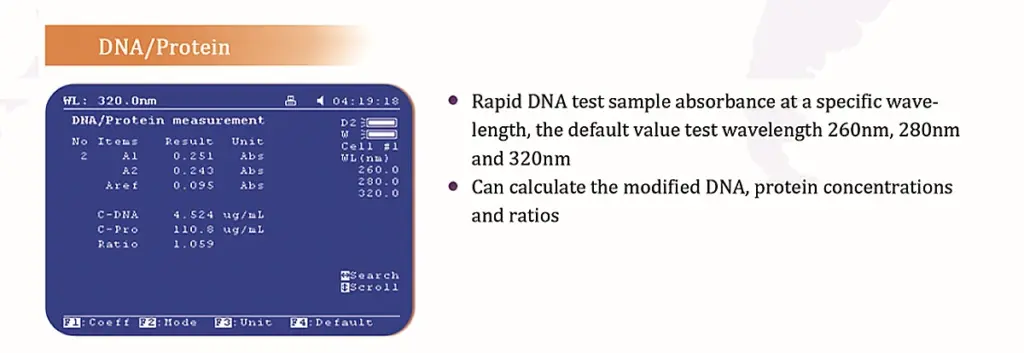
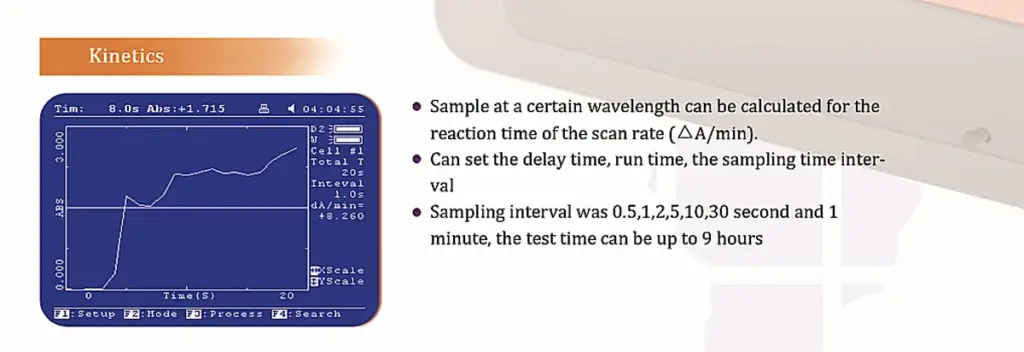
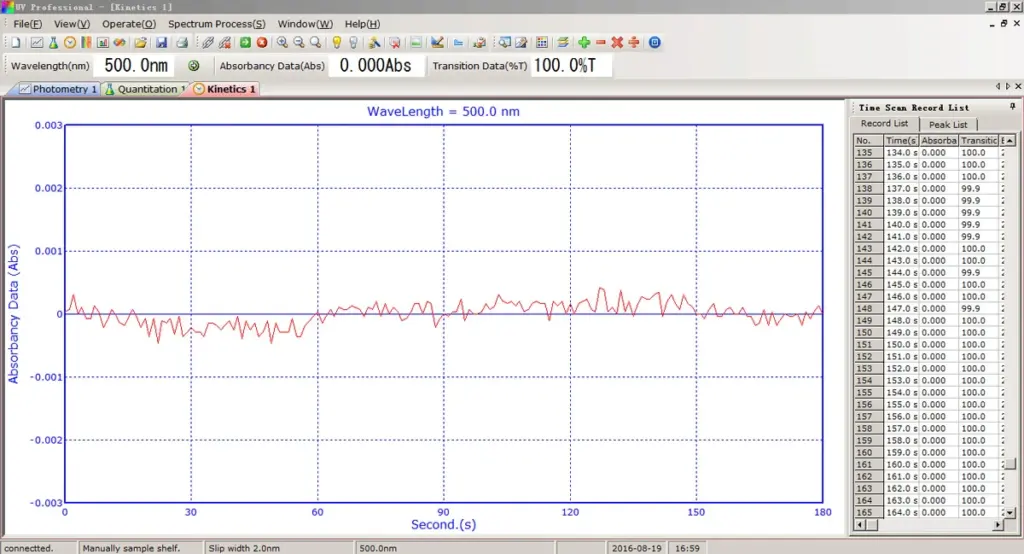
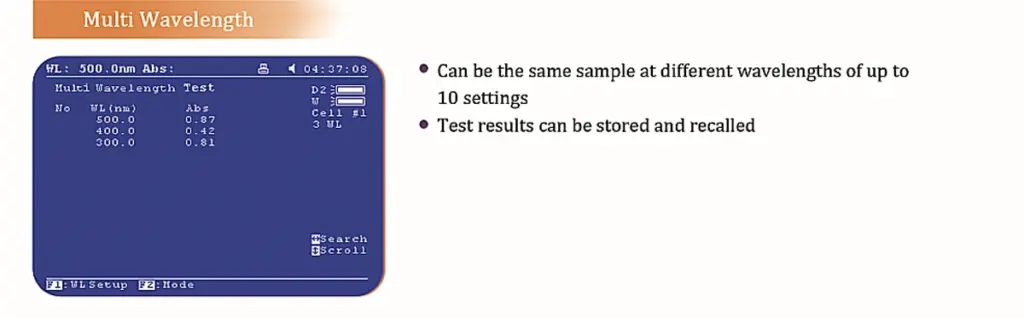
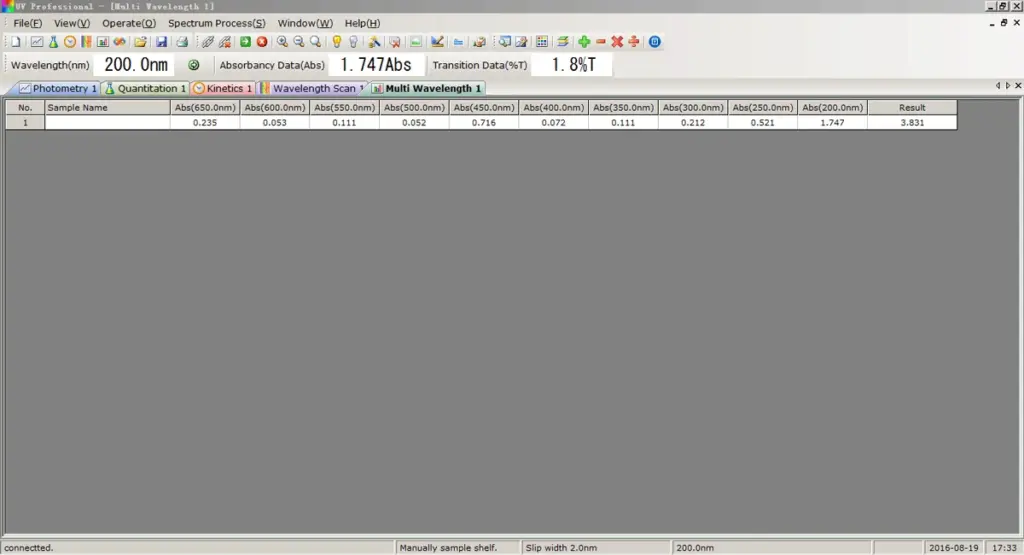
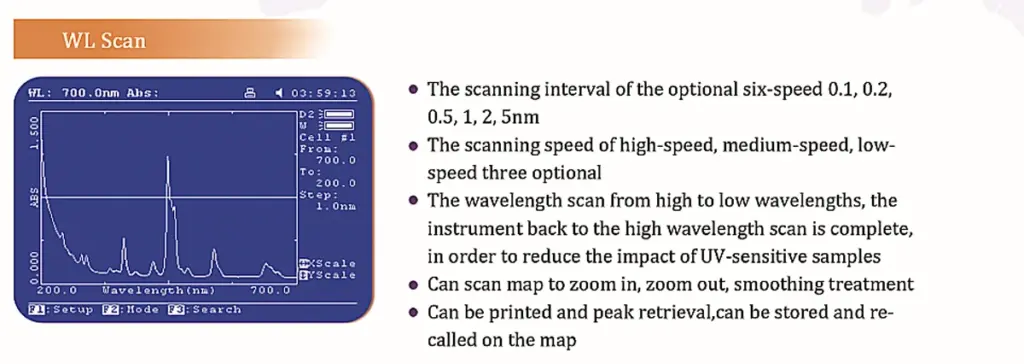
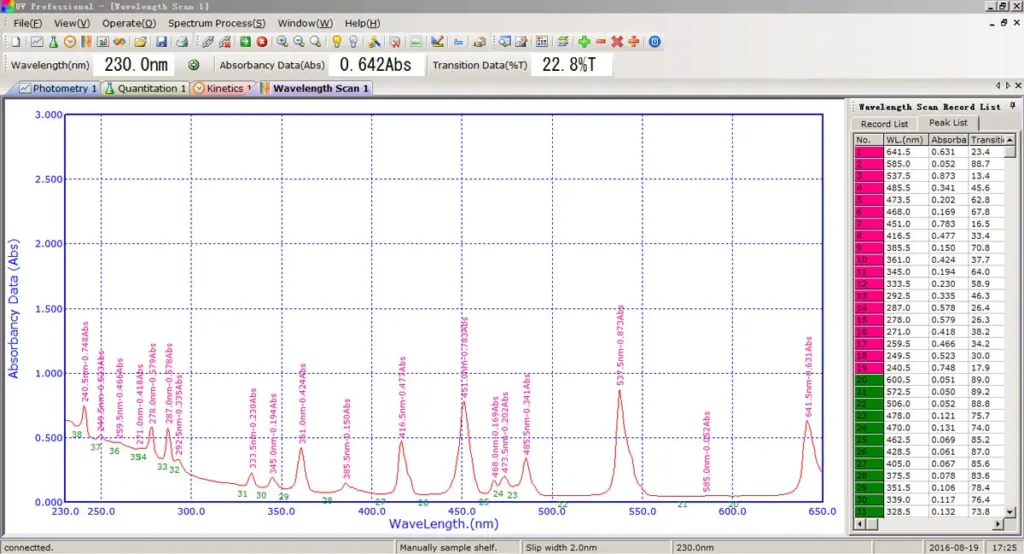
Comprehensive Testing Functions: Integrated software capabilities include full-band or segmented wavelength scanning, kinetic tests for time-based absorbance changes, multi-wavelength testing, and dedicated DNA/protein concentration analysis.
Data Export & PC Control: Includes a general-purpose parallel printer port to print measurement data, curve parameters, and standard sample points. A built-in USB interface allows connection to a PC for flexible control and data management.
Specifications
Parameter
Specification
Wavelength Range
190~1100nm
Band Width
4nm
Wavelength Accuracy
±0.5nm
Wavelength Repeatability
0.1nm
Photometric Accuracy
±0.3% τ
Photometric Repeatability
0.15% τ
Stray Light
≤0.04% τ (220nm NaI, 340nm NaNO2)
Stability
0.001A/h@500nm
Photometric Mode
T, A, C, E
Wavelength Setting
Automatic
Photometric Display Range
-0.3~3A
Display Mode
LCD Screen (128*64 Dots)
Detector
Imported Silicon Photodiode
Light Source
Imported Deuterium Lamp & Tungsten Halogen Lamp
Sample Pool
Accommodates 5mm ~ 100mm cuvettes
Power Requirement
AC 220V/50Hz or 110V/60Hz
Power Consumption
120W
Dimensions (W×D×H)
470 × 330 × 200 mm
Weight
11 Kg
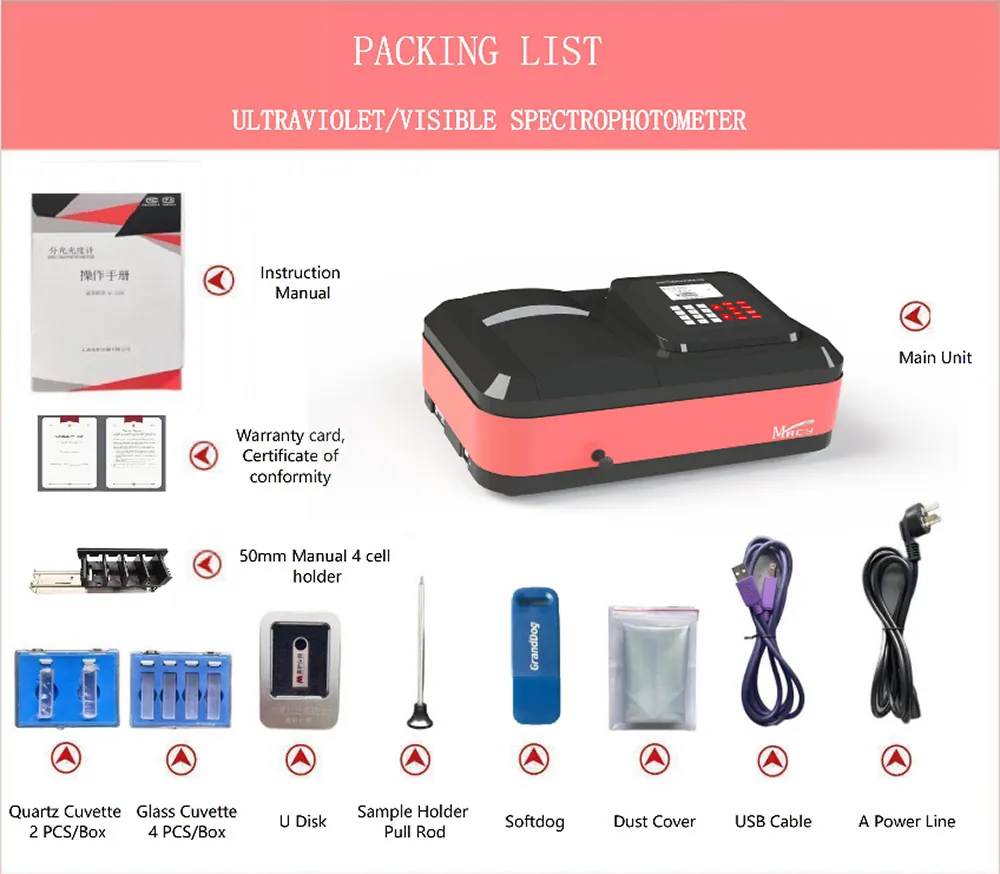
Standard Configuration
Applications
The UV-1300 is utilized for broad analytical applications requiring visible and ultraviolet spectrum testing:
Environmental Monitoring: Analyzing water quality, heavy metal residues, and chemical oxygen demand (COD) using quantitative measurement modes.
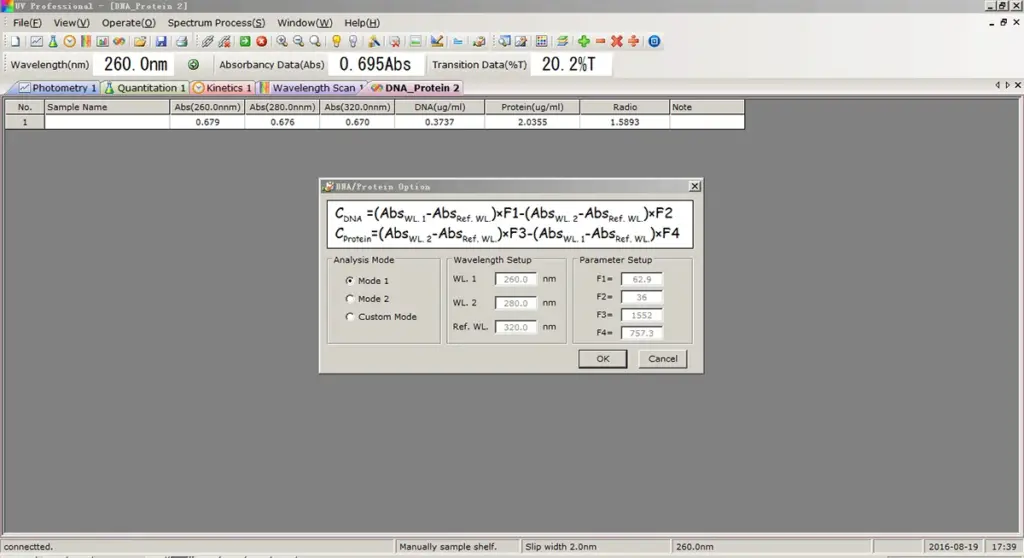
Biological & Medical Sciences: Performing nucleic acid purity checks and protein concentration analysis using specific test formulas.
Materials Science & Metallurgy: Testing the composition of chemical solutions and metallurgical extracts.
General Chemistry & Academia: Providing standard curve analysis, kinetic testing, and wavelength scanning for laboratory research and teaching applications.
Who is it for?
Academic Institutions: University and high school chemistry and biology laboratories needing an automated, standalone UV-Vis instrument for routine teaching.
Industrial Testing Facilities: Environmental, agricultural, and metallurgical testing labs requiring an instrument capable of multi-wavelength testing and data storage without a PC.
Quality Control Departments: QC labs seeking a reliable spectrophotometer with automated wavelength features and a standard 4nm bandwidth for routine compliance testing.
Why choose it?
Standalone Convenience: The instrument functions fully without an external computer. The LCD screen allows users to edit standard curves, conduct wavelength scans, and perform kinetic tests directly on the device.
Automated Reliability: Automatic wavelength setting and automatic filter changing reduce the chance of manual configuration errors, supporting a wavelength accuracy of ±0.5nm.
Certified Qualifications: The instrument complies with major international product qualifications and safety standards, holding certifications including the European CE mark, North American ETL, FCC, RoHS, China CQC, and 3C.
Software features
DNA Protein
Kinetics
Multi Wavelength
Quantitive
WL Scan
Packaging, Installation & Operation
Packaging & Shipping
After unpacking the instrument, compare the contents with the packing list and check that all items are present and undamaged.
Installation & Setup
Place the spectrophotometer in a suitable location away from direct sunlight, dust, corrosive gases, and strong vibrations. For stable operation, keep it away from strong magnetic or electrical fields and electrical devices that may generate high-frequency fields.
Keep the area around and underneath the instrument clear to allow adequate airflow.
Use the appropriate power cord and connect the instrument to a grounded outlet.
Initial Operation
Turn on the spectrophotometer and allow it to warm up for the recommended time before taking measurements. Follow the instrument’s operating instructions to complete any required system initialization, calibration, or wavelength verification before measurement.
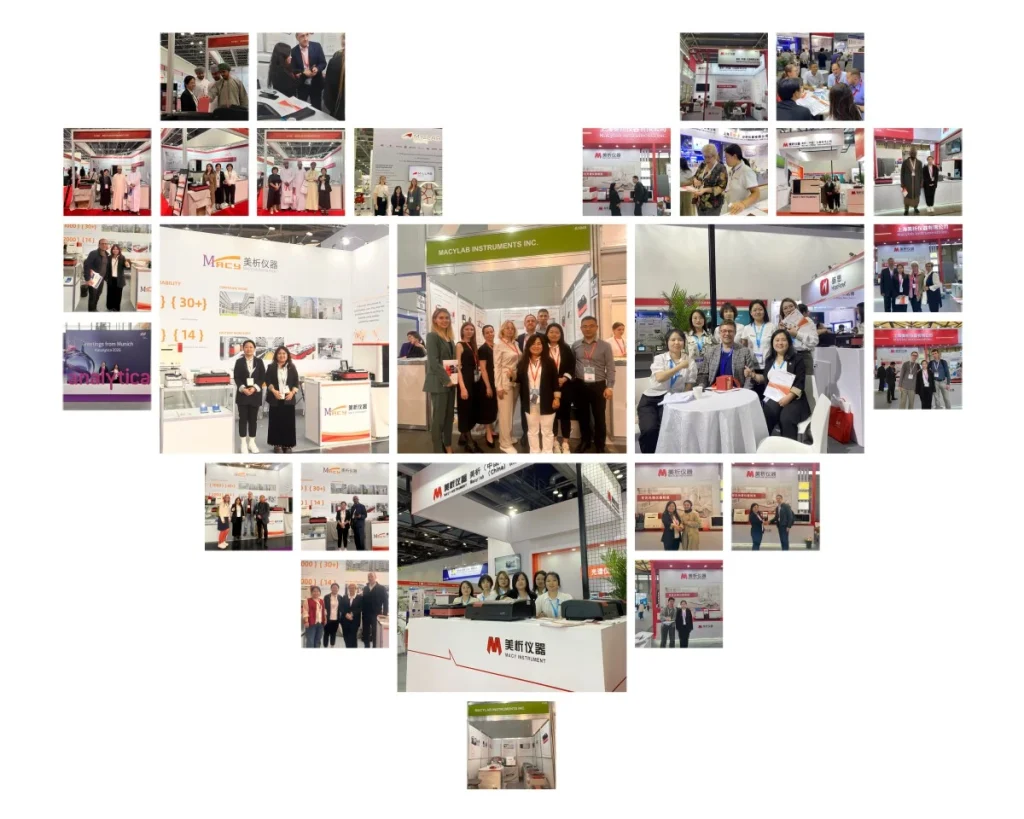
Exhibition
FAQ (Frequently Asked Questions)
Q1: What is the difference between the UV-1300 and the UV-1500?
The primary difference is the spectral bandwidth. The UV-1300 features a standard 4nm bandwidth suitable for routine testing, whereas the UV-1500 features a narrower 2nm bandwidth for higher-resolution analytical requirements. Both models share the same automatic wavelength and LCD display features.
Q2: Can the UV-1300 perform full-spectrum wavelength scanning?
Yes. The built-in software supports full-band spectrum scanning from 190nm to 1100nm, as well as segmented scanning to monitor specific absorbance changes.
Q3: Does the instrument require a computer to operate?
No. The UV-1300 functions as a standalone unit with its own LCD screen and keypad. However, it does include a USB interface for optional PC control and data export.
Q4: Can the instrument test DNA and proteins?
Yes. The UV-1300 includes dedicated test formulas for analyzing nucleic acid purity and protein concentration.
Q5: What size cuvettes can be used with this instrument?
The sample pool is designed to accommodate standard cuvettes with path lengths ranging from 5mm up to 100mm.