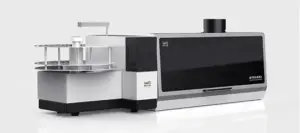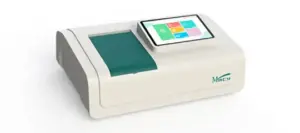
How to Evaluate an Inductively Coupled Plasma Emission Spectrometer for Rare Earth Element Quality Control
Key Takeaways
- Define the sample types, target elements, and concentration ranges before comparing instruments.
- Check whether the optical resolution can distinguish the analytical lines required by your methods.
- Compare grating options by wavelength coverage and resolution rather than groove density alone.
- Request application data and repeatability results before confirming an instrument configuration.
Introduction
Rare earth elements are used in permanent magnets, metal alloys, catalysts, and electronic components. Their concentrations can affect product composition and material performance. A magnet manufacturer, for example, may need to monitor neodymium as a main component while checking dysprosium or terbium as additives. An oxide producer may focus on product purity and trace impurities instead.
For laboratories handling these materials, selecting an Inductively Coupled Plasma Emission Spectrometer involves more than checking how many elements an instrument can measure. Buyers need to know whether it can measure their target elements across the required concentration ranges. Optical resolution, wavelength coverage, and signal stability also influence this decision.
What Should Rare Earth Laboratories Consider Before Selecting an Analytical Instrument?
A sound selection process starts with the materials and measurements that the laboratory handles. This helps buyers identify essential functions before comparing technical specifications.
Which Rare Earth Materials Need to Be Tested?
Different stages of rare earth production involve different materials, so laboratories should identify their main sample types first.
Rare earth ores are tested to determine elemental composition and assess mineral feedstock. According to the USGS, bastnaesite, monazite, loparite, and lateritic ion-adsorption clays are among the principal economic sources of rare earths. Their elemental compositions vary, which makes raw material testing important during mineral evaluation.
Rare earth oxides require a different quality control focus. Producers may need to verify the main element content and monitor impurities that affect product purity. For metals and alloys, laboratories check specified element concentrations against material or customer requirements.
Magnetic material manufacturers also monitor rare earth content. Neodymium is a major component in many permanent magnets, while dysprosium and terbium may be added to modify high-temperature performance. Their concentrations can therefore become important production control points.
A laboratory searching for a mineral analyzer should look beyond general mineral testing claims. It should confirm that the instrument can measure the elements found in its actual samples.
What Analytical Requirements Should Buyers Define?
Before requesting quotations, prepare a target element list and a basic testing specification. The following checks make instrument comparisons more practical.
| Requirement | What to confirm |
| Target elements | List each required rare earth element, including Sc or Y if needed |
| Concentration range | Separate major components from trace impurities |
| Sample types | Identify ores, oxides, metals, alloys, or magnetic materials |
| Testing volume | Estimate daily sample numbers and repeat measurements |
| Analytical method | Identify customer specifications or required standard methods |
Concentration range deserves particular attention. A method designed to measure a major component may not provide sufficient sensitivity for a trace impurity. Ask suppliers for detection limits, working ranges, and repeatability data for the elements on your list.
For example, a magnet laboratory may need to measure high neodymium content while monitoring much lower dysprosium levels. It should request application data for both concentration ranges. A general claim of multi-element capability does not establish that the instrument can handle both tasks.
A written requirement sheet should include the target elements, expected concentrations, sample types, and daily workload. These details provide a practical basis for comparing instruments.
Which Instrument Features Matter for Rare Earth Element Analysis?
Rare earth samples can produce crowded emission spectra. Buyers should therefore focus on the specifications that affect analytical line selection and measurement consistency.
Why Is Optical Resolution Important for Rare Earth Analysis?
Optical resolution describes the ability to distinguish emission lines that are close to one another. This matters because some rare earth elements have neighboring spectral lines that can overlap.
A 2019 study published in Chemical Papers compared ICP-OES instruments with different spectral resolutions for rare earth analysis. The researchers found that instruments with higher spectral resolution produced more reliable results for the tested rare earth mixtures. Correction factors improved some results from lower-resolution instruments, but did not remove the need to assess spectral overlap.
Consider two analytical lines separated by 0.010 nm. An instrument with a stated resolution of 0.007 nm has a more favorable resolution specification for distinguishing them than one rated at 0.015 nm. However, this comparison is only a screening indicator. Actual separation also depends on line shape, signal intensity, instrument conditions, and the sample matrix.
The US EPA’s Method 200.7 also requires analysts to evaluate spectral interference for the individual instrument and selected wavelength. Although this method is designed for water, solids, and biosolids rather than specifically for rare earth materials, it illustrates why wavelength selection and interference checks matter in ICP-OES analysis.
Before purchasing, ask the supplier for recommended analytical lines, spectral profiles where available, and test results using representative samples or reference materials. A high-resolution icp spectrometer may reduce some line overlap problems, but resolution alone cannot guarantee accurate results. The selected method still requires validation.
How Should Buyers Compare Grating Options and Wavelength Coverage?
A grating separates emitted light into its component wavelengths. Its groove density affects spectral dispersion, while the optical design determines the available wavelength range and resolution.
A higher groove density does not automatically make a configuration better for every laboratory. It may provide finer resolution over a narrower wavelength range. A lower groove density may cover more wavelengths, which can be useful when the target element list is broader.
Use this comparison when reviewing instrument configurations:
| Laboratory requirement | Selection priority |
| Closely spaced analytical lines | Finer stated resolution at the required wavelengths |
| Target lines spread across a wide range | Sufficient wavelength coverage |
| Both major and trace measurements | Application data showing suitable lines and working ranges |
For example, if all required analytical lines fall within 190–500 nm, a configuration covering that range may be sufficient. If the method requires a line above 500 nm, the laboratory needs a configuration that extends beyond that point. There is no benefit in paying for wider coverage if the additional wavelengths are not used, but a narrow range is unsuitable when it excludes an essential analytical line.
The practical step is to create a wavelength list for every target element. Match each line against the proposed instrument range, then check resolution and application data for the most important measurements.
How Do Detector Performance and Instrument Stability Affect Results?
The detector converts emitted light into an electrical signal. Its specifications matter when laboratories need consistent signal measurement across repeated tests.
Buyers should check the detector type, operating range, and stated stability. They should also ask how stability is measured and under what conditions the figure applies.
The RF power supply deserves similar attention because it provides the energy needed to sustain the plasma. Check the operating frequency, adjustable power range, and output stability. These figures help assess the excitation system, but they do not replace actual measurement tests.
During supplier evaluation, request repeated measurements of the same sample. Compare the relative standard deviation (RSD) with the laboratory’s acceptance limit. Also confirm whether the results came from repeated readings of one prepared solution or from independently prepared samples. The latter provides additional information about the consistency of the complete analytical procedure.
Why Choose the ICP-6800E for Rare Earth Element Quality Control?
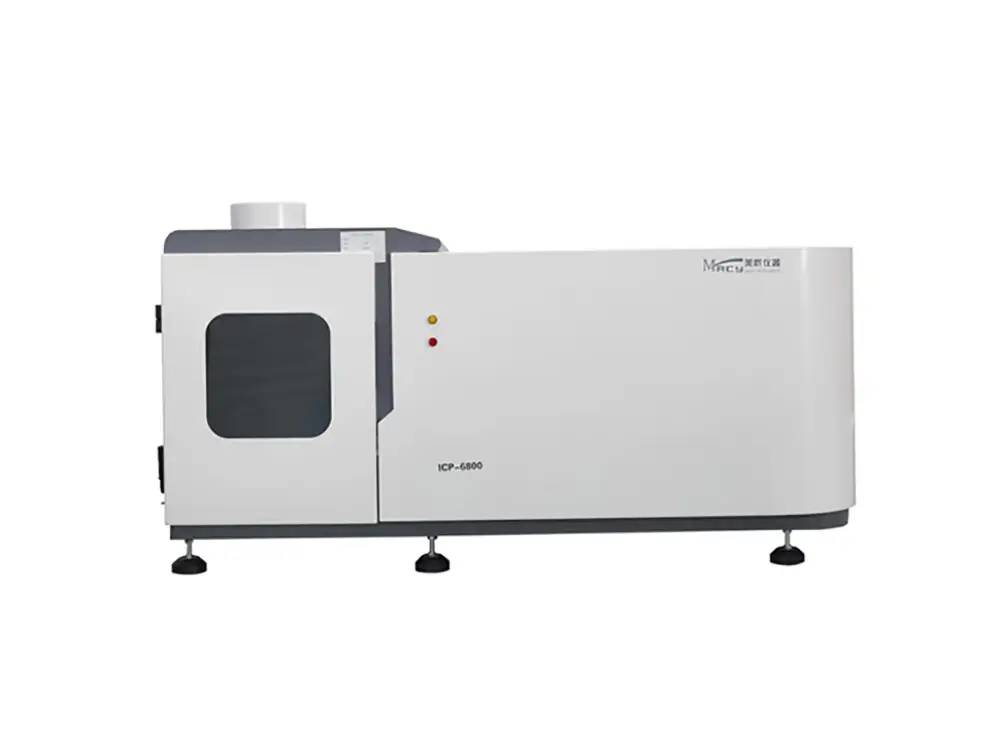
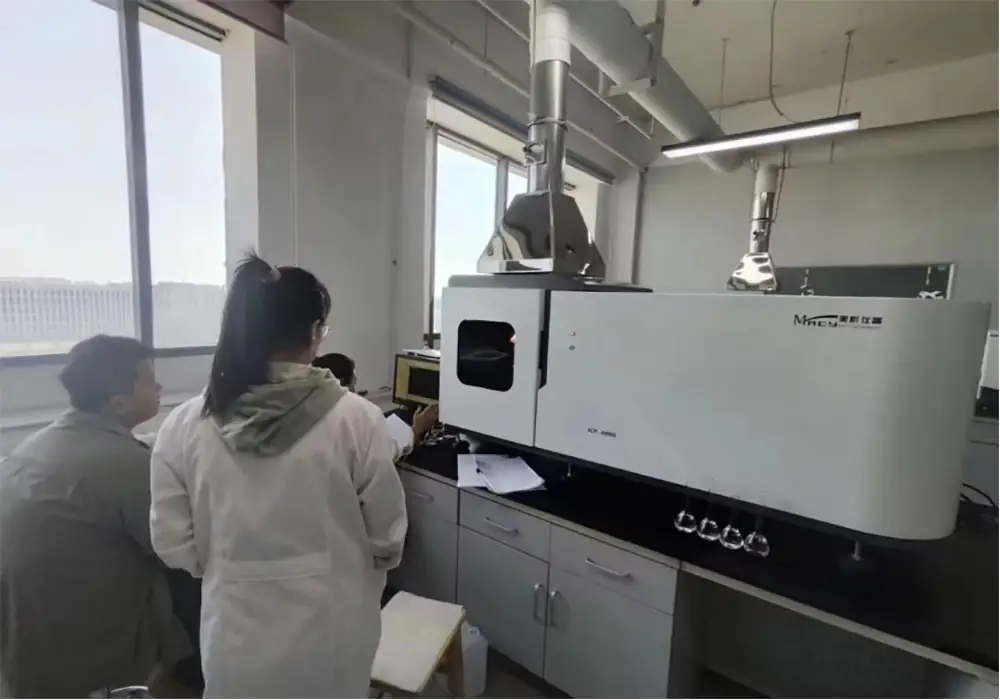
For laboratories that need dedicated rare earth composition analysis, the ICP-6800E offers a defined target element range and two optical configurations. Its main specifications are summarized below.
| Key information | ICP-6800E specifications |
| Target elements | 15 lanthanide series elements, Sc and Y |
| Optical system | 1000 mm focal length Czerny-Turner |
| Grating options | 3600 L/mm or 2400 L/mm |
| Wavelength and resolution | 190–500 nm, ≤0.007 nm; or 190–800 nm, ≤0.015 nm |
| Detector | PMT R293/R928; negative high voltage 0–1000 V; stability <0.05% |
| RF system | 27.12 MHz ±0.05%; 500–1600 W; output stability <0.3% |
Dedicated Coverage of 17 Elements
The ICP-6800E is designed for rare earth element composition analysis. Its stated target range includes 15 lanthanide series elements, together with scandium and yttrium.
This coverage is relevant to laboratories testing rare earth ores, oxides, refined materials, alloys, and magnetic materials. Buyers should still compare the listed elements with their own analytical methods. They should also confirm the available analytical lines and concentration ranges for each required element, especially when trace impurities are part of the acceptance criteria.
Two Grating Options for Different Wavelength Requirements
The 1000 mm Czerny-Turner optical system offers two grating configurations.
The 3600 L/mm grating covers 190–500 nm and provides a stated resolution of ≤0.007 nm. It is worth evaluating when all required analytical lines fall within this range and finer resolution is a priority.
The 2400 L/mm grating covers 190–800 nm, with a stated resolution of ≤0.015 nm. It is the relevant option when the laboratory needs analytical wavelengths above 500 nm.
The choice should follow the target element list. If a required line falls outside one configuration’s range, that option should be excluded. For lines within both ranges, compare the stated resolution and request application data before deciding.
PMT Detection and Adjustable RF Power
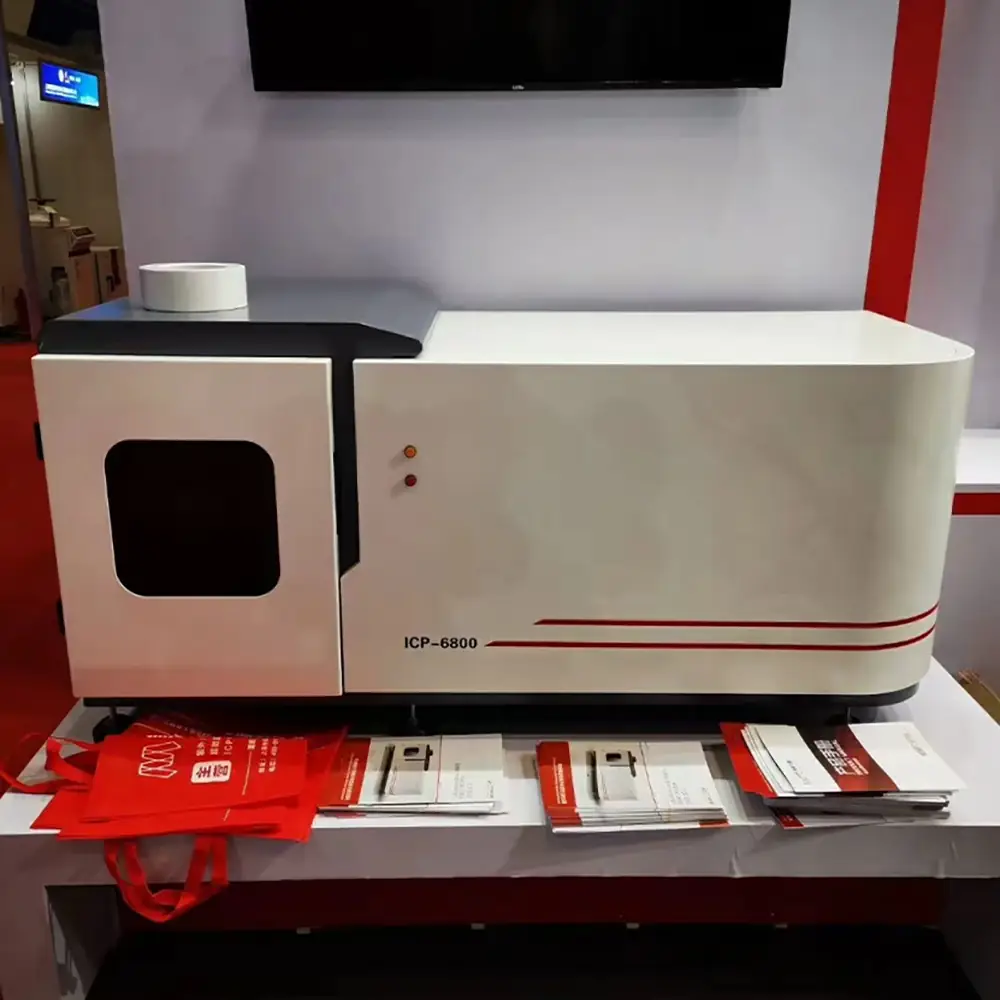
The instrument uses an R293 or R928 photomultiplier tube (PMT). Its negative high-voltage range is 0–1000 V, with stated stability below 0.05%.
The solid-state RF power supply operates at 27.12 MHz ±0.05%. Its output power is adjustable from 500 to 1600 W, with output stability below 0.3%. An automatic matching function is also provided.
These figures give laboratory managers specific parameters to review when assessing the detection and excitation components. For purchasing decisions, they should be supported by repeatability tests and application results using representative samples.
Sample Introduction for Different Rare Earth Materials
The sample introduction assembly includes a three-concentric torque tube, a 6 mm coaxial nebulizer, and a 34 mm double-barrel atomizing chamber.
The stated application range includes rare earth ores, raw materials, finished products, geological and soil samples, alloys, and magnetic materials. The instrument is also specified for samples prepared in nitric acid, hydrochloric acid, and hydrofluoric acid solutions.
For laboratories comparing an icp oes spectrometer, these details help establish whether the sample introduction arrangement is relevant to their work. Acid compatibility does not confirm that every digestion procedure is suitable. The laboratory must validate its own preparation method and confirm compatibility with the complete sample introduction assembly.
Frequently Asked Questions
These questions cover common purchasing concerns and the analytical principles behind rare earth testing.
Which Elements Can the ICP-6800E Analyze?
Its stated target range covers 15 lanthanide series elements, plus scandium and yttrium. Buyers should confirm the required analytical lines and concentration ranges for their own methods before ordering.
What Is the Difference Between the Two ICP-6800E Grating Options?
The 3600 L/mm grating covers 190–500 nm with a resolution of ≤0.007 nm. The 2400 L/mm grating covers 190–800 nm with a resolution of ≤0.015 nm. Select the option according to the required analytical wavelengths and resolution.
Can the ICP-6800E Be Used for Acid-Dissolved Samples?
Its stated applications include samples prepared in nitric acid, hydrochloric acid, and hydrofluoric acid solutions. The laboratory should still confirm the sample preparation procedure and material compatibility before routine testing.
Why Do Rare Earth Samples Require Careful Wavelength Selection?
Rare earth elements can produce dense emission spectra. Nearby lines may overlap, so laboratories need to select wavelengths that provide adequate separation and sensitivity. Published research has demonstrated that spectral resolution can affect the reliability of rare earth measurements.
Can One ICP-OES Instrument Test Ores, Oxides, and Alloys?
One instrument may support several material types when suitable sample preparation procedures and validated analytical methods are available. The laboratory should verify performance separately for representative samples rather than assuming that one method applies to every material.
Conclusion
A good instrument purchase should reduce uncertainty in daily testing. Before making a decision, ask the supplier to demonstrate the required elements, compare analytical lines, and report repeatability using representative samples. Also confirm installation requirements, consumables, application support, and after-sales service.
For laboratories evaluating a Trace Element Analyzer for rare earth quality control, the ICP-6800E offers a dedicated element range and configurable optical performance. Its suitability should be confirmed through application testing against the laboratory’s own methods.
Contact MacyLab to request technical specifications, pricing, or application support. Provide your sample types, target elements, concentration ranges, and required analytical wavelengths so the proposed configuration can be assessed against your testing needs.